Philippines Presents Extended Continental Shelf Claim in West Philippine Sea to UN Panel
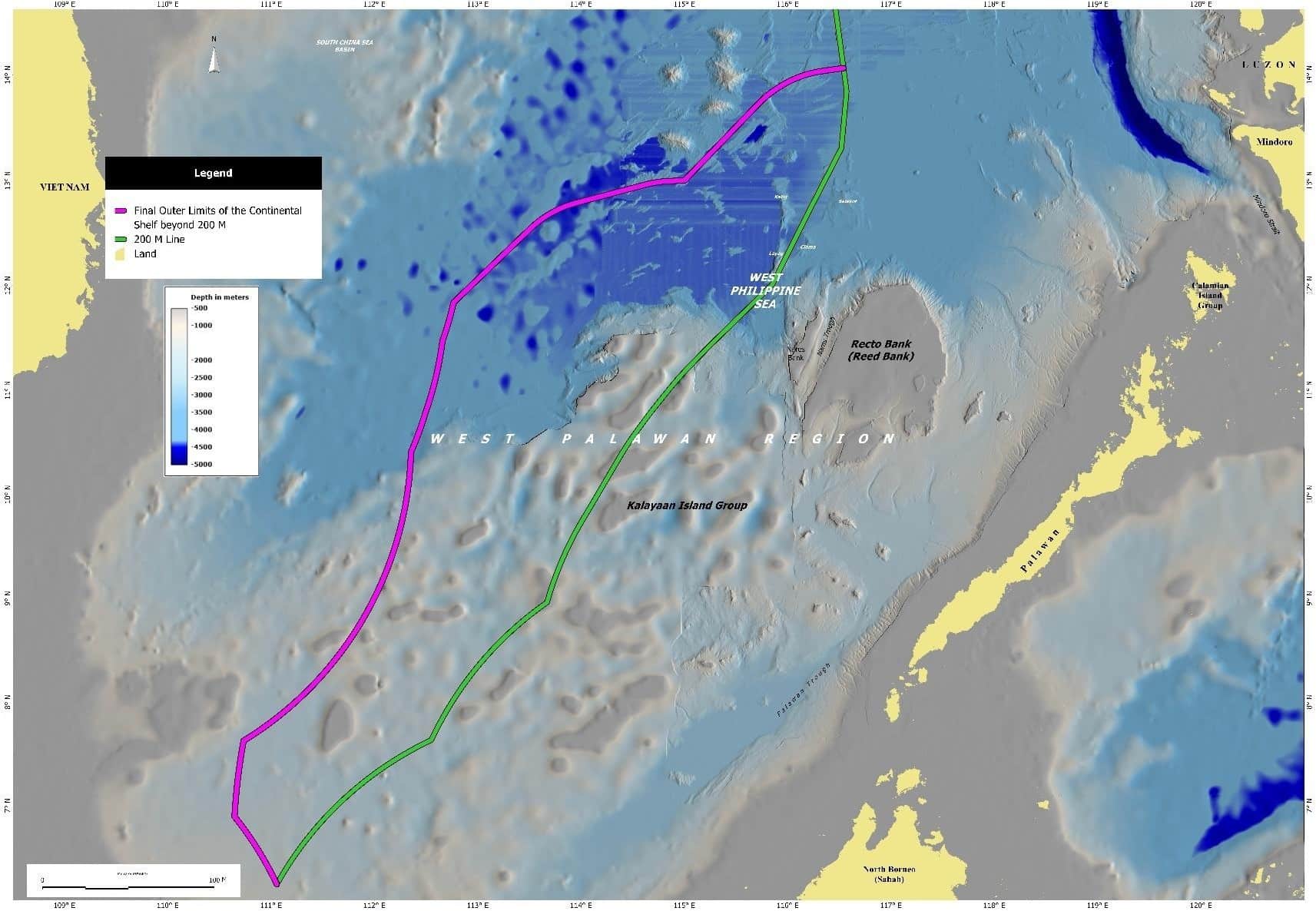
The Philippines has formally presented its claim for an extended continental shelf in the West Philippine Sea (WPS) to a United Nations commission. During the presentation, Manila urged the commission to take into account the significant 2016 arbitral ruling concerning the South China Sea as it reviews the Philippines' bid. This action was disclosed by the Department of Foreign Affairs (DFA). The DFA stated that the presentation was made before the UN Commission on the Limits of the Continental Shelf (CLCS). The Philippines' submission seeks to establish sovereign rights over its continental shelf beyond the 200 nautical miles provided by the UN Convention on the Law of the Sea (UNCLOS). This move is part of a broader strategy to assert its maritime entitlements in the disputed waters. The 2016 ruling, which invalidated China's expansive claims in the South China Sea, is considered a crucial legal precedent by the Philippines. By referencing this ruling, Manila aims to bolster the legitimacy and strength of its current claim. The presentation before the UN panel represents a significant diplomatic effort to solidify its territorial and maritime rights.
The Philippines' presentation of its extended continental shelf claim to the UN Commission on the Limits of the Continental Shelf (CLCS) is a strategic legal maneuver within the established international framework of UNCLOS. By referencing the 2016 arbitral ruling, Manila seeks to leverage a prior legal victory to strengthen its current submission. This approach highlights the ongoing tension between established international legal mechanisms and competing geopolitical interests in the region. The CLCS process, while technical, has significant implications for maritime boundary delimitation and resource rights, potentially influencing future regional stability and economic access. The Philippines' action underscores the importance of utilizing international legal avenues to assert national claims, even amidst complex geopolitical dynamics, offering a pathway for dispute resolution that relies on established norms rather than unilateral assertions.
AI-generated to prompt reflection — not editorial opinion, not advice, not a statement of fact. How this works.