Physicist Cirac: Quantum Computers Don't Need to Be Flawless
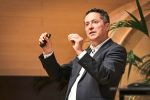
Spanish quantum physicist Ignacio Cirac believes that waiting for a perfect quantum computer is unnecessary. He suggests that current quantum technology can already be useful for solving specific problems. This perspective challenges the traditional pursuit of fault-tolerant quantum computing, which aims for absolute error correction. Cirac's view implies that even with inherent imperfections, quantum computers can offer significant advantages for certain computational tasks. This could accelerate the practical application of quantum computing in various fields. The focus shifts from achieving theoretical perfection to leveraging existing capabilities for real-world impact. This approach may pave the way for earlier adoption and development of quantum solutions.
The perspective that quantum computers do not need to be error-free for immediate utility suggests a pragmatic shift in the field. This approach acknowledges the immense engineering challenges in achieving full fault tolerance. By focusing on specific problem sets where noisy or imperfect quantum computations can still yield valuable results, researchers and developers might unlock near-term applications. This strategy could foster innovation by lowering the barrier to entry for practical quantum computing, potentially accelerating its integration into scientific research and industry. The trade-off lies between the long-term goal of universally applicable, fault-tolerant machines and the short-term gains from imperfect, specialized systems. Evaluating the viability of this 'noisy intermediate-scale quantum' (NISQ) era approach requires careful consideration of error mitigation techniques and the specific computational advantages offered for targeted problems.
AI-generated to prompt reflection — not editorial opinion, not advice, not a statement of fact. How this works.