Physicists Simulate Black Hole That Begins to 'Evaporate' in Lab
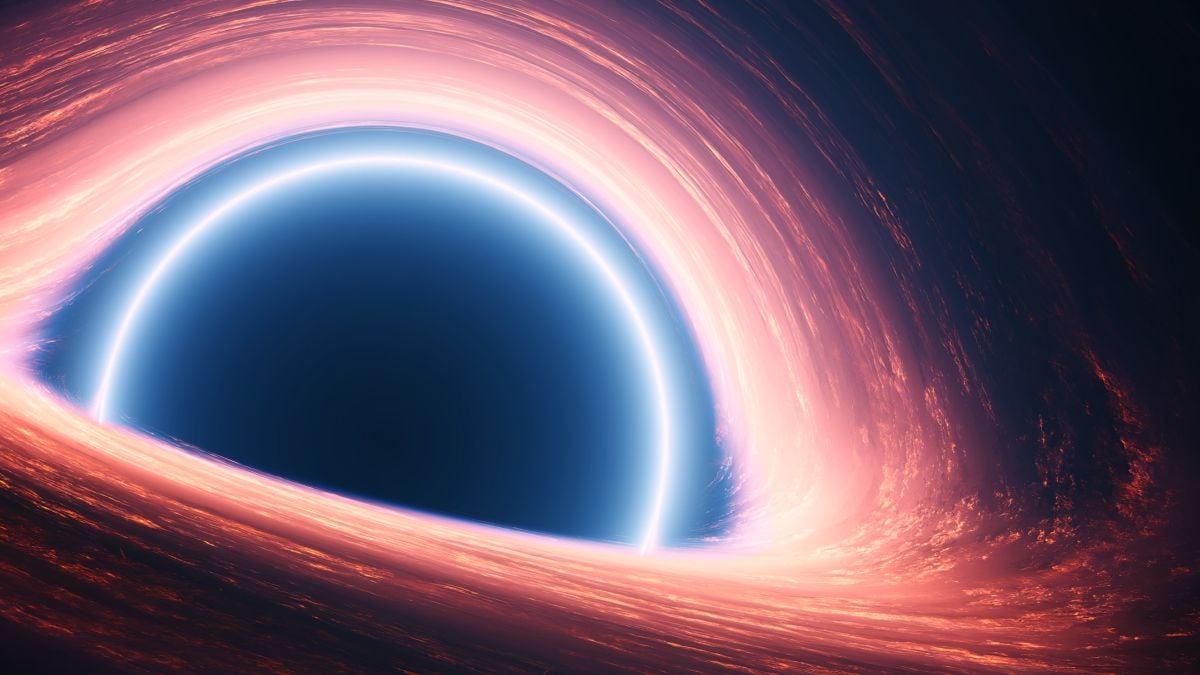
Scientists have successfully simulated a black hole in a laboratory setting, observing a phenomenon where it began to 'evaporate.' This groundbreaking experiment offers a unique opportunity to study the complex physics of black holes, particularly Hawking radiation, in a controlled environment. The simulation involved creating conditions that mimic the event horizon of a black hole, allowing researchers to observe quantum effects. The observed 'evaporation' is consistent with theoretical predictions made by Stephen Hawking. This research could provide crucial insights into the nature of gravity, quantum mechanics, and the very fabric of spacetime. The ability to replicate such extreme astrophysical phenomena on a smaller scale opens new avenues for experimental physics. Further analysis of the simulation's results is expected to refine our understanding of these cosmic enigmas. The experiment represents a significant step forward in bridging theoretical astrophysics with empirical observation.
This experimental simulation of black hole evaporation offers a novel approach to probing quantum gravity. By creating analogous conditions in a lab, physicists can test theoretical predictions like Hawking radiation without needing to observe actual astrophysical black holes. This methodology allows for controlled experimentation and data collection, potentially accelerating our understanding of fundamental physics. The challenge now lies in scaling these simulations and ensuring the observed phenomena accurately reflect the complex quantum processes occurring in real black holes. Future research will likely focus on refining simulation techniques and developing new theoretical frameworks to interpret these experimental results, potentially leading to breakthroughs in unifying general relativity and quantum mechanics.
AI-generated to prompt reflection — not editorial opinion, not advice, not a statement of fact. How this works.