Physics professor captures International Space Station passing over Itapetininga
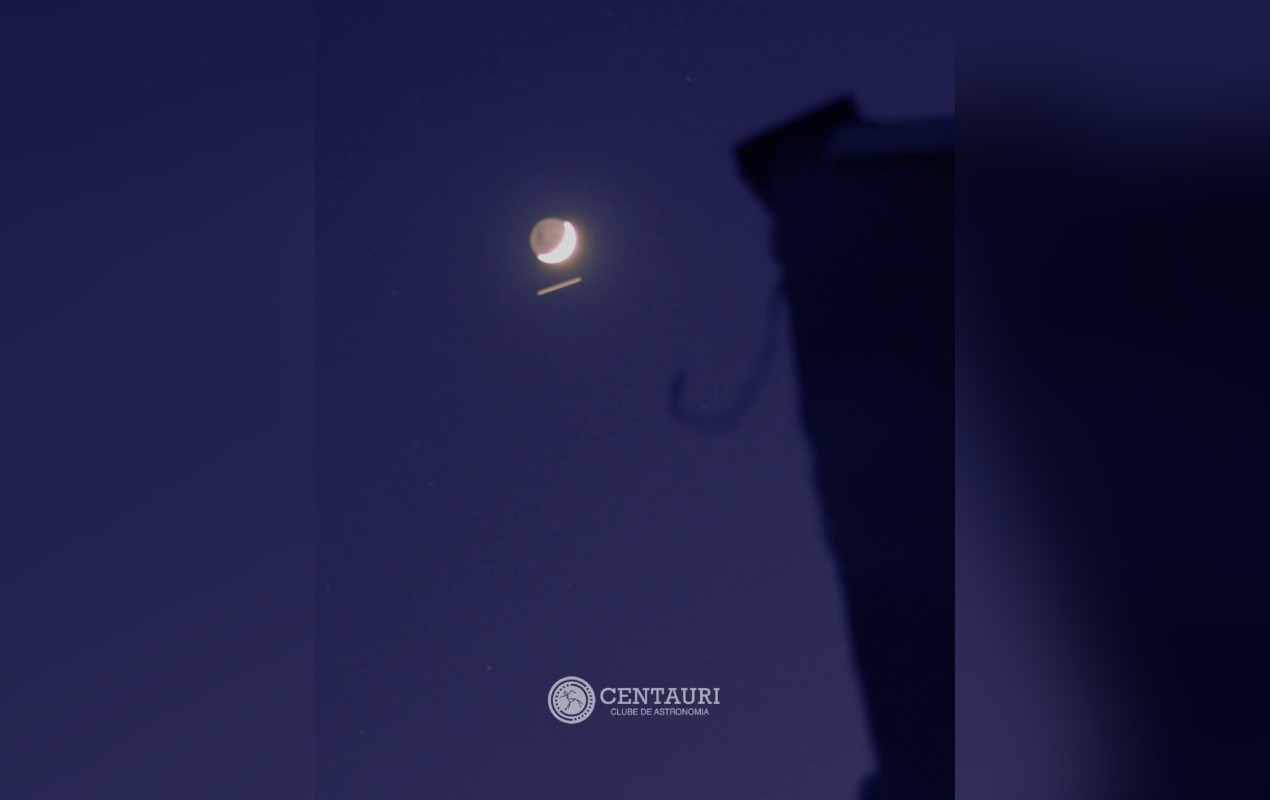
Rodrigo Raffa, a physics professor and head of the Itapetininga Astronomy Club, successfully photographed the International Space Station (ISS) as it traversed the sky above Itapetininga, São Paulo, on Friday, May 10th. Raffa observed the ISS using his telescope, positioned since 5 AM to capture the event, which occurred shortly after the station passed near the waning crescent moon. He described the ISS as the brightest object in the sky after the moon during its passage, noting its exceptional brilliance on this particular morning. The images captured show a streak of light as the ISS crossed the sky below the moon, approximately 400 kilometers from Earth. This was not Raffa's first time observing the ISS, but he emphasized that each sighting is unique and special, particularly when it aligns with celestial bodies like the moon and the Pleiades star cluster. The ISS's intense brightness is attributed to its large solar panels reflecting sunlight, making it the largest satellite orbiting Earth and easily visible. Raffa explained that the station's visibility can disappear when it moves out of the sun's illuminating angle relative to the observer. He highlighted the importance of observing such phenomena to foster understanding of space science and its impact on humanity. The ISS, a joint project of NASA, Roscosmos, ESA, JAXA, and CSA, has been a continuously occupied orbiting laboratory since 2000, conducting research in microgravity and radiation effects, and has hosted astronauts from various nations, including Brazil's Marcos Pontes. Currently, seven astronauts are aboard the station.
The observation of the International Space Station by Professor Rodrigo Raffa offers a tangible connection to humanity's ongoing investment in space-based research and exploration. The ISS represents a significant international collaboration, serving as a unique microgravity laboratory for scientific inquiry. Its visibility from Earth underscores the scale of human engineering in orbit and the potential for public engagement with space science. As orbital infrastructure grows, understanding the dynamics of visibility, orbital mechanics, and the scientific output of such missions becomes increasingly crucial for strategic planning and public support. Future considerations may involve optimizing observation opportunities and communicating the value of these endeavors in an era of expanding space activities.
AI-generated to prompt reflection — not editorial opinion, not advice, not a statement of fact. How this works.