Piauí Chef Transforms Prehistoric Art into Edible Masterpieces
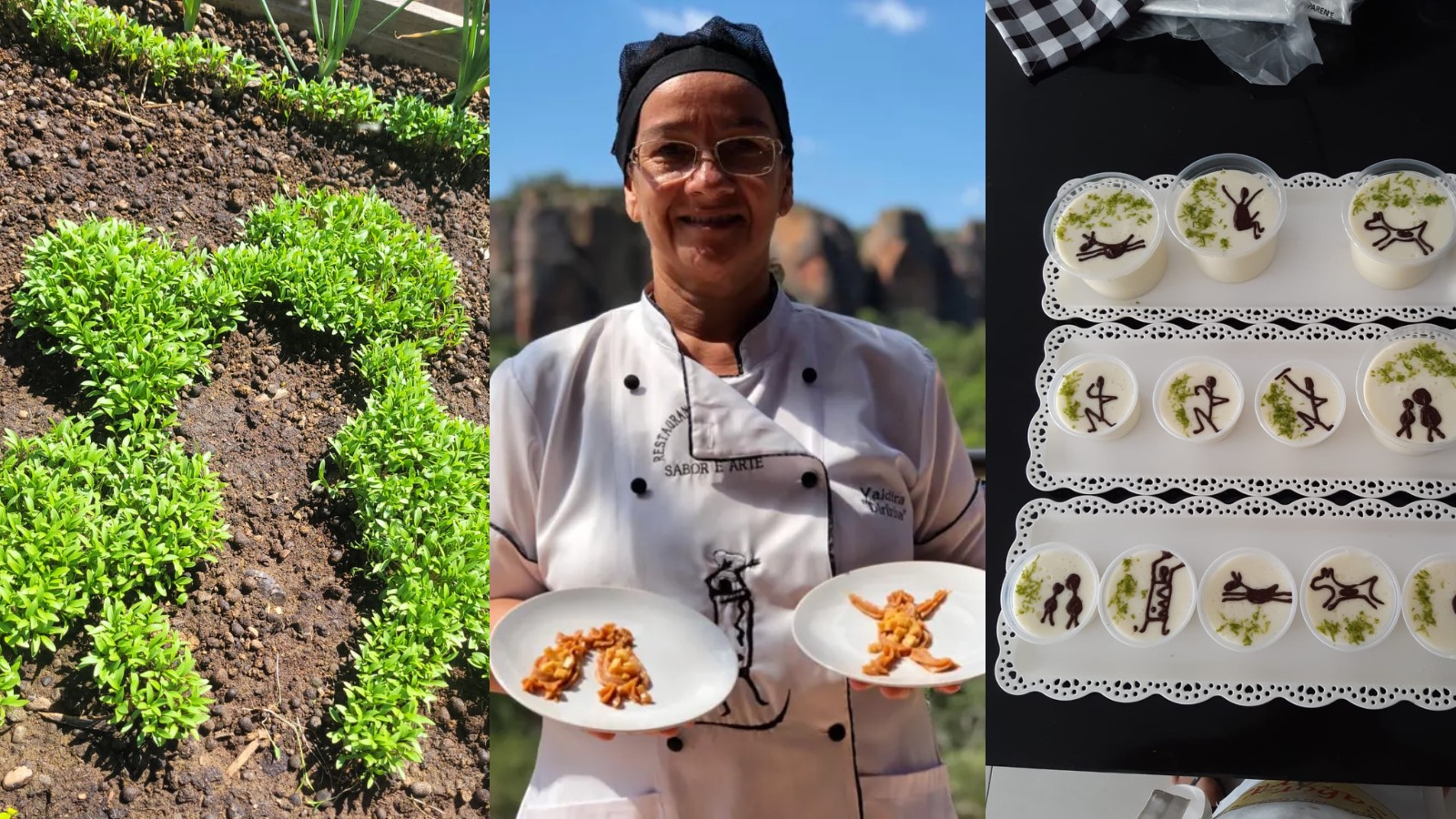
In São Raimundo Nonato, Piauí, former art teacher and chef Raimunda Valdira, known as Dirinha, is captivating tourists by recreating prehistoric rock paintings from the Serra da Capivara National Park onto her dishes. Her culinary journey began when her son asked for a dragon cake, inspiring her to adapt her artistic skills to food decoration. She realized she could replicate iconic images, like the Pedra Furada, using edible mediums. Dirinha's restaurant features dishes made with local ingredients such as goat meat, sun-dried meat, Cardoso cheese, and cassava, grown on her farm. Even her crops are artistically arranged, with cilantro planted in rock art patterns. She has spent over a decade refining her technique, now able to create intricate designs in under a minute. These artistic edible creations extend beyond traditional plates to salads, desserts, and even fruits like watermelons and mangoes. Popular menu items include goat with cassava and a 'rock art style' goat pie, which Dirinha believes embody the region's identity. She also customizes dishes for couples, recreating the famous 'kissing couple' rock painting, often referred to as 'the first kiss of the Americas,' using ingredients like dulce de leche and cheese. Dirinha credits archaeologist Niède Guidon, a key figure in Serra da Capivara research, as a significant inspiration for her work, acknowledging Guidon's dedication to preserving cultural heritage.
This initiative creatively merges cultural heritage preservation with culinary arts, offering a unique tourist attraction and economic opportunity for the Piauí region. By translating ancient rock art into edible formats, Dirinha's restaurant not only educates patrons about local history but also stimulates interest in the Serra da Capivara National Park. This approach highlights how intangible cultural assets can be leveraged for tangible economic and social benefit, fostering a deeper connection between local identity and contemporary commerce. Future considerations might involve scaling this model, exploring partnerships with tourism boards, and ensuring the sustainable sourcing of local ingredients to support the regional economy.
AI-generated to prompt reflection — not editorial opinion, not advice, not a statement of fact. How this works.