Pilot Sets Cocaine-Laden Plane Ablaze to Destroy Evidence, Police Say
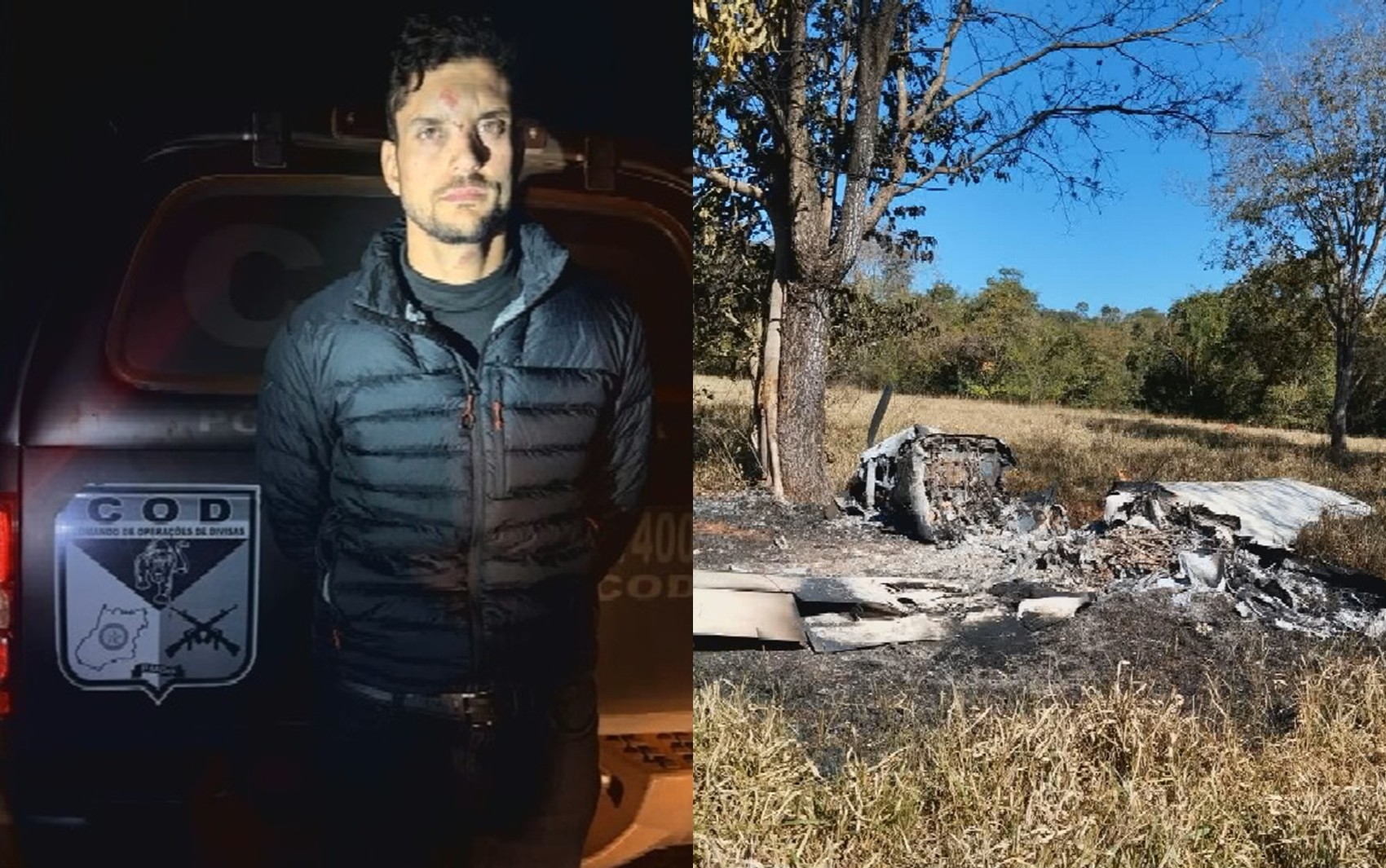
A pilot who made an emergency landing in rural Itarumã, Goiás, has been arrested after allegedly setting fire to the aircraft used to transport cocaine. Police believe the pilot, identified as 32-year-old Henrique Donizeti Ferri, intentionally ignited the plane after removing the drugs in an attempt to destroy evidence of drug trafficking. Ferri fled the scene but was apprehended the following day. The incident occurred on Wednesday morning, May 15th. Ferri initially claimed to authorities that a mechanical failure caused the forced landing. However, investigators suspect arson, noting a fuel canister found on the ground near the plane, which subsequently caught fire. Prior to the fire, Ferri reportedly concealed 343 kg of cocaine in the nearby woods. The pilot was apprehended after police intercepted his father, wife, and a friend who had traveled from Ribeirão Preto, São Paulo, to assist in his escape. The group was found with a significant amount of cash near GO-206 in the early hours of Thursday, May 16th. They had arranged to meet Ferri, who had a satellite phone, by flashing their car's headlights. Ferri confessed to police that he had been hired for three drug transport flights, with this being his final trip. He stated he was paid R$70,000 per journey, with the cocaine loaded near the Bolivia border in Mato Grosso and destined for Frutal, Minas Gerais. Ferri, his relatives, and the friend were taken to the Federal Police station in Jataí.
This event highlights the risks inherent in illicit drug transportation networks, where individuals may resort to extreme measures like destroying evidence to evade capture. The pilot's actions suggest a pre-meditated attempt to obstruct justice, contrasting with his initial claim of mechanical failure. The involvement of family members in a planned extraction indicates a potential support system for such criminal activities, raising questions about the broader organizational structure. From a systemic perspective, the significant quantity of cocaine and the pilot's previous involvement suggest a recurring pattern of drug trafficking operations within the region. The financial incentive of R$70,000 per trip underscores the high-stakes nature of this illicit trade. Future law enforcement efforts may need to consider not only the pilots but also the logistical and financial support networks involved in these operations.
AI-generated to prompt reflection — not editorial opinion, not advice, not a statement of fact. How this works.