Pirarucu with 400 young go viral, but experts warn of biological invasion in Brazil
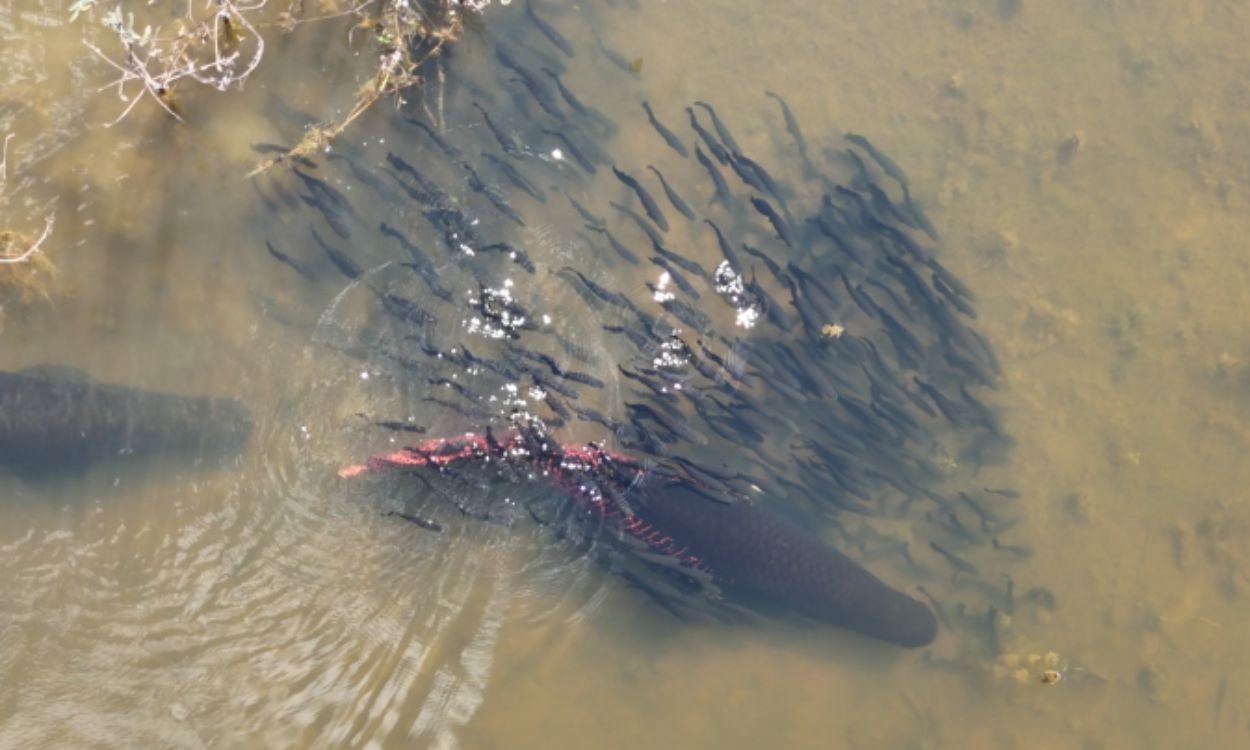
A video capturing a pair of pirarucu (Arapaima gigas) fish with approximately 400 offspring has gone viral on social media. The footage was filmed by drone in an flooded area of the Teles Pires River in Itaúba, Mato Grosso, Brazil, and highlights the fish's parental care and the sheer number of young. While visually striking, the scene also signals a significant ecological concern: the spread of an invasive species into an area where it is not naturally found. The pirarucu, though native to the Amazon basin, is considered an exotic invasive species in this particular stretch of the Teles Pires River. Its natural distribution was historically limited by geographical barriers like rapids and waterfalls, preventing it from reaching areas like the upper Teles Pires. However, human activities, particularly the construction of hydroelectric dams, have altered these environments, eliminating natural barriers and creating slow-moving water conditions favorable for the pirarucu's establishment and reproduction. The pirarucu, a large predatory fish that can exceed two meters and weigh over 100 kilograms, possesses characteristics that enhance its invasive potential, including strong parental care. The male pirarucu protects the young for about three months, teaching them to breathe and feed, while the female guards the vicinity. This efficient parental strategy ensures high survival rates for the offspring, contributing to the species' success in new environments. As an apex predator, the pirarucu can consume large quantities of native fish, disrupt food webs, and reduce local biodiversity. Studies indicate that invasive species can consume up to 70% more resources than native species, exacerbating the impact on local ecosystems. In response to this ecological threat, Brazil's environmental agency, Ibama, has recognized the pirarucu as an invasive species outside its native range, authorizing its capture and removal without size or quota limits as a population control measure. While fishing can help reduce numbers, experts emphasize that it must be combined with other strategies such as preventing escapes from fish farms, scientific monitoring, and environmental education to effectively manage the invasion.
The viral video of pirarucu with numerous offspring, while captivating, underscores a critical environmental challenge stemming from human-induced ecological shifts. The introduction of the pirarucu outside its natural range, facilitated by altered riverine landscapes from hydroelectric projects, exemplifies how infrastructure development can inadvertently create pathways for invasive species. This situation highlights a systemic tension between economic development and ecological preservation, where the creation of slow-moving water bodies, beneficial for energy generation, simultaneously favors species adapted to such conditions, potentially at the expense of native biodiversity. The effective parental care observed, a survival advantage, becomes a driver of ecological disruption when applied in a novel environment. Management strategies, such as regulated fishing, are necessary but must be part of a broader, integrated approach that addresses the root causes of introduction and spread, including aquaculture oversight and habitat restoration, to mitigate long-term impacts on ecosystem resilience.
AI-generated to prompt reflection — not editorial opinion, not advice, not a statement of fact. How this works.
