PLA's 'Steel Rain' Rockets Hint at Taiwan Conflict Strategy
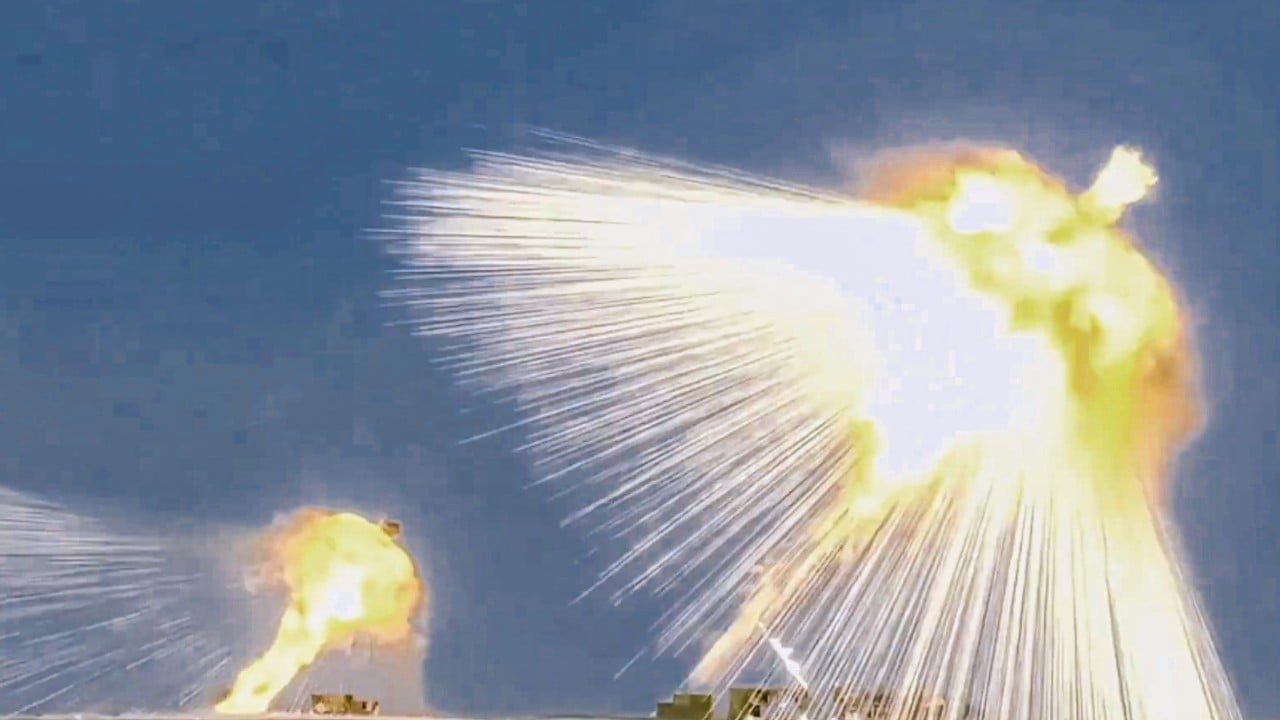
The People's Liberation Army (PLA) has revealed new airburst munitions, dubbed 'Steel Rain,' which detonate mid-air to scatter metal fragments over a wide area. This development, showcased on the PLA-affiliated China Military Bugle social media channel on Sunday, provides insights into potential tactics for its long-range rocket artillery in a conflict over Taiwan. The footage depicts rockets fired from the PHL-191 system detonating above a desert training ground, blanketing the area with high-speed shrapnel. This demonstration suggests a focus on area denial or suppression capabilities, potentially aimed at overwhelming Taiwanese defenses or disrupting troop movements.
The PLA's demonstration of 'Steel Rain' airburst munitions highlights a potential shift towards area saturation and suppression tactics in its operational planning for Taiwan. This technology could be intended to neutralize dispersed or entrenched targets, offering a psychological and physical deterrent. From a strategic perspective, such capabilities aim to reduce the need for precision strikes against hardened positions, potentially influencing the perceived cost and risk calculus for both sides. The development also underscores the ongoing technological competition in precision and area-effect weaponry within the region, prompting consideration of counter-strategies focused on survivability and dispersion.
AI-generated to prompt reflection — not editorial opinion, not advice, not a statement of fact. How this works.