Planetary Gravitational Influence: Clearing Orbits 180 Degrees Away
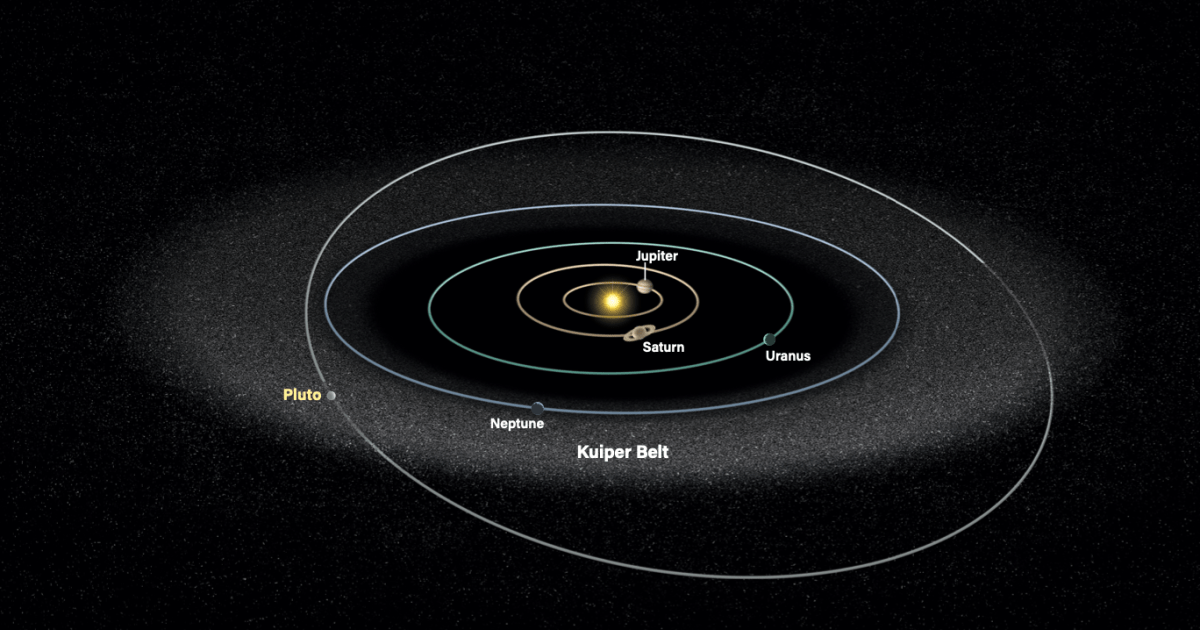
The question arises regarding how planets, according to NASA's definition, clear objects from their orbital paths, specifically those located 180 degrees away. NASA specifies that a celestial body qualifies as a planet if its gravitational pull is strong enough to have cleared its orbital neighborhood of other objects of comparable size. While it is understandable how a planet's gravity can influence and remove objects in close proximity, the mechanism by which it affects objects on the opposite side of its orbit remains a point of inquiry. This phenomenon highlights the pervasive nature of a planet's gravitational field, extending its influence across its entire orbital path. The query suggests a need for a more detailed explanation of orbital dynamics and gravitational interactions in planetary formation and classification.
The query probes a fundamental aspect of planetary dynamics and the IAU's definition of a planet, which hinges on gravitational dominance within an orbit. While a planet's gravity directly influences objects in its immediate vicinity, its influence extends throughout its orbital path due to the nature of gravitational fields. Objects on the opposite side of an orbit are not directly 'pushed' away but are subject to the planet's gravitational pull over time, influencing their own orbital trajectories. This can lead to their eventual ejection from the orbit, capture by the planet, or collision, depending on their initial conditions and the planet's gravitational perturbations. Understanding this requires considering the cumulative effects of gravity over extended periods and the complex interactions within a solar system's gravitational architecture.
AI-generated to prompt reflection — not editorial opinion, not advice, not a statement of fact. How this works.