Plant Photosystem Supercomplex Structures Revealed
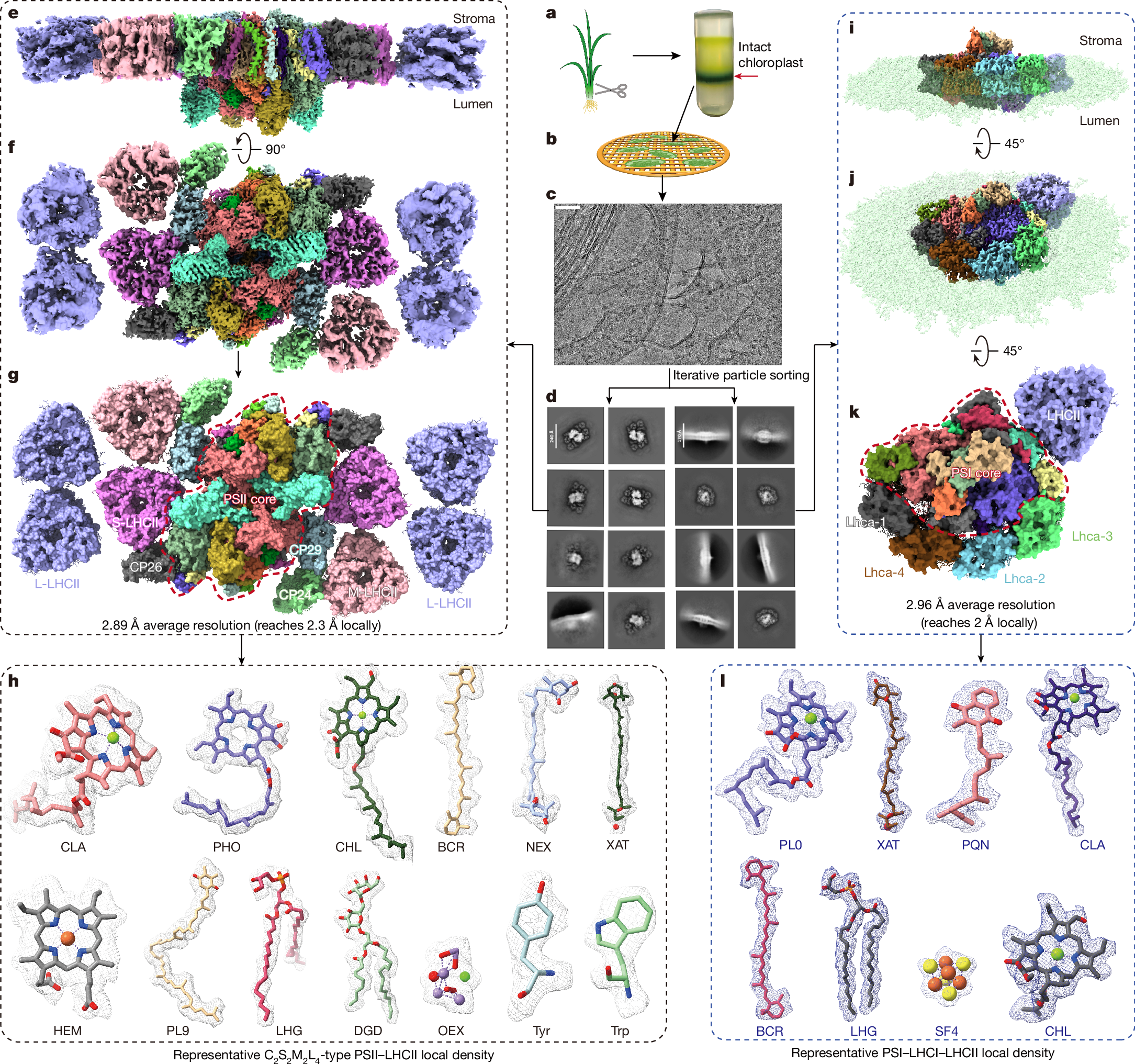
Researchers have successfully determined the in situ structures of plant photosystem supercomplexes. These supercomplexes are crucial for photosynthesis, the process by which plants convert light energy into chemical energy. Understanding their precise architecture is vital for comprehending the efficiency and mechanisms of light harvesting and energy transfer within plant cells. The study provides unprecedented detail on how these molecular machines are organized within their native cellular environment. This detailed structural information can pave the way for future research aimed at improving photosynthetic efficiency in crops. Such advancements could have significant implications for global food security and sustainable agriculture. The findings offer a foundational understanding that may unlock new avenues for bioengineering and crop improvement strategies.
This research offers a fundamental advancement in understanding the molecular machinery of photosynthesis. By elucidating the in situ structures of plant photosystem supercomplexes, scientists gain critical insights into the efficiency of light capture and energy conversion. This knowledge is foundational for future bioengineering efforts aimed at enhancing crop yields, potentially addressing global food security challenges. The structural details provide a basis for rational design in developing more efficient photosynthetic systems, a key area of focus in the context of sustainable agriculture and the broader bioeconomy over the next decade. Understanding these complex biological systems can inform strategies for optimizing energy capture in both natural and artificial photosynthetic processes.
AI-generated to prompt reflection — not editorial opinion, not advice, not a statement of fact. How this works.