Plastic strap removed from injured shark in Fernando de Noronha
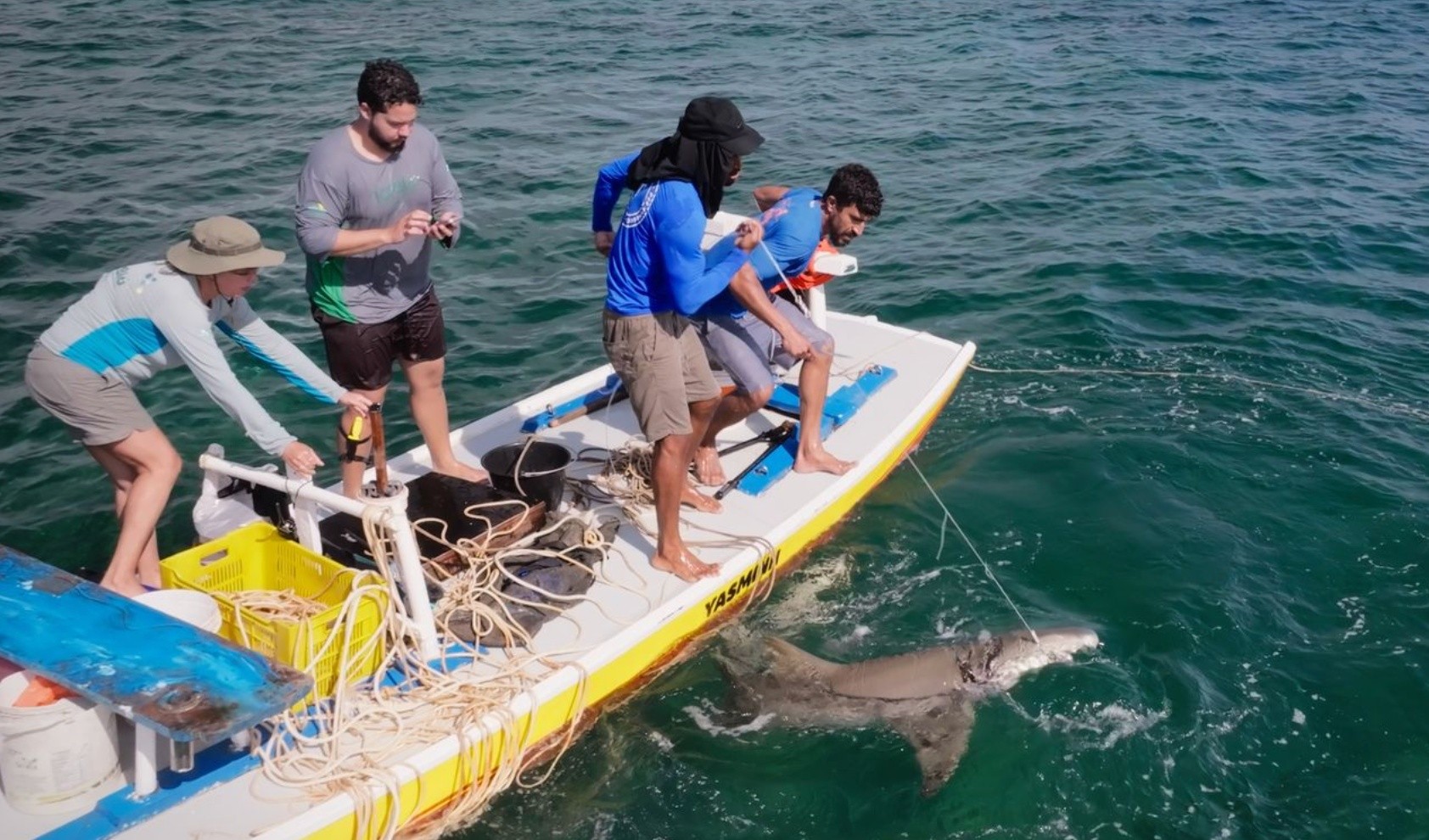
A multi-agency task force successfully removed a plastic strap from an injured lemon shark on Friday, March 31st, at Boldró Beach in Fernando de Noronha. The strap was found near the shark's head, causing a wound to its skin. The rescue operation involved local residents, researchers from the Sharks and Rays Project and Ecotuba Project (affiliated with the Federal Rural University of Pernambuco - UFRPE), and staff from the Chico Mendes Institute for Biodiversity Conservation (ICMBio). For three days, the teams conducted dives and used drones to monitor the area and locate the specific shark.
Visitor guide José Martins was instrumental in identifying the affected animal and leading the sea operation, supported by a raft. Drones were used from the beach and Boldró Lookout to aid in locating the shark. Project coordinator Fábio Borges explained the challenge of identifying the correct shark among others of the same species to avoid misidentification. After three days of effort, the shark was safely captured, brought to a support vessel, had the strap removed, and was then released.
Martins described the capture as difficult, requiring patience and direct intervention with a line and bait. Researchers, including UFRPE's Mariana Rêgo, praised the operation for its importance to animal conservation and the significant mobilization of residents and institutions. Rêgo highlighted the value of community involvement and the collaborative spirit, emphasizing the privilege of learning from and sharing work with the local population. Fábio Borges expressed satisfaction with the collective effort, underscoring the importance of each participant's role in achieving a balanced marine environment.
This event highlights the pervasive impact of plastic pollution on marine wildlife, even in protected areas. The successful rescue demonstrates the effectiveness of community-led conservation efforts and inter-institutional collaboration when faced with immediate threats to individual animals. However, the incident underscores a systemic challenge: the ongoing presence of plastic debris in marine ecosystems requires upstream solutions, including improved waste management, reduced plastic production, and enhanced public awareness campaigns. Future efforts should focus on preventing such entanglements through stricter regulations on plastic use and more comprehensive cleanup initiatives, rather than relying solely on reactive rescue operations. The long-term health of marine populations depends on addressing the root causes of pollution.
AI-generated to prompt reflection — not editorial opinion, not advice, not a statement of fact. How this works.