Plastic Water Sachets Persist in Dakar Despite Senegal's Ban
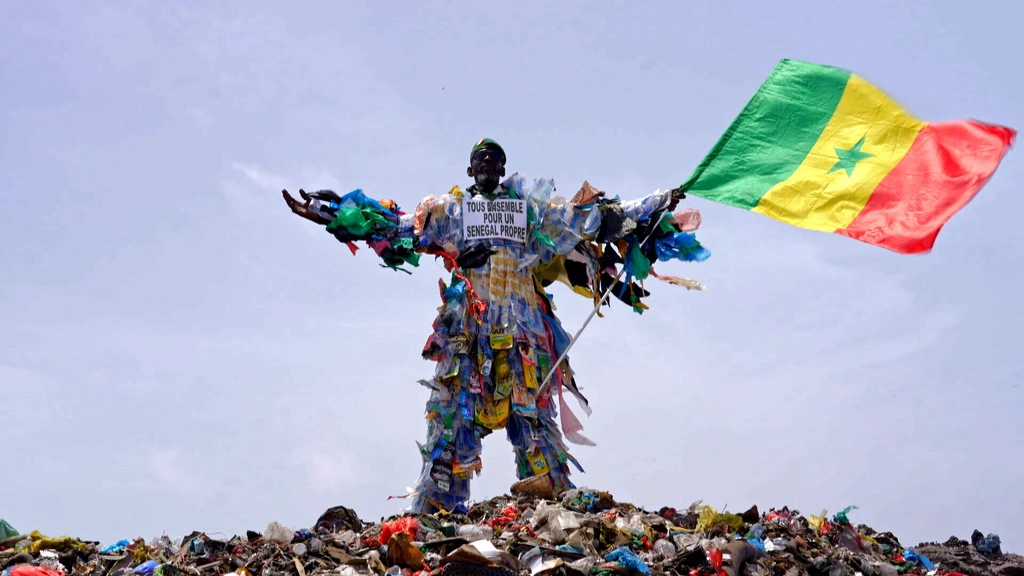
Dakar's picturesque Hann Bay is suffering from severe plastic pollution, a problem endemic to West African coastal regions where approximately 80% of plastic waste is poorly managed, according to the World Bank. Rapid urbanization, population growth, and the proliferation of cheap, single-use plastics are overwhelming waste management systems in many coastal cities. Waste is often inadequately collected, ending up in open dumps, being burned, or polluting rivers and the sea. Modou Fall, known as 'Plastic Man,' has become a prominent environmental activist, donning a suit made of plastic bags to advocate for a cleaner Senegal. He engages with the public, organizes clean-up drives, conducts educational programs for schools, and lobbies the government on the plastic issue. Fall describes plastic water sachets, sold for about 80 cents and containing 300-500 milliliters, as "assassins" due to their environmental persistence, taking up to 400 years to decompose. He warns that these sachets break down into microplastics, harming marine life and posing risks to human health through the food chain. Despite Senegal's 2020 ban on single-use plastics, including these sachets, enforcement is reportedly weak, with banned items still widely available. Fall alleges that the water sachets are produced without permits, and the lack of oversight creates environmental and health hazards. Although police recently dismantled over ten illegal production facilities near Dakar, sales continue, driven by economic factors and job creation. Fall insists that the government must uphold the law, reminding officials that no one is above it. The World Bank emphasizes that tackling plastic pollution requires collaboration among governments, businesses, and citizens. Initiatives are underway in Senegal to address the problem more broadly, with various stakeholders convening to find solutions. Modou Fall has demonstrated progress by transforming a former landfill in Guédiawaye into a green community space, where he conducts workshops and repurposes plastic waste, such as using old water bottles as plant pots, to promote a circular economy.
The persistence of single-use plastic water sachets in Dakar, despite a national ban, highlights a common challenge in developing economies: the tension between environmental regulations and immediate socio-economic needs. While the ban aims to curb pollution, the continued availability of these sachets suggests that enforcement mechanisms are insufficient, or that alternative, affordable hydration options are lacking for a significant portion of the population. The economic incentives, including job creation in their production and sale, present a complex governance dilemma. Addressing this issue effectively will likely require a multi-pronged approach that not only strengthens regulatory enforcement but also invests in accessible, sustainable alternatives and robust waste management infrastructure. Future strategies must consider the long-term health and environmental costs against the short-term economic benefits, fostering a transition towards a circular economy that provides both ecological sustainability and economic opportunity.
AI-generated to prompt reflection — not editorial opinion, not advice, not a statement of fact. How this works.