Pluto's Crater Walls Show Evidence of City-Sized Landslides
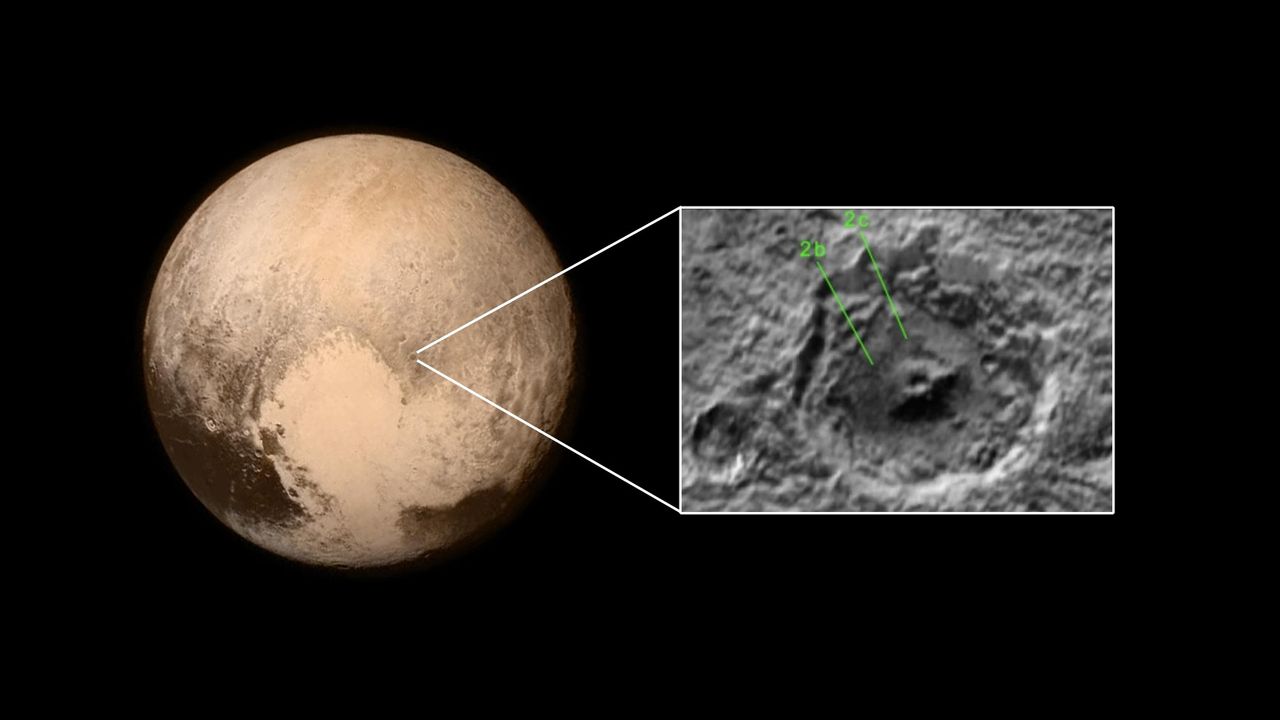
Astronomers have identified evidence of massive landslides occurring on the surface of Pluto. These geological events took place on the steep walls of craters on the dwarf planet. The scale of these landslides is significant, with some estimated to be large enough to completely bury entire cities on Earth. The findings are based on analysis of imagery captured by NASA's New Horizons mission. This mission provided unprecedented close-up views of Pluto and its moons. The discovery adds to our understanding of the geological activity and processes shaping celestial bodies in the outer solar system. Studying these events on Pluto can offer insights into the dynamics of icy worlds.
The discovery of large-scale landslides on Pluto highlights the complex geological processes active even on distant, seemingly inert celestial bodies. This finding underscores the value of deep-space exploration missions like New Horizons in revealing unexpected planetary dynamics. Understanding the forces driving these events on Pluto, such as cryovolcanism or tectonic activity, could inform models of geological evolution for icy moons and dwarf planets throughout the solar system. Such phenomena may be more common than previously assumed, suggesting a need to reassess the potential for dynamic geological activity across a wider range of extraterrestrial environments.
AI-generated to prompt reflection — not editorial opinion, not advice, not a statement of fact. How this works.