PM Rahman Meets Alliance Partners to Discuss Governance and Future Strategy
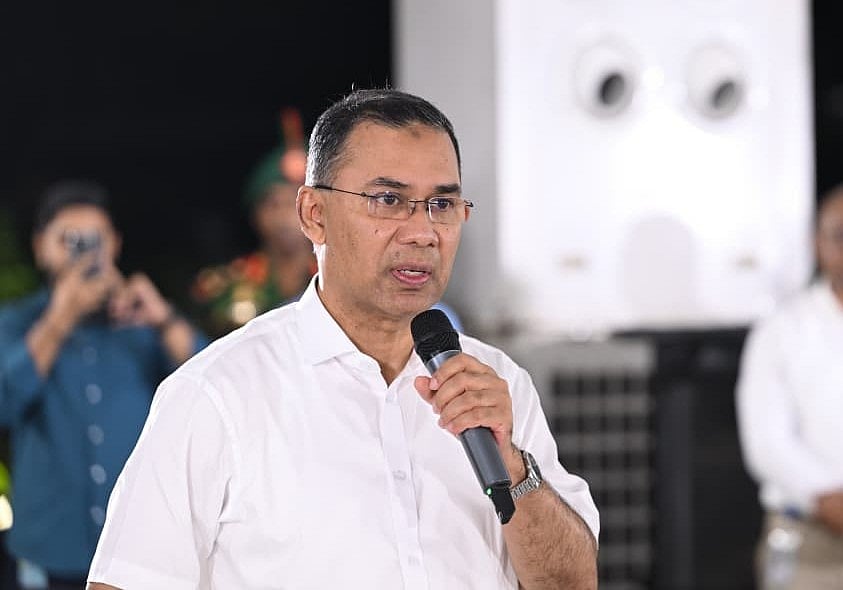
Prime Minister Tareq Rahman, also the chairman of the BNP, held his first formal meeting with leaders of parties allied in the simultaneous movement, five months after forming the government. The nearly 90-minute session at the state guesthouse Jamuna on Monday evening focused on government operations, coordination with allies, future political programs, and fulfilling campaign promises. The meeting was organized to incorporate allies' views into governance and strengthen their long-standing political alliance, addressing dissatisfaction among some parties over the limited inclusion of three allied leaders in the government, despite the BNP's prior promise of a 'national government'.
Attendees included State Minister for Planning Junaid Saki, State Minister for Expatriates' Welfare and Overseas Employment Nurul Haq, and State Minister for Primary and Mass Education Bobby Hajjaj, alongside other key figures from various allied parties. Prominent BNP leaders, including Secretary General and Minister of Local Government Mirza Fakhrul Islam Alamgir, and Minister of Finance and Planning Amir Khosru Mahmud Chowdhury, were also present. Notably, the Jatiya Samajtantrik Dal (JSD) led by ASM Abdur Rob did not attend, citing concerns that separate political meetings before establishing national consensus on issues like the July Charter and state reform could create confusion. Jamiat Ulema-e-Islam, though invited, also abstained for strategic reasons, indicating a desire to participate in broader national dialogues initiated by the government. The meeting also touched upon the perceived lack of visible ground-level political activity by the BNP and its allies since forming the government, and criticisms regarding the implementation of the July Charter and state reform. Some allies expressed concerns about the BNP adopting an "alone we go" policy in crucial decisions, leading to distance and uncertainty within the alliance.
This meeting signifies a crucial juncture for the governing coalition, moving beyond initial post-election power distribution to address the practicalities of governance and alliance cohesion. The Prime Minister's initiative to solicit input from coalition partners, even after five months, suggests an acknowledgment of the need for broader consensus and a potential recalibration of strategies to manage internal dissent. The absence of certain key allies and their stated reasons highlight underlying tensions regarding political strategy and reform agendas, indicating that the "national government" promise may still be a point of contention. The Prime Minister's commitment to regular consultations and the implementation of the "July Charter" signals an intent to bridge these gaps, but the success will hinge on tangible actions and equitable power-sharing. The current political landscape, marked by economic challenges and institutional rebuilding, demands a unified front, yet the divergent expectations among allies present a complex governance puzzle for the next decade.
AI-generated to prompt reflection — not editorial opinion, not advice, not a statement of fact. How this works.