PM Shehbaz Sharif Orders Committee to Review PML-N Lawmakers' Welfare Suggestions for Gilgit-Baltistan
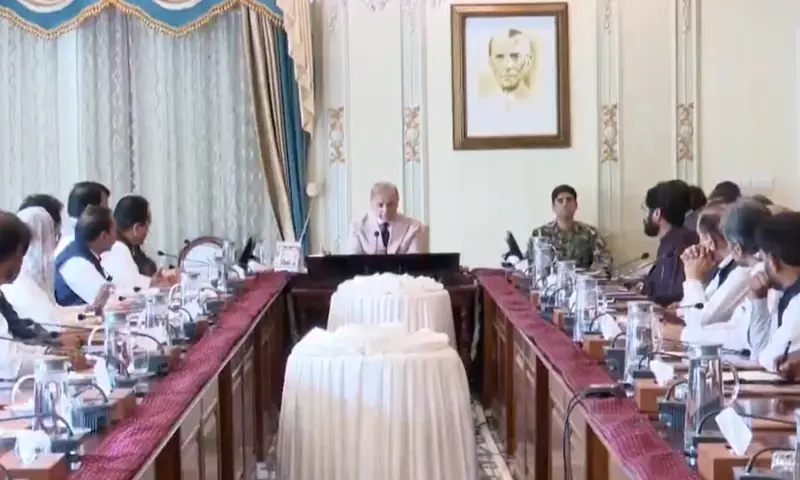
Prime Minister Shehbaz Sharif has directed the formation of a committee to review welfare suggestions from Pakistan Muslim League-Nawaz (PML-N) lawmakers representing Gilgit-Baltistan (GB). This directive came during a meeting in Islamabad with PML-N members of the GB Assembly, emphasizing the critical need for effective communication between the federal government and GB leadership. The Prime Minister's Office (PMO) stated that the development and progress of GB are top priorities for the federal government. The meeting included Deputy Prime Minister Ishaq Dar, Information Minister Attaullah Tarar, Minister for GB and Kashmir Affairs Amir Muqam, and PM’s Adviser on Political Affairs Rana Sanaullah. Prime Minister Sharif highlighted that elected assembly members provide direct insight into the region's issues and priorities, underscoring a shared objective to serve the people and improve their lives. The committee will be chaired by Deputy Prime Minister Dar, with Ministers Muqam and Sanaullah as members, tasked with reviewing suggestions and presenting a report. Special attention is being focused on enhancing infrastructure, communications, energy, education, health, tourism, and employment opportunities in GB. The government plans to leverage the region's natural resources and tourist destinations to bolster the local economy. Key priorities include providing quality education, modern technical training, and dignified employment for the youth to foster national development. Four cadet schools are nearing completion and expected to start classes next year. Additionally, a 100-megawatt solar energy project is progressing rapidly, and all resources are being mobilized for timely completion of development projects. An early warning system for climate change and glaciers has also been installed to alert locals about potential disasters and adverse weather.
The Prime Minister's directive to form a committee for reviewing legislative suggestions from regional lawmakers underscores a governance strategy focused on incorporating local input into federal policy for Gilgit-Baltistan. This approach aims to enhance the perceived legitimacy and effectiveness of development initiatives by demonstrating responsiveness to elected representatives. The emphasis on infrastructure, education, and economic development, particularly through leveraging natural resources and tourism, aligns with common strategies for regional uplift. The inclusion of specific projects like solar energy and cadet schools indicates a focus on tangible outcomes. From a systems perspective, the success of these initiatives will depend on inter-agency coordination, resource allocation, and the long-term sustainability of projects beyond political cycles, especially given the region's unique geographical and environmental context. The formation of this committee may also be viewed through the lens of inter-party dynamics, particularly in light of the PPP and PML-N forming a coalition government in GB, suggesting a coordinated effort to manage regional governance.
AI-generated to prompt reflection — not editorial opinion, not advice, not a statement of fact. How this works.