PML-N Wins 9 of 13 Seats in AJK Mirpur Division Elections Amidst Unofficial Results
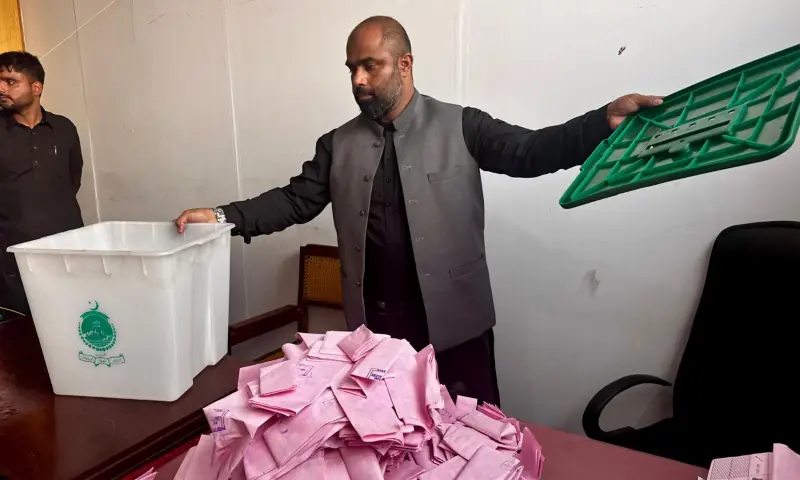
The Pakistan Muslim League-Nawaz (PML-N) has secured a significant victory, winning nine out of thirteen constituencies in the Mirpur division of Azad Jammu and Kashmir (AJK) during recent elections. Unofficial results released by the AJK Election Commission on Tuesday indicate the PML-N's dominance across the division. The Pakistan Peoples Party (PPP) managed to win four seats, including the key city of Mirpur. The elections in AJK are being conducted in three phases due to security concerns, with the Mirpur division polls held on Monday. The electoral process was reportedly marred by scuffles, violence, and allegations of rigging, with both the PML-N and PPP accusing each other of electoral malpractice. Notable PML-N victories include constituencies such as Dadyal, Khari Sharif, Barnala, Samahni, Bhimber, Nakyal, Sehnsa, Charhoi, and Khuiratta. In specific races, PML-N's Azhar Sadiq won LA-1 (Mirpur-I) with 15,427 votes against Muhammad Afzal Shahid's 9,832. Waqar Ahmed Noor of PML-N narrowly defeated Chaudhry Pervaiz Ashraf of PPP in LA-5 (Mirpur-I) by 721 votes, receiving 29,821 ballots. Tariq Farooq of PML-N secured LA-7 (Bhimber-III) with 37,613 votes, surpassing former AJK Prime Minister Chaudhry Anwarul Haq, who garnered 25,534 votes. The subsequent phases of the AJK elections are scheduled for August 2 in Muzaffarabad division and August 10 for refugee constituencies and the Poonch division.
The preliminary results from the AJK Mirpur division elections highlight a competitive political landscape where electoral outcomes are influenced by local campaigning and inter-party accusations of malpractice. The staggered election schedule across different divisions suggests ongoing logistical and security considerations that impact the electoral process. As the remaining phases unfold, the focus will be on whether these security concerns and allegations of rigging persist, potentially affecting voter turnout and the perceived legitimacy of the overall election. Understanding the underlying governance structures and the mechanisms for addressing electoral disputes will be crucial in ensuring public trust in the democratic process moving forward.
AI-generated to prompt reflection — not editorial opinion, not advice, not a statement of fact. How this works.