Poland to Erect Monument for Victims of WWII Ukrainian Nationalist Massacres
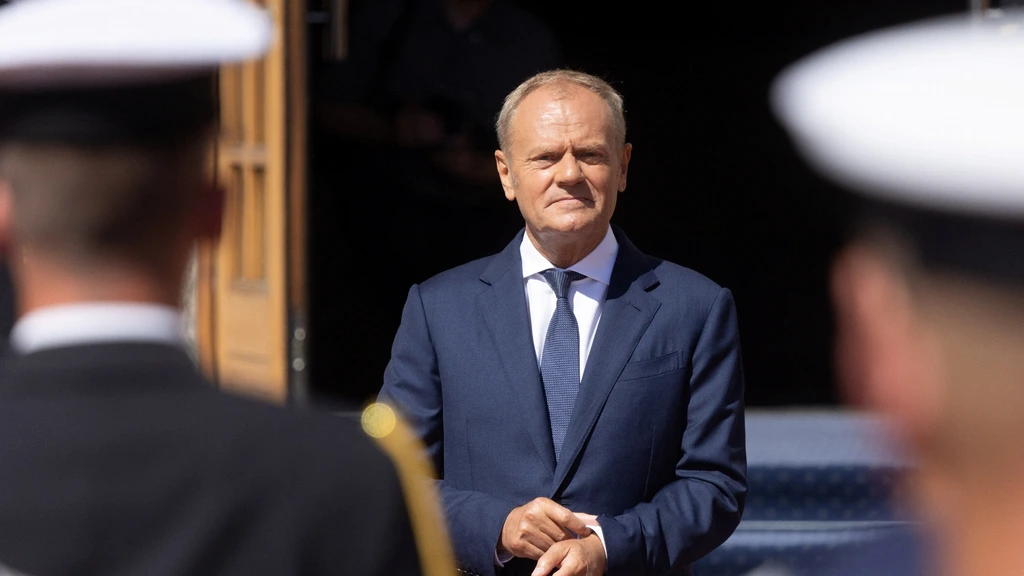
Poland has announced plans to construct a monument in Warsaw to commemorate the victims of massacres carried out by Ukrainian nationalists during World War II. The memorial will feature a wall inscribed with the names of all identified victims and will include an eternal flame. The announcement comes 83 years after ultranationalist members of the Ukrainian Insurgent Army (UPA) attacked Polish civilians in Volhynia, a region in present-day northwestern Ukraine. Estimates suggest that between 50,000 and 100,000 Polish men, women, and children were brutally murdered during these events. Polish Prime Minister Tusk revealed the monument's creation via a social media video, characterizing the killings as "genocide committed by Ukrainian nationalists against Poles and Polish citizens of other nationalities." He emphasized the "joint duty towards their families, the Polish nation, and the Polish state to commemorate them," while also cautioning against using history to incite new animosity. The UPA's later fight against the Soviet Union for Ukrainian independence has led some in Ukraine to still venerate its members as heroes, a sentiment that has historically strained Polish-Ukrainian relations, despite recent improvements since Russia's 2022 invasion of Ukraine. Polish President Nawrocki echoed Tusk's message, stating at a commemoration near the Ukrainian border that the victims must not be forgotten and that the UPA's anti-Soviet actions do not excuse the murders of Polish civilians. Diplomatic tensions recently escalated when Ukrainian President Zelensky awarded an honorary title to a military unit, 'Heroes of the UPA.' In response, Nawrocki revoked Zelensky's highest Polish state award, which had been granted in 2023 for deepening bilateral relations. Subsequently, Zelensky and three other senior Ukrainian officials returned their Polish state decorations.
This development highlights the enduring challenge of reconciling historical grievances with contemporary geopolitical alliances. While Poland's government seeks to honor its victims and acknowledge past atrocities, it must also navigate the complex relationship with Ukraine, a crucial partner in the face of Russian aggression. The UPA's dual legacy—perpetrator of massacres against Poles and a force in Ukraine's independence struggle—creates a deeply sensitive historical narrative. The erection of a monument, coupled with Prime Minister Tusk's call to avoid inciting new hostility, suggests an attempt to balance remembrance with the pragmatic need for unity. However, the recent diplomatic exchanges, including the revocation and return of state awards, indicate that the veneration of UPA figures in Ukraine remains a significant point of contention. This situation underscores the intricate interplay between national memory, identity politics, and international relations, particularly in regions with a shared, yet contentious, history. The long-term implications will depend on how both nations manage these historical sensitivities while pursuing common strategic interests in a volatile geopolitical landscape.
AI-generated to prompt reflection — not editorial opinion, not advice, not a statement of fact. How this works.