Polar Bears Threaten Barnacle Goose Population on Svalbard
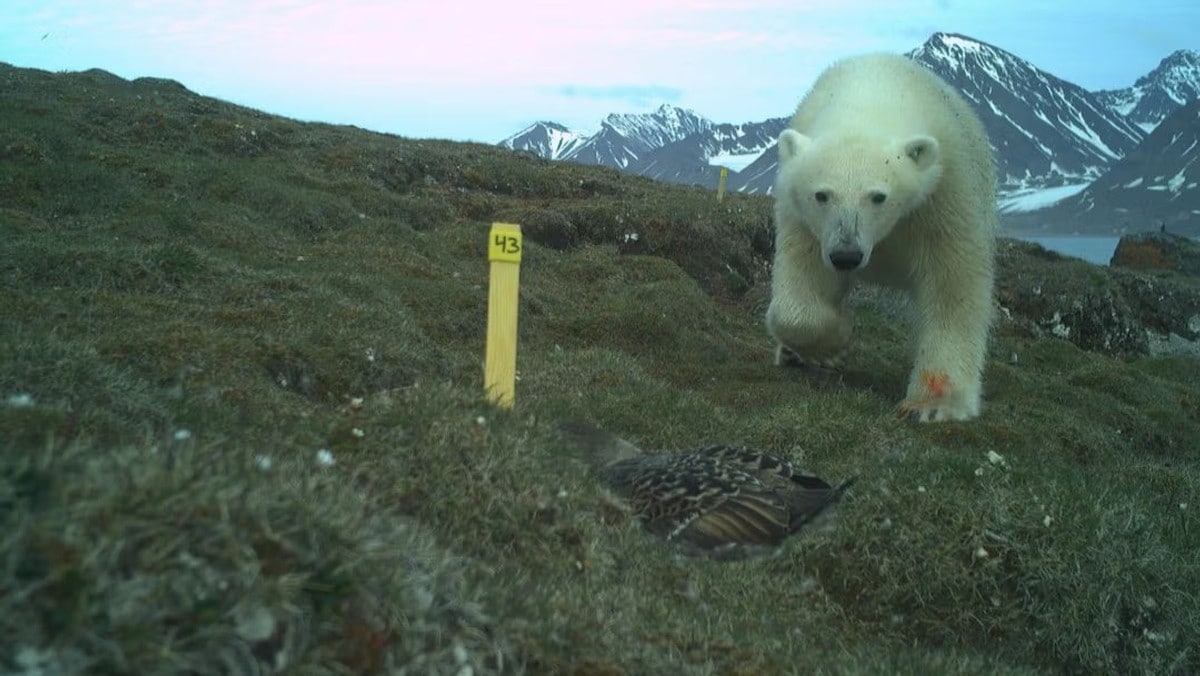
An unprecedented number of polar bears are preying on the eggs of barnacle geese in Kongsfjorden, Svalbard. This surge in predation poses a significant threat to the local goose population. The bears are exploiting the nesting grounds to feed on the eggs, which are a vital food source for the geese during their breeding season. The increased presence of polar bears in this specific area indicates a potential shift in their feeding habits or territorial range. Conservationists are concerned about the long-term impact of this behavior on the ecological balance of the region. The Arctic environment is particularly sensitive, and disruptions to breeding cycles can have cascading effects. Further monitoring is required to understand the full extent of the threat and to develop potential mitigation strategies. The situation highlights the complex interdependencies within the Arctic ecosystem and the challenges faced by wildlife in a changing climate.
The increased predation of barnacle goose eggs by polar bears in Kongsfjorden, Svalbard, illustrates the dynamic and often precarious balance of Arctic ecosystems. As polar bear populations adapt to changing ice conditions, their foraging strategies may shift, leading to increased pressure on terrestrial food sources like bird eggs. This situation underscores the interconnectedness of species and habitats, where changes in one population or environmental factor can have significant ripple effects. From a systems perspective, understanding these evolving predator-prey dynamics is crucial for effective conservation planning. Future ecological resilience will depend on our ability to anticipate and manage such shifts, recognizing that conservation efforts may need to adapt to novel ecological interactions driven by climate change and its cascading impacts.
AI-generated to prompt reflection — not editorial opinion, not advice, not a statement of fact. How this works.