Police Body Cameras Spark Debate on Effectiveness and Transparency
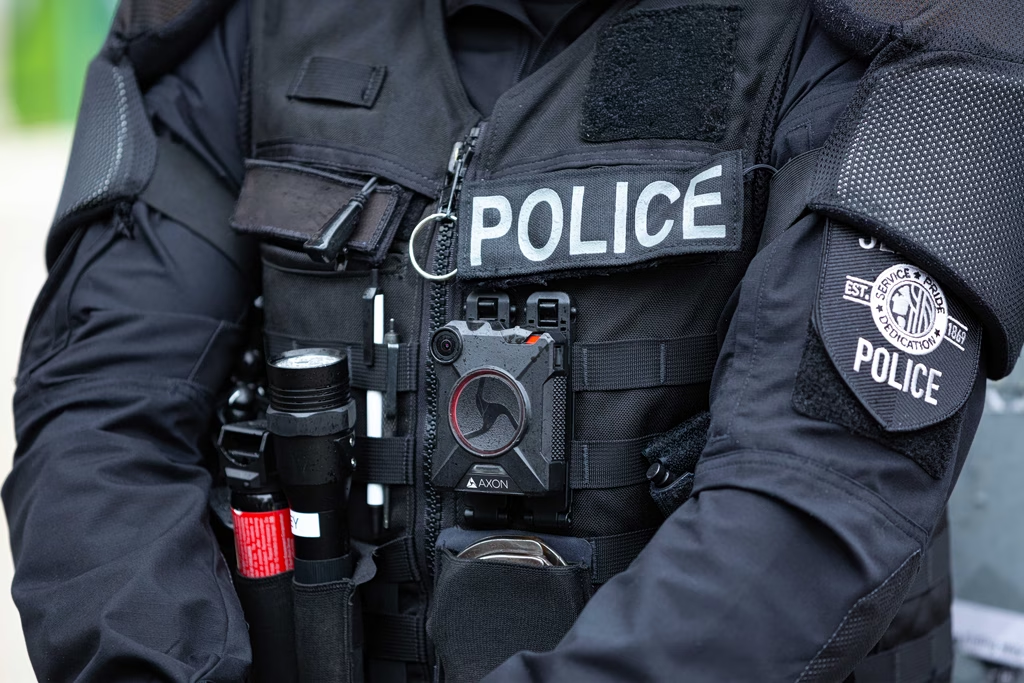
The deployment of cameras on police uniforms, intended to record operational conditions, has ignited a significant debate internationally regarding their effectiveness. Proponents argue that these devices enhance transparency and curb instances of police misconduct. Conversely, critics contend that the implementation of body cameras has not demonstrably led to a reduction in police brutality. The discussion centers on whether these technological tools truly serve their intended purpose of accountability and improved policing practices. Further evaluation is needed to ascertain the tangible impact of body cameras on police behavior and public trust. The ongoing discourse highlights the complexities in assessing the efficacy of such measures in diverse operational environments.
The integration of body-worn cameras by law enforcement agencies represents a technological intervention aimed at enhancing accountability and public trust. While the stated goals of increasing transparency and reducing misconduct are laudable, the observed outcomes suggest a complex interplay of factors influencing police behavior and public perception. The effectiveness of cameras may be contingent on comprehensive policy frameworks, robust data management protocols, and independent oversight mechanisms. Future considerations should explore how these systems can be optimized to achieve their intended benefits, potentially through standardized training, clear guidelines on data access and retention, and continuous evaluation of their impact on community relations and officer conduct, within the evolving landscape of digital surveillance and privacy rights.
AI-generated to prompt reflection — not editorial opinion, not advice, not a statement of fact. How this works.