Police Dog Zeus Discovers 1.2 Tonnes of Marijuana in Hidden Bunker
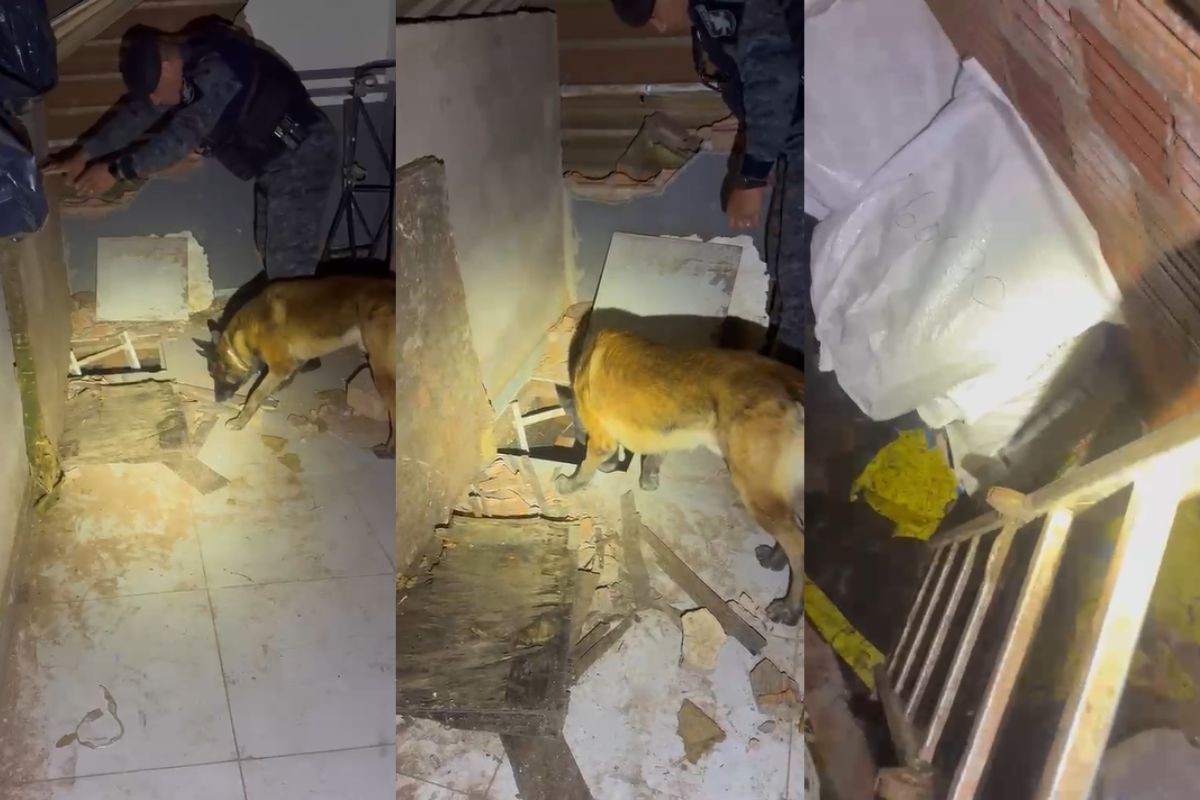
A five-year-old Belgian Malinois named Zeus, a drug-sniffing dog with the Military Police's Shock Battalion Canine Unit, played a crucial role in uncovering a hidden bunker containing 1.2 tonnes of marijuana. The discovery occurred early Tuesday morning in the Jardim Itamaracá neighborhood of Campo Grande, Brazil. Zeus alerted officers to the exact location of the concealed drugs, leading to the seizure of 578 marijuana bricks weighing a total of 1,221.2 kilograms. During the operation, 31-year-old Leandro Larrea da Silva was arrested after claiming responsibility for the contraband. He stated he was holding the drugs temporarily in exchange for payment. Lieutenant Victor Conte, head of the Canine Unit, explained that Zeus is part of a team of 12 drug-sniffing dogs, all undergoing continuous training to maintain readiness. Each dog works with a pair of officers; Zeus's primary handlers are Sergeant Lamboia and Soldier Gineton. The training regimen involves initial socialization at a police kennel, followed by specialized operational training at the Shock Battalion. This includes scent tracking exercises and exposure to various real-world stimuli such as traffic noise and diverse odors to ensure the dogs are well-adapted for duty. The operation began with a tip about a property potentially used for storing stolen motorcycles and drugs. Upon entering the residence with the owner's permission, police, with Zeus's assistance, found a hidden compartment, or bunker, in the yard where the marijuana was stored.
This operation highlights the critical role of specialized canine units in law enforcement's efforts to combat drug trafficking. The sophisticated training and inherent capabilities of dogs like Zeus demonstrate a cost-effective and efficient method for detecting concealed substances, complementing human intelligence and investigative techniques. The successful interdiction of a significant quantity of illicit drugs underscores the ongoing challenges in supply chain security and the adaptive strategies employed by criminal organizations, such as the use of hidden bunkers. Future approaches may involve enhanced technological surveillance alongside traditional methods to further disrupt these networks, while also considering the ethical implications of animal welfare within demanding operational environments.
AI-generated to prompt reflection — not editorial opinion, not advice, not a statement of fact. How this works.