Police investigate truck driver's account after car dragged 700 meters on Dutra highway
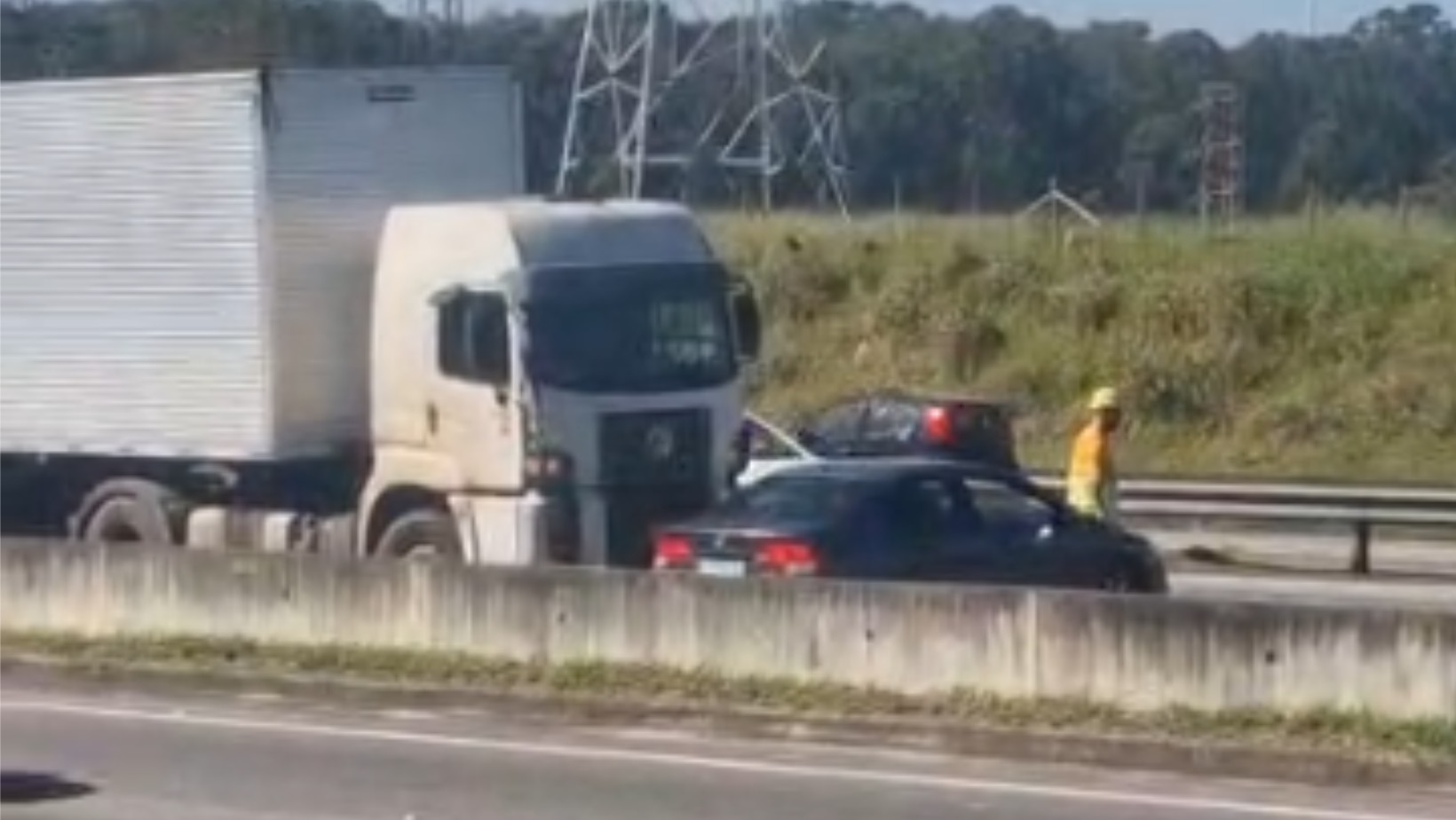
Civil Police are analyzing a truck's tachograph and security camera footage to clarify an incident where a car was dragged approximately 700 meters on the Via Dutra highway in São José dos Campos, São Paulo. The tachograph records crucial data such as speed, distance, and stopping time, which will aid the investigation. The truck driver claims he did not see the car due to a blind spot and that he stopped at a safe location to await assistance. However, the investigating delegate, Thiago Amaral Fonseca, finds this version inconsistent with the accident's dynamics, particularly the extent of the damage to the victim's car. The accident occurred on November 1st around 11 AM when the victim, 83-year-old retiree Maria Auxiliadora de Carvalho, attempted to change lanes due to roadworks. Despite the severe impact that left her car destroyed, she sustained no injuries. Federal Highway Police records reportedly show the truck made only a brief stop after the collision, bypassed a police post without stopping, and the driver did not use the emergency number. The truck driver was questioned by Civil Police on Monday, November 6th, and released as the investigation continues. The driver's defense lawyer stated that the driver informed a concessionaire employee of his intention to move to a safe parking spot due to ongoing road construction, and that he observed the elderly woman was unharmed and using her phone. The highway concessionaire, CCR RioSP, countered that a safe shoulder was available approximately 500 meters from the collision site, making it unnecessary to leave the scene.
The investigation into this incident highlights the critical role of data recorders and surveillance in verifying driver accounts following traffic accidents. The discrepancy between the driver's explanation of a blind spot and the police's assessment of the accident's dynamics, coupled with conflicting information from highway authorities regarding the truck's post-incident behavior, suggests a potential gap between reported actions and observed events. Future road safety systems, potentially incorporating advanced driver-assistance systems with more comprehensive event data recording and immediate communication protocols, could offer clearer insights into such complex scenarios, reducing reliance on potentially subjective human accounts and improving accountability.
AI-generated to prompt reflection — not editorial opinion, not advice, not a statement of fact. How this works.