Police Monitored Berlin Attack Suspect Abdul B. Until Shortly Before Attack
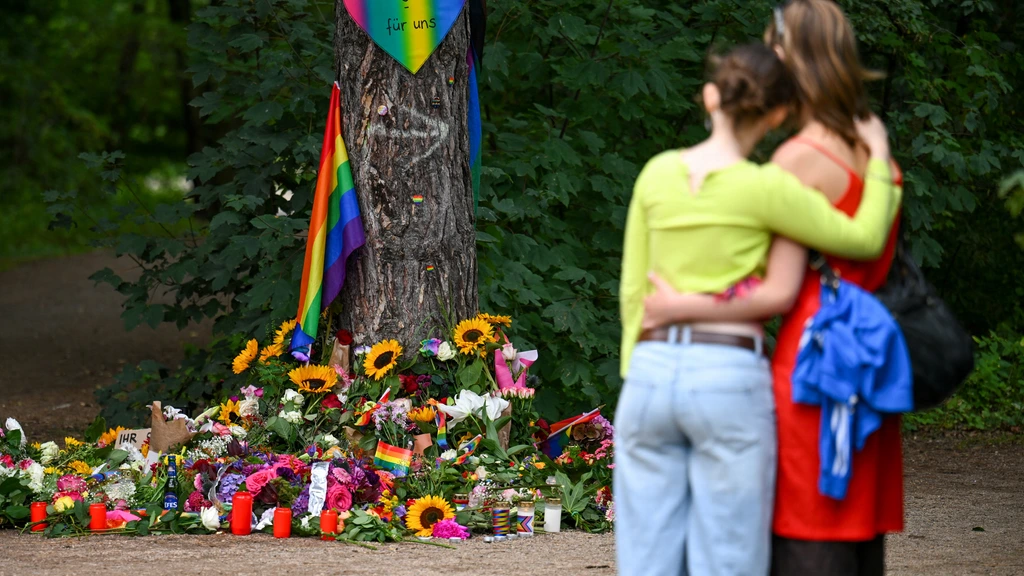
German media reports indicate that Abdul B., the suspect in the recent Berlin attack, was under surveillance by security services until very shortly before the incident. Police had installed a camera outside his residence and filmed him leaving his home on Saturday evening, approximately one hour before the attack occurred. The assault targeted a Pride event in the German capital, resulting in the death of one Polish woman and injuries to 29 others. Authorities are treating the act as an Islamist terrorist offense, and Abdul B. was shot and killed by officers following a manhunt. The surveillance operation, revealed by Süddeutsche Zeitung, NDR, and WDR, began after B.'s release from custody in mid-May. The 21-year-old had previously received a suspended prison sentence for preparing a terrorist act and was conditionally released, requiring participation in a deradicalization program.
Surveillance was reportedly scaled back ten days after his release due to a perceived lack of evidence of planned attacks and limited resources. However, an anti-terrorism team later assessed B. as posing a high risk, categorizing him as 'red.' Despite this assessment, no additional measures were implemented due to differing conclusions from the monitoring officers. While phone and internet monitoring continued, and camera footage from his home was reviewed daily, it remains unclear if officers saw him leave on the night of the attack or reviewed the footage later. Earlier in July, a search of B.'s home was conducted based on camera footage showing him carrying an object resembling a pistol, which turned out to be a toy.
Abdul B. had a history of radicalization, including attempts to join the Islamic State. He was arrested in Lebanon in July 2025 and received a three-month sentence for inciting religious and sectarian conflicts. Upon returning to Berlin after his release, he was arrested at the airport. Prosecutors sought a three-year prison sentence for preparing a "serious act of violence," but he was ultimately given a suspended sentence of one year and ten months, which he was awaiting appeal on while at liberty. The ongoing public discourse in Germany ranges from calls for harsher penalties to critiques of police and judicial execution errors, with some parties linking the incident to immigration.
The revelation of extensive police surveillance on Abdul B. leading up to the Berlin attack raises critical questions about the effectiveness and resource allocation within counter-terrorism operations. The reported scaling back of surveillance despite an "red" risk assessment highlights potential systemic disconnects between intelligence gathering and operational response, possibly influenced by resource constraints. This situation underscores the complex challenge of balancing individual liberties with public safety, particularly when dealing with individuals flagged as high-risk but lacking immediate, concrete evidence of imminent threats. The incident's timing amidst political campaigns in Germany intensifies scrutiny, potentially influencing policy debates on security, immigration, and law enforcement powers, while also risking exploitation by populist narratives. Future considerations should focus on improving inter-agency communication, refining risk assessment protocols, and ensuring adequate resources for sustained monitoring when credible threats are identified, to prevent similar tragedies and avoid politicization of security failures.
AI-generated to prompt reflection — not editorial opinion, not advice, not a statement of fact. How this works.