Police Pepper Spray Incident at DF Bar Leaves Patrons Unwell
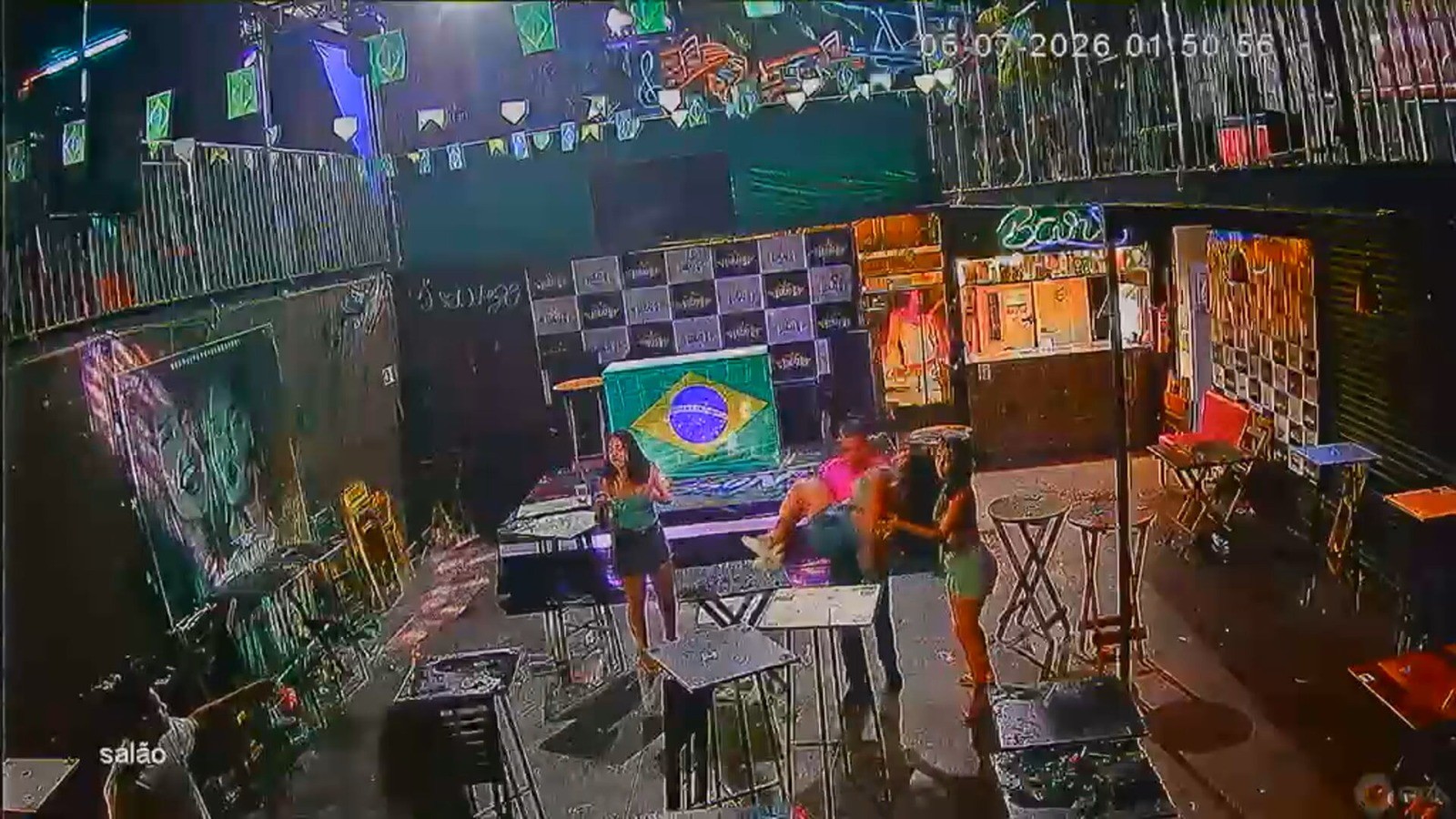
Two women fell ill following an intervention by the Military Police (PM) at a bar in Itapoã, Distrito Federal, on Sunday morning, May 5th. The bar's owner, Francisco Barbosa da Silva, stated that police officers used pepper spray both outside and inside the establishment while it was closing down around 12:40 AM. He reported that an employee was affected by the spray and required treatment at a local UPA, and that two female patrons fainted during the incident. Videos recorded by witnesses and internal bar security cameras appear to show the chaotic moments, including one woman on the ground and another being carried away, as well as a woman fainting. The Military Police, in a statement, claimed their team was patrolling the area when they encountered a "generalized fight" inside the bar. According to the police, their orders to cease the aggression were ignored by the individuals involved. Citing a numerical disadvantage with only four officers against a crowd, the police stated they deployed a "tear gas dispenser" to disperse the commotion. The PM also noted that social media videos present only a partial view of the event and that the bar has a history of fights and disturbances among its patrons. No arrests were made as the individuals involved dispersed before they could be identified. The police further clarified that the use of tear gas is considered an intermediate response, employed to de-escalate mutual aggression and ensure public safety, adhering to principles of necessity and proportionality. They also highlighted the bar's recurring issues with altercations, leading to frequent patrols to prevent escalation.
The incident at the Itapoã bar highlights a recurring tension between law enforcement's mandate to maintain public order and the rights of citizens to assemble and conduct business. The Military Police's justification of using tear gas due to a "generalized fight" and numerical disadvantage suggests a systemic challenge in de-escalating volatile situations with limited resources. However, the reported effects on patrons, including fainting and requiring medical attention, raise questions about the proportionality and necessity of the force used within a private establishment. Future considerations for law enforcement in such environments might involve enhanced de-escalation training, improved crowd management strategies, and clearer protocols for engaging with businesses during operational closures, especially when patrons may be affected by less-lethal crowd control measures. The bar's alleged history of disturbances also points to a broader community issue that requires multi-faceted solutions beyond immediate police intervention.
AI-generated to prompt reflection — not editorial opinion, not advice, not a statement of fact. How this works.