Police Soldier and Law Student Arrested with Over 100kg of Drugs in Salvador Mall Parking Lot
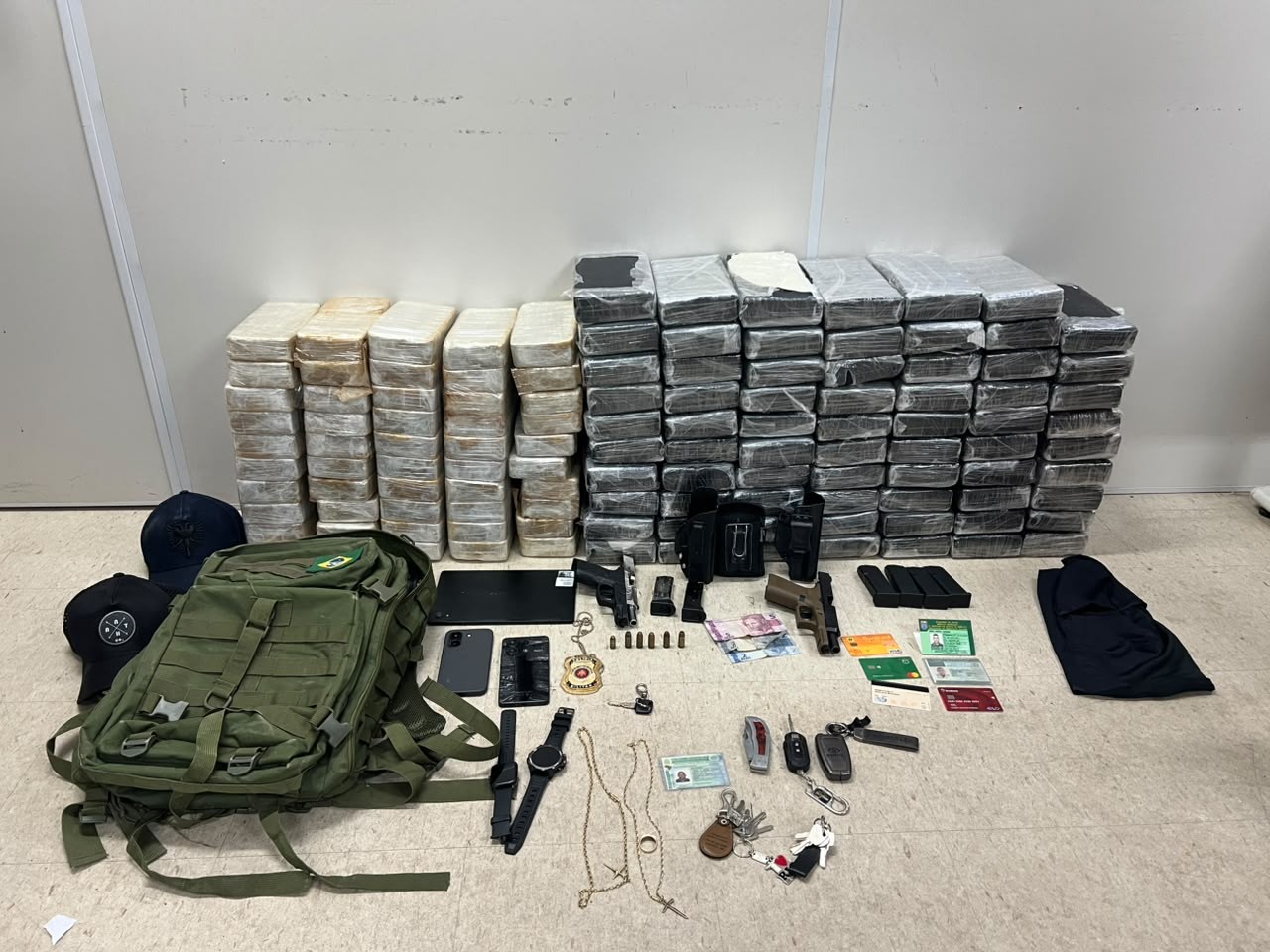
A police soldier and a law student were arrested on Wednesday, May 22nd, with over 100 kilograms of drugs in the parking lot of the Salvador Norte Shopping mall in Salvador, Bahia, Brazil. The seizure was conducted by teams from Rondesp RMS and the Department of Homicide and Personal Protection (DHPP). Authorities discovered 69 kilograms of cocaine and 50 kilograms of crack hidden in a Strada pickup truck. The arrested individuals were identified as soldier Elder Lourenço Santos Pereira, assigned to the Euclides da Cunha Battalion, and Renan Santana Carvalho. Carvalho presented an expired official Army document upon identification. Initially, both denied any connection to the vehicle containing the drugs, attempting to evade the police. However, security teams had been monitoring them since their arrival at the parking lot. Confronted with gathered evidence, they admitted the illicit material was in the truck. In addition to the drugs, two pistols (one per suspect), magazines, ammunition, cell phones, and other items were confiscated from the vehicle and the suspects. All confiscated items and the suspects were taken to the DHPP for registration and further investigation into the origin and destination of the drugs, as well as the suspects' involvement in the criminal scheme. Inquiries are ongoing regarding any administrative procedures initiated against the soldier by the Military Police.
This incident highlights potential systemic vulnerabilities within law enforcement and educational institutions, where individuals entrusted with upholding the law and pursuing legal careers are implicated in significant drug trafficking. The apprehension of a police soldier and a law student suggests a need to examine recruitment, vetting, and ongoing monitoring processes within both the police force and the legal education system. It raises questions about the incentives that might lead individuals in positions of authority or with promising futures to engage in high-risk criminal activities. Further investigation into the broader network and the potential for corruption or external coercion is crucial for understanding and mitigating such occurrences, emphasizing the importance of robust oversight mechanisms and ethical reinforcement across all levels of public service and education.
AI-generated to prompt reflection — not editorial opinion, not advice, not a statement of fact. How this works.