Polish Law and Justice Party Splits as Dozens of Lawmakers Depart
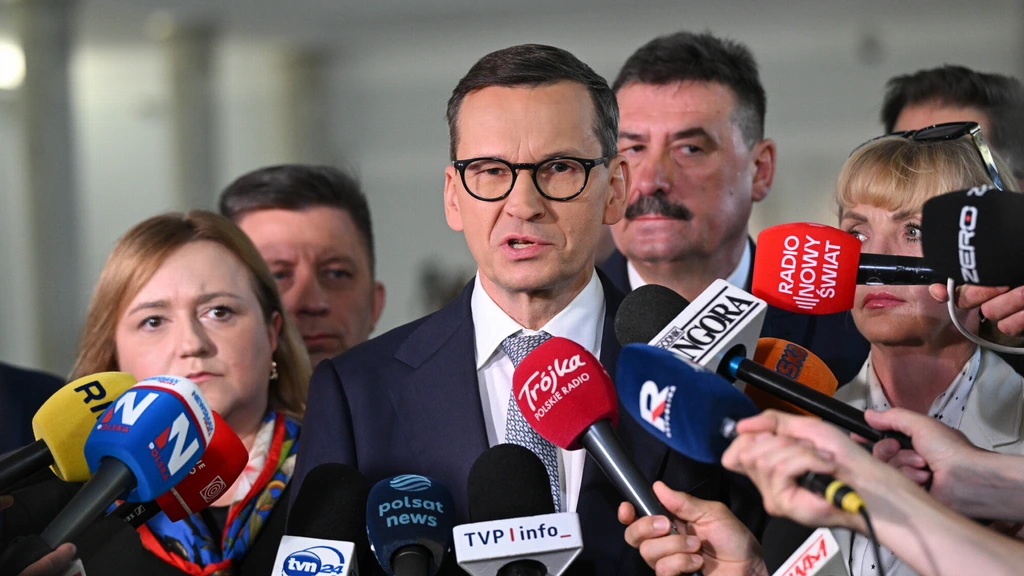
Poland's conservative-nationalist Law and Justice (PiS) party is experiencing a significant internal division, with approximately forty members of parliament, one senator, and three MEPs reportedly leaving the party. This exodus is driven by a faction seeking a more moderate political direction, contrasting with the stance of party leader Jaroslaw Kaczynski. The dissenters, led by former Prime Minister Mateusz Morawiecki, have formed an association to discuss the party's future course. Tensions escalated when Kaczynski demanded all members sign a loyalty pledge and disassociate from other political groups by a specific deadline. Morawiecki and his supporters refused, leading to their expulsion, though Kaczynski claims they resigned voluntarily. He stated around thirty MPs resigned, a figure contested by MEP Piotr Müller, who asserts no one initiated their resignation. PiS, which governed from 2015 to 2023, held 186 out of 460 seats in the Sejm, Poland's parliament. The current government, led by Prime Minister Tusk, aims to reverse policies enacted by PiS, particularly concerning the judiciary and the rule of law. However, these efforts face challenges, including obstruction from the current conservative nationalist Prime Minister Karol Nawrocki, who, despite being officially independent, is linked to PiS. The future plans of Morawiecki and the departing lawmakers remain unclear, with no announcement yet regarding a potential new party. The split further fragments the right-wing political landscape in Poland, forcing Kaczynski to reconsider his strategy after attempting to appeal to more right-wing voters with his choice of Przemyslaw Czarnek as a prime ministerial candidate.
The internal schism within Poland's Law and Justice party highlights a common challenge for established political movements: balancing ideological purity with broader electoral appeal and adapting to shifting political landscapes. The departure of a significant bloc of lawmakers, led by a former prime minister, suggests a fundamental disagreement over the party's strategic direction and its perceived extremism. This fragmentation could weaken PiS's influence, particularly as the current government seeks to undo its legacy. From a governance perspective, the event underscores the inherent tension between party discipline and the democratic imperative for diverse viewpoints within a political body. As Poland navigates its post-PiS era, the ability of both the incumbent government and the fractured opposition to forge stable coalitions and implement their agendas will be crucial. The long-term implications may involve a recalibration of Poland's political center and a redefinition of conservative-nationalist politics in the region.
AI-generated to prompt reflection — not editorial opinion, not advice, not a statement of fact. How this works.