Polish Opposition Fractures: Ex-PM Morawiecki Forms New Faction
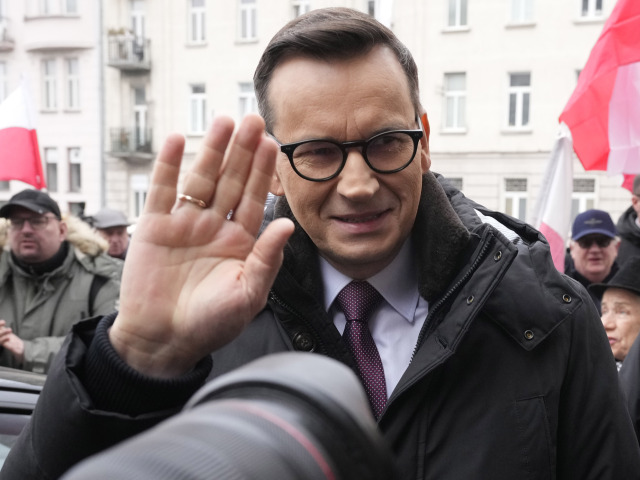
Former Polish Prime Minister Mateusz Morawiecki announced the formation of a new parliamentary faction today, comprising 40 lawmakers. This development follows a significant split within the Law and Justice (PiS) party concerning the future direction of the main Polish opposition force. The move indicates a deepening division within the party, potentially altering the landscape of Polish politics. Morawiecki's new faction represents a substantial bloc of legislators, signaling a challenge to the established leadership within the PiS party. The exact reasons for the internal discord and the specific policy disagreements driving this schism are central to understanding the implications of this political realignment. The creation of this separate faction by Morawiecki and his supporters suggests a divergence in strategic vision for the party's role in opposition. This event marks a critical moment for the PiS, as it navigates internal conflicts and seeks to maintain its influence in Polish political discourse. The long-term consequences for the party's unity and electoral prospects remain to be seen.
The fragmentation of the Law and Justice (PiS) party, evidenced by former Prime Minister Mateusz Morawiecki forming a new faction with 39 other lawmakers, highlights internal governance challenges within major political organizations. Such divisions often stem from differing strategic priorities, leadership succession disputes, or ideological drift, impacting a party's ability to present a unified front. In the context of evolving political landscapes and the increasing influence of digital communication, parties must adapt their internal structures to manage diverse factions and maintain cohesion. The emergence of distinct parliamentary groups can lead to shifts in legislative dynamics and electoral strategies, prompting a re-evaluation of coalition possibilities and opposition effectiveness. This event underscores the importance of robust internal party mechanisms for consensus-building and long-term strategic planning, particularly as political actors navigate the complexities of the coming decade.
AI-generated to prompt reflection — not editorial opinion, not advice, not a statement of fact. How this works.