Political Affiliation Skews Inflation Perception, Study Finds
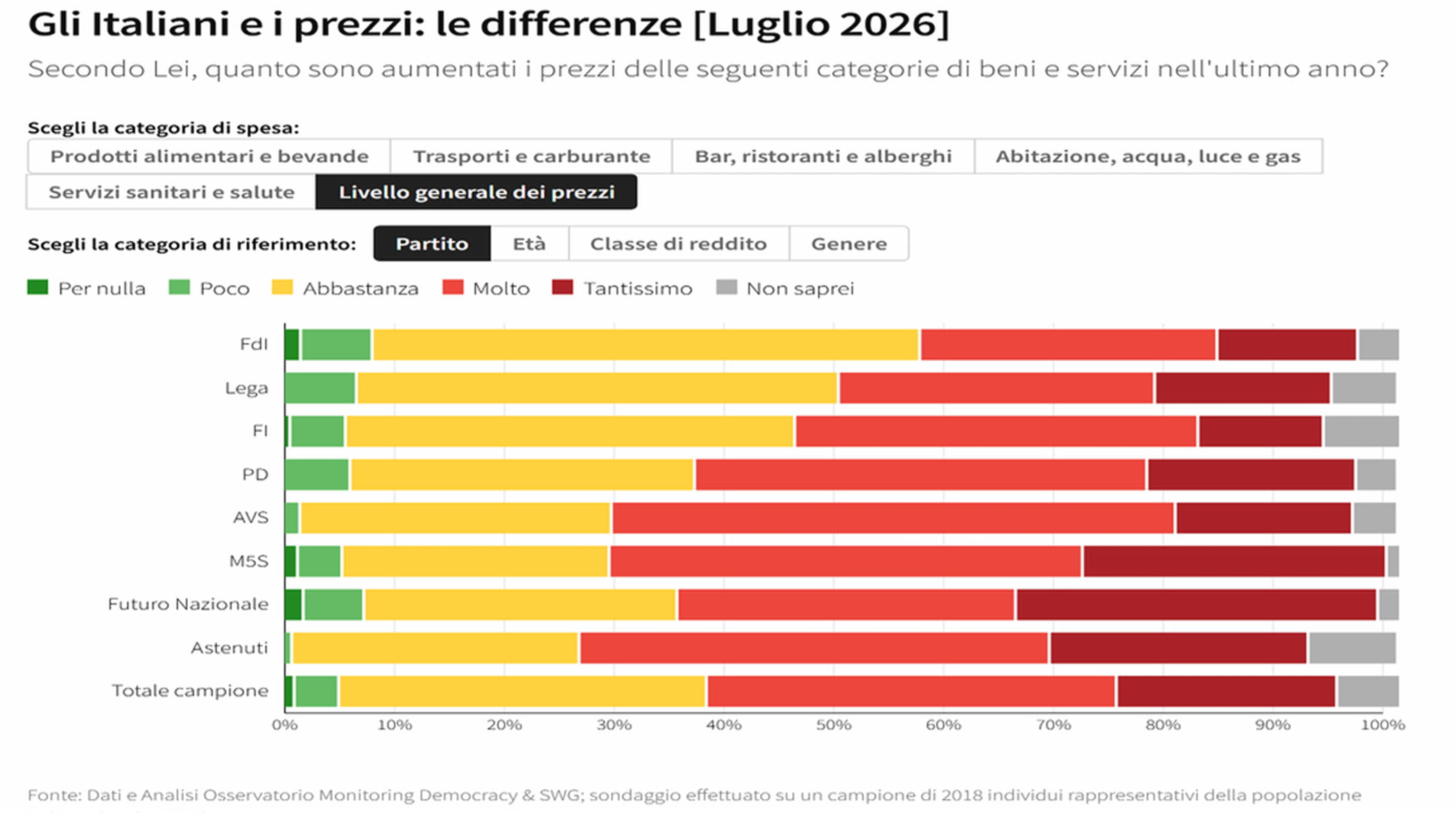
A recent analysis reveals that an individual's political affiliation significantly influences their perception of inflation, creating a notable divergence in how price increases are experienced. Voters supporting Fratelli d'Italia (FdI) report experiencing fewer price hikes compared to those who vote for center-left parties. This discrepancy is particularly pronounced when comparing FdI supporters with those who align with the Five Star Movement and the supporters of the League, represented by the figure of Vannacci. The study highlights a substantial gap, with up to thirty percentage points difference in perceived inflation between these groups. This suggests that political identity acts as a filter through which economic realities, such as the rising cost of living, are interpreted and felt.
This divergence in inflation perception, strongly correlated with political alignment, suggests that voters may process economic data through partisan lenses. Individuals may be more attuned to price changes that align with their party's narrative or that impact groups they identify with. This phenomenon raises questions about the effectiveness of public communication regarding economic policy and the potential for political polarization to create differing lived realities. Understanding these perceptual filters is crucial for policymakers aiming to address public concerns about the cost of living, as purely data-driven communication may not resonate equally across the electorate. Future economic policy discussions may need to account for these subjective interpretations to foster broader consensus and trust.
AI-generated to prompt reflection — not editorial opinion, not advice, not a statement of fact. How this works.
