Political Slogans Projected on Embassy Walls: From Chongqing to Global Reach
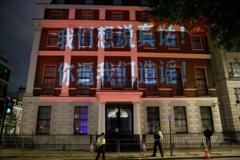
Political projections have emerged as a novel method for certain overseas advocacy groups to voice their political demands, a tactic that has recently expanded from Chongqing to cities worldwide. These projections have been observed on the exterior walls of Chinese embassies and consulates in various international locations. The trend has spread beyond China's borders, with instances reported in major global cities such as New York, Berlin, and Sydney. This form of political expression involves projecting messages or images onto the buildings, serving as a visible and public declaration of the groups' agendas. The expansion of this tactic suggests a growing reliance on digital and visual means for political activism by these organizations. It represents a shift in how dissenting voices or advocacy groups choose to engage with the public and international community, utilizing prominent public spaces for their messages.
The use of political projections on diplomatic buildings represents a modern iteration of public protest, leveraging readily available technology to bypass traditional media gatekeepers. This tactic allows advocacy groups to project their messages directly onto symbols of state power, potentially increasing visibility and impact. The global spread of this method indicates a shared understanding among dispersed groups of how to effectively utilize digital projection for political messaging. From a systemic perspective, this trend highlights the evolving landscape of dissent in the digital age, where physical presence can be augmented by technological reach. It raises questions about the balance between freedom of expression, the security of diplomatic missions, and the responsibility of technology providers in facilitating such displays.
AI-generated to prompt reflection — not editorial opinion, not advice, not a statement of fact. How this works.