Politics and FIFA World Cup: A History of Interference
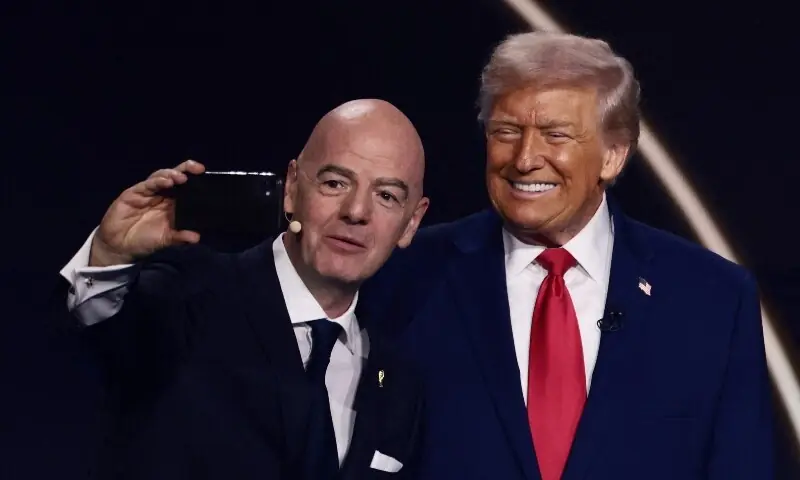
US President Donald Trump's recent call to FIFA chief Gianni Infantino to review a red card for co-host nation's star striker Folarin Balogun marks the latest instance of political influence on the FIFA World Cup. Balogun is now eligible to play in the upcoming last-16 match after FIFA suspended his ban for a year. This event brings to light a history of political interference in the tournament.
Historically, the 1934 World Cup in Italy saw fascist dictator Benito Mussolini leverage the event to promote his regime and Italian identity, attending matches and visiting referees' changing rooms, ultimately securing an Italian victory amidst suspicions of biased officiating. In 1938, both Mussolini and Nazi dictator Adolf Hitler sought to use the tournament for their political agendas. While Germany, bolstered by annexed Austrian players, exited early, Italy, wearing black shirts, again triumphed after Mussolini issued a stark "Win or die" warning to his team.
The 1978 World Cup in Argentina coincided with 'The Dirty War' under military junta leader Jorge Rafael Videla. Despite objections to the regime hosting, FIFA, then led by Joao Havelange, remained silent. The host nation's progression to the final, requiring a large win against Peru, was met with suspicion due to a controversial 6-0 victory, fueling whispers of a deal between the juntas. In 1982, during a match between France and Kuwait, Kuwaiti players stopped playing, believing they heard a whistle. The intervention of Kuwaiti Olympic Committee president Sheikh Fahad Al-Ahmed Al-Jaber Al-Sabah onto the pitch led to a French goal being disallowed by the referee, though France eventually scored again. The Sheikh tragically died eight years later during the Iraqi invasion of Kuwait.
The historical instances detailed illustrate a recurring tension between the global platform of the FIFA World Cup and the political ambitions of host nations and influential figures. These events highlight how sporting spectacles can be co-opted for propaganda, nationalistic fervor, or to legitimize authoritarian regimes. The FIFA organization's role, from passively observing to actively intervening or remaining silent, underscores the complex governance challenges in managing a global event that intersects with diverse political landscapes. Examining these past intrusions prompts consideration of FIFA's evolving responsibilities in safeguarding the sport's integrity against undue political influence and ensuring a level playing field, especially as the tournament's global reach and economic impact continue to grow in the coming decades.
AI-generated to prompt reflection — not editorial opinion, not advice, not a statement of fact. How this works.