Politics and Sports: The FIFA World Cup's Entanglement
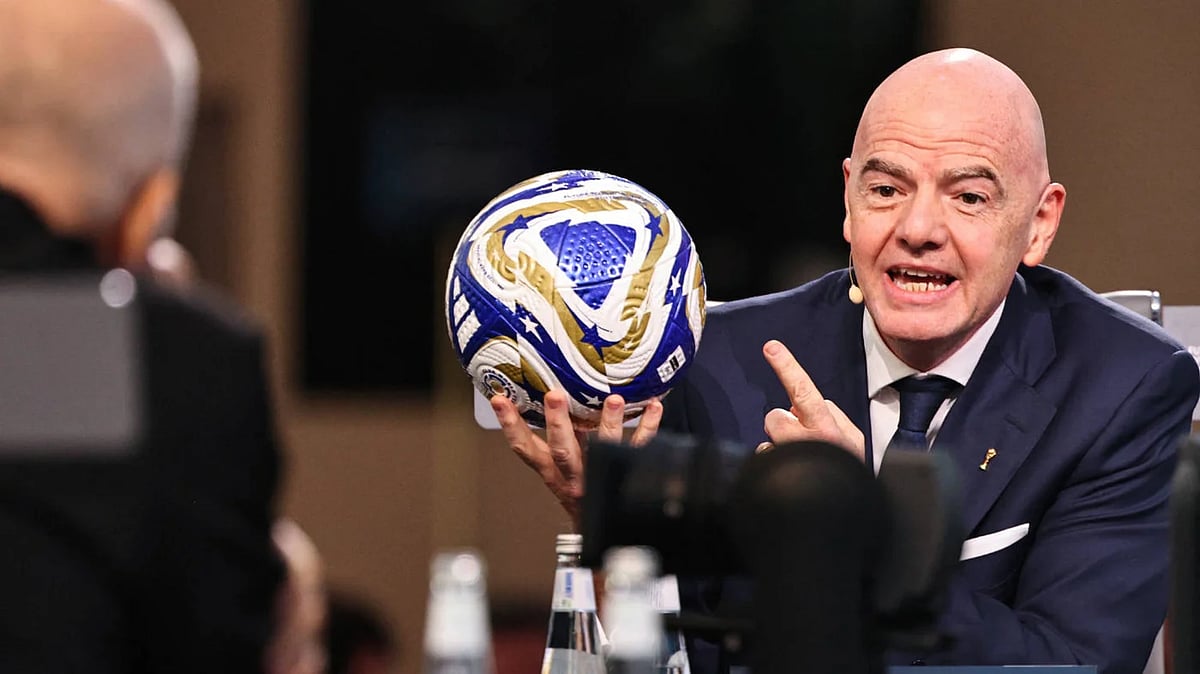
The relationship between sports and politics, historically intertwined since ancient Greece and Nazi Germany, continues to be a complex issue, despite the persistent notion of keeping international sports apolitical. Geoffrey Allen Pigman, a diplomacy expert, explains why this separation is practically impossible. The recent FIFA World Cup, a massive and lucrative event, concluded amidst numerous controversies. Many players, officials, fans, and spectators were denied entry into the United States to watch the games. Notably, U.S. President Donald Trump intervened with FIFA President Gianni Infantino regarding a referee's decision he perceived as detrimental to the U.S. national team, a decision that was subsequently reversed.
These incidents prompt a re-evaluation of the purpose of international sports. Questions arise about the true objectives of global sporting events like the World Cup: do they serve the public interest, or are they primarily large-scale commercial ventures focused on entertainment and profit, where political leaders exploit sports for their own agendas? While 'fair play' is a fundamental principle of sports, implying freedom from political interference, the reality is that sports and politics remain inseparable. Historically, sports have been used positively in diplomacy, dating back to the ancient Olympics with the 'ekecheiria' or Olympic Truce, which ensured safe passage for participants and facilitated diplomatic communication.
Modern 'public diplomacy' has become increasingly significant with the rise of mass media, allowing governments and non-state actors to promote international policies and build global images. Sports diplomacy is viewed as a subset of this, leveraging the vast global audience and media consumption connected to major events. The interactions between athletes, fans, and officials at events like the Olympics or World Cup foster crucial diplomatic connections, often described as 'people-to-people diplomacy,' enabling spontaneous relationships beyond governmental interests. However, this can be undermined when governments use diplomacy as a propaganda tool, spreading misinformation and creating a false positive image, a tactic termed 'sportswashing' to distract from poor records in human rights or governance. Conversely, 'sports anti-diplomacy' involves using sports for aggressive, nationalistic aims, as seen in the 1936 Berlin Olympics or the 1969 'Football War.'
The FIFA World Cup's recent controversies highlight the inherent tension between sports' aspirational ideals of apolitical competition and the practical realities of global politics. FIFA's stated commitment to political neutrality clashes with the geopolitical interests and domestic policies of host nations, particularly evident in U.S. immigration policies impacting participants. The use of sports events for diplomatic signaling, such as the 'FIFA Peace Prize' awarded to President Trump, suggests a transactional approach where symbolic gestures may be employed to navigate political complexities and secure favorable outcomes for event organizers. This dynamic raises questions about whether major international sporting bodies are truly independent arbiters of fair play or are susceptible to leverage by powerful state actors. Looking ahead, the increasing politicization of global events, coupled with the rise of 'sportswashing' and 'sports anti-diplomacy,' indicates a future where sports will likely remain a potent, albeit contested, arena for political influence and national projection.
AI-generated to prompt reflection — not editorial opinion, not advice, not a statement of fact. How this works.