Poll: Majority of Brazilians believe Trump's tariffs aim to aid Flávio Bolsonaro's campaign
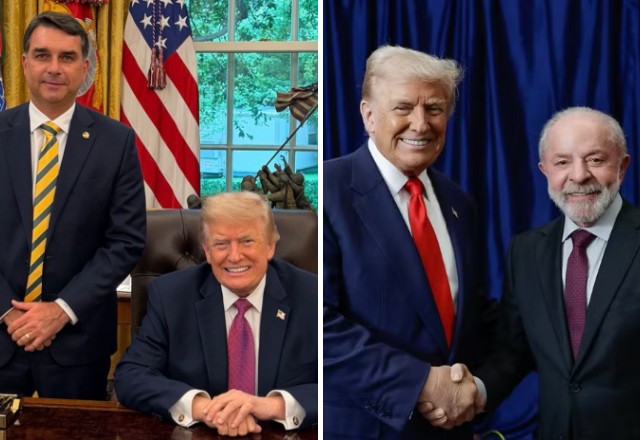
A recent Datafolha poll reveals that 52% of Brazilian voters suspect that the tariffs imposed by the Donald Trump administration on Brazil are intended to benefit Flávio Bolsonaro's presidential campaign. Conversely, 37% of respondents do not believe the measure aims to favor the senator, and 11% were undecided. The survey, conducted on July 22-23 with 2,004 participants aged 16 and over, has a margin of error of two percentage points. Among Flávio Bolsonaro's supporters, 29% felt the tariffs were meant to help him, while this figure rose to 73% among supporters of President Luiz Inácio Lula da Silva.
The poll also indicated that 63% of those surveyed are aware of the US tariffs, with 25% feeling well-informed and 34% reasonably informed. The trade dispute intensified in July when the US announced a 25% tariff on Brazilian goods, later adding a 12.5% surcharge citing labor rights concerns. The political discussion also involved the relationship between the Bolsonaro family and the former US president, with former congressman Eduardo Bolsonaro, Flávio's brother, having been active in the US during the initial phase of the trade crisis.
Regarding responsibility for the trade dispute, 34% of respondents believe Lula is correct in attributing blame to Flávio Bolsonaro, while 26% agree with the senator's view that the Brazilian government is at fault. A significant 74% of Brazilians favor negotiating a resolution to the trade crisis, with only 17% advocating for proportional retaliation and 2% accepting the tariffs. However, 51% of respondents feel President Lula could have done more to prevent the tariffs, compared to 29% who believe he acted appropriately and 12% who think he overstepped.
This poll highlights a significant perception among Brazilian voters that international trade policy, specifically US tariffs, may be influenced by domestic political considerations. The findings suggest a public discourse where economic actions are interpreted through a partisan lens, potentially reflecting pre-existing political alignments and trust levels in leadership. The divergence in opinion between supporters of different political factions underscores the challenge of objective assessment when national economic interests intersect with political campaigns. Moving forward, understanding the systemic incentives that might lead to such perceptions, and how transparent trade negotiations can mitigate the influence of political speculation, will be crucial for fostering stable international economic relations and informed public opinion.
AI-generated to prompt reflection — not editorial opinion, not advice, not a statement of fact. How this works.