Pope John Paul II's 1980 Mass at Aparecida Shrine Marks 46th Anniversary
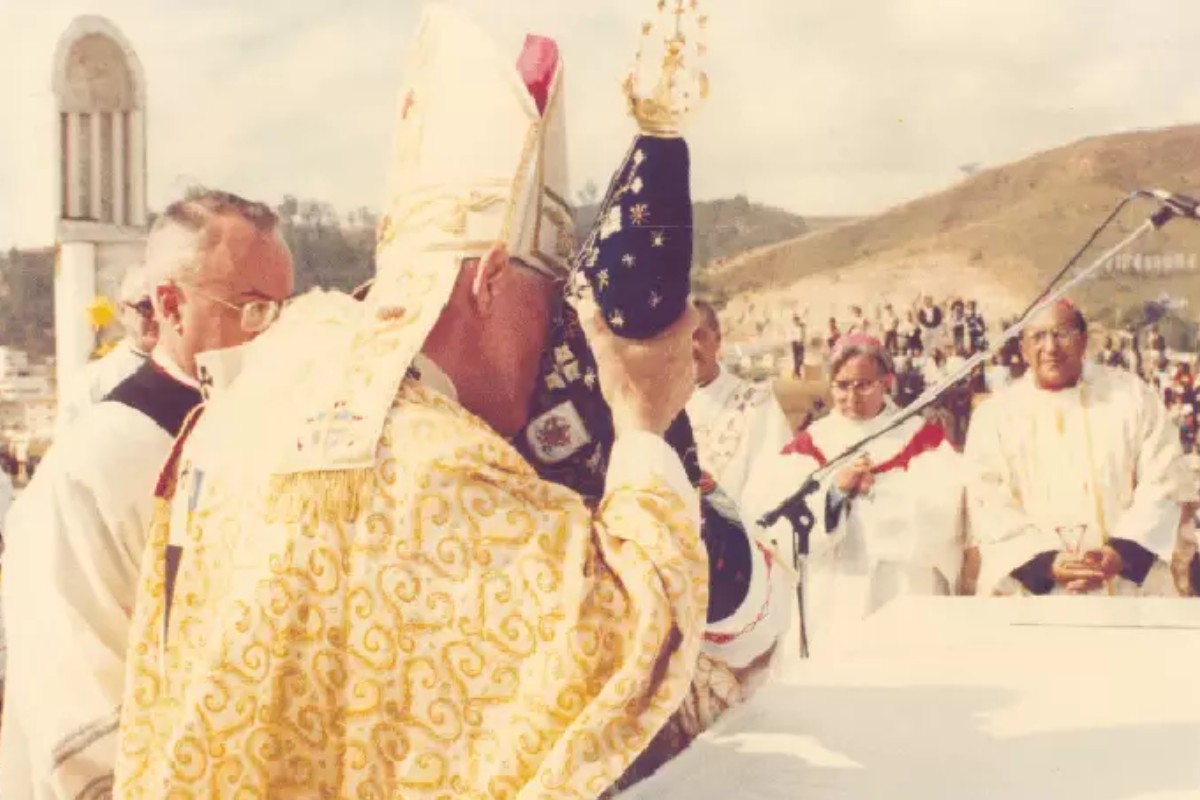
Exactly 46 years ago, on July 4, 1980, Pope John Paul II visited the National Shrine of Nossa Senhora Aparecida, a pivotal moment in the religious site's history. During this visit, the pontiff celebrated a Mass for over 300,000 faithful, consecrated the central altar, and bestowed the title of Minor Basilica upon the church. He also declared the site the world's largest Marian Shrine, according to the National Shrine itself. This visit to Aparecida was part of John Paul II's first apostolic journey to Brazil, which took place from June 30 to July 12, 1980. In his homily, the Pope referred to Aparecida as the "spiritual capital of Brazil" and recounted its history as a pilgrimage destination since the 1717 discovery of the image of Nossa Senhora Aparecida. He highlighted the Shrine's growth from a small oratory to its current basilica, attributing its development to the faith of Brazilians and the efforts of all involved in its construction. The Pope also recalled the solemn crowning of Nossa Senhora Aparecida in 1904, her declaration as Patroness of Brazil in 1930, and the 1967 bestowal of the Golden Rose by Pope Paul VI. John Paul II encouraged the faithful to preserve the tradition of pilgrimages and devotion to Nossa Senhora Aparecida, emphasizing their significance to Brazilian religiosity and Christian faith. The visit marked the first time a pope visited the National Shrine, solidifying Aparecida's status as a major global religious pilgrimage destination, attracting millions of visitors annually.
This event highlights the enduring power of religious pilgrimage sites as focal points for national identity and faith, even as global secularization trends continue. The significant attendance at Pope John Paul II's 1980 Mass underscores the deep connection between religious devotion and cultural heritage in Brazil. As societies evolve, the role of such institutions in providing spiritual guidance and community cohesion will continue to be tested against the backdrop of technological advancement and changing social values. The long-term sustainability of these traditions may depend on their ability to adapt and remain relevant to younger generations, while preserving their core spiritual and historical significance.
AI-generated to prompt reflection — not editorial opinion, not advice, not a statement of fact. How this works.