Pope Leo XIV visits Lampedusa, prioritizing migrants over US Independence Day
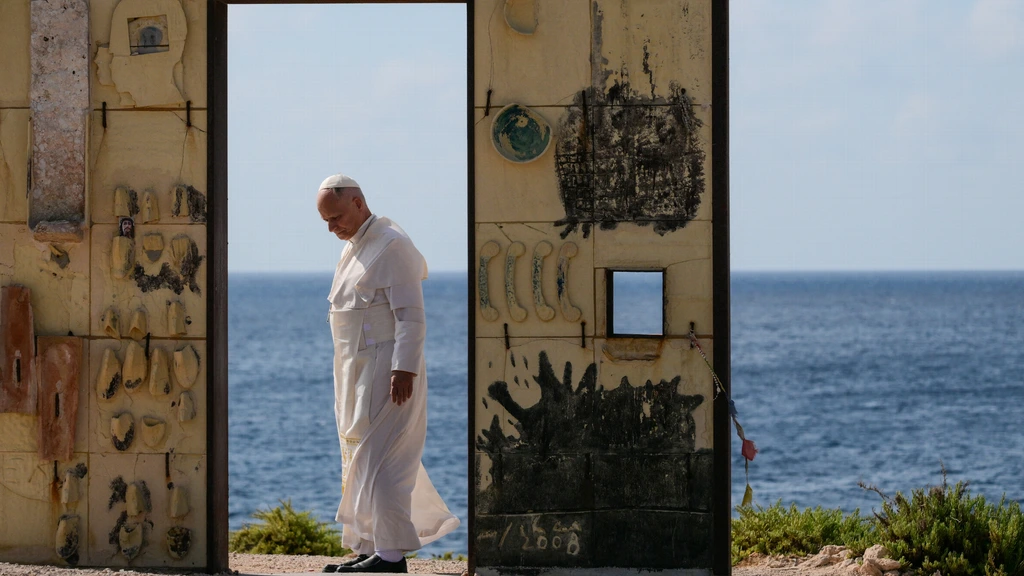
Pope Leo XIV, the first American pontiff, has chosen to spend the United States' 250th Independence Day celebration on the Italian island of Lampedusa, engaging with migrants instead of participating in festivities in his home country. During a mass on the island, a significant transit point for migrants traveling from Africa to Europe, Leo urged for greater action to support the nearly 15,000 migrants who have arrived this year. He emphasized individual responsibility in fostering peace, truth, and care over indifference and hate, likening the island's residents to modern Samaritans for their efforts. The Pope visited the "Door to Europe" artwork, commemorating deceased migrants, and laid a wreath at a cemetery for unidentified drowned individuals buried under driftwood crosses. He acknowledged the sea's toll on those who did not reach their intended destinations, describing them as "victims of decisions made and not made." Pope Leo appealed to European leaders for a comprehensive approach to migration, encompassing emergency aid, long-term protection, and development assistance to address the root causes of forced migration. This visit stands in stark contrast to the rhetoric of Donald Trump, who, during his own Independence Day celebrations, warned that American identity is under threat from newcomers with differing ideologies. Earlier in the year, Pope Leo had criticized the US immigration policy as inhumane, while Trump had previously labeled the Pope as "weak on crime and very bad on foreign policy." The Pope reiterated his commitment to advocating for peace.
Pope Leo XIV's decision to observe the US Independence Day with migrants in Lampedusa, rather than in the United States, highlights a significant divergence in priorities and moral framing between religious leadership and certain political factions. This action can be viewed through the lens of systemic critique, where the Pope is leveraging his platform to draw attention to the humanitarian consequences of global inequality and restrictive immigration policies. By contrasting his message with that of figures like Donald Trump, the Pope is implicitly challenging narratives that frame immigration primarily as a threat to national identity or security. The analysis of this event involves understanding the incentive structures driving both migration and border control policies, and considering how differing value systems—religious compassion versus nationalistic preservation—are being articulated and contested on the global stage. The long-term implications may involve increased pressure on international bodies and national governments to reconcile humanitarian obligations with sovereign interests, particularly in the context of an increasingly interconnected world shaped by technological advancements and climate change.
AI-generated to prompt reflection — not editorial opinion, not advice, not a statement of fact. How this works.