Populism's Rise Linked to Disappointment Over Party Division, Says UML General Secretary Pokharel
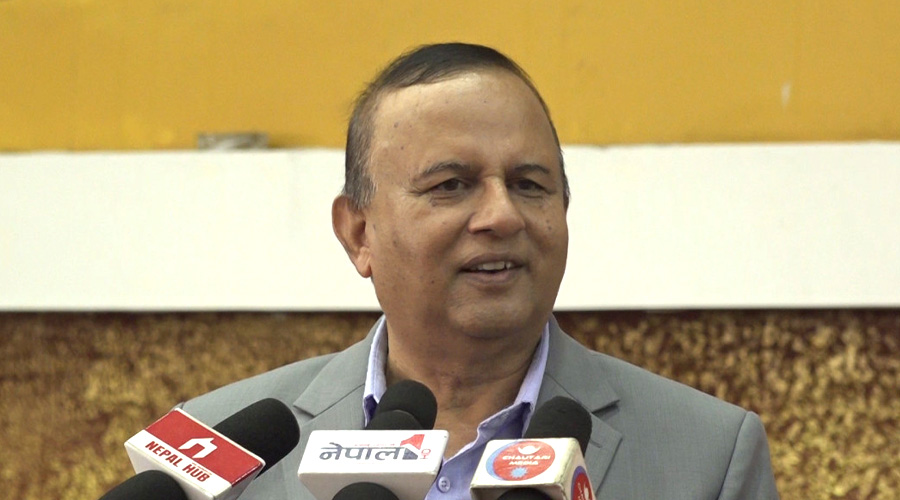
Shankar Pokharel, General Secretary of the Communist Party of Nepal (Unified Marxist-Leninist) or CPN (UML), stated that disappointment stemming from internal party struggles and division has led to the rise of populism in Nepal. Pokharel made these remarks on Saturday while addressing the launch event of the 'UML Party Awakening Campaign' in Lalitpur. He noted that not only the new generation but also the older generation, connected through social security, are distancing themselves from the CPN (UML). This indicates a broader disillusionment within the party's traditional support base. The campaign aims to re-engage party members and the public. Pokharel's comments suggest a recognition of significant challenges facing the party's public image and support. The rise of populism is often seen as a response to perceived failures of established political parties to address public concerns. The CPN (UML) appears to be grappling with this trend.
The statement by CPN (UML) General Secretary Shankar Pokharel highlights a potential systemic issue within the party, where internal conflict and division have eroded public trust and support, creating fertile ground for populist movements. This dynamic suggests a disconnect between the party's leadership and its base, as well as the broader electorate. The 'Party Awakening Campaign' indicates an effort to address this deficit, but its success will depend on the party's ability to genuinely reform its internal governance and reconnect with public aspirations. In the context of evolving political landscapes, parties that fail to adapt to changing societal expectations and maintain internal cohesion risk further marginalization, potentially ceding space to less established or more ideologically extreme political actors. The challenge lies in rebuilding credibility and demonstrating a clear vision for national development that resonates beyond partisan interests.
AI-generated to prompt reflection — not editorial opinion, not advice, not a statement of fact. How this works.