Porto Alegre dike construction doesn't affect Rio Gravataí flooding, officials say
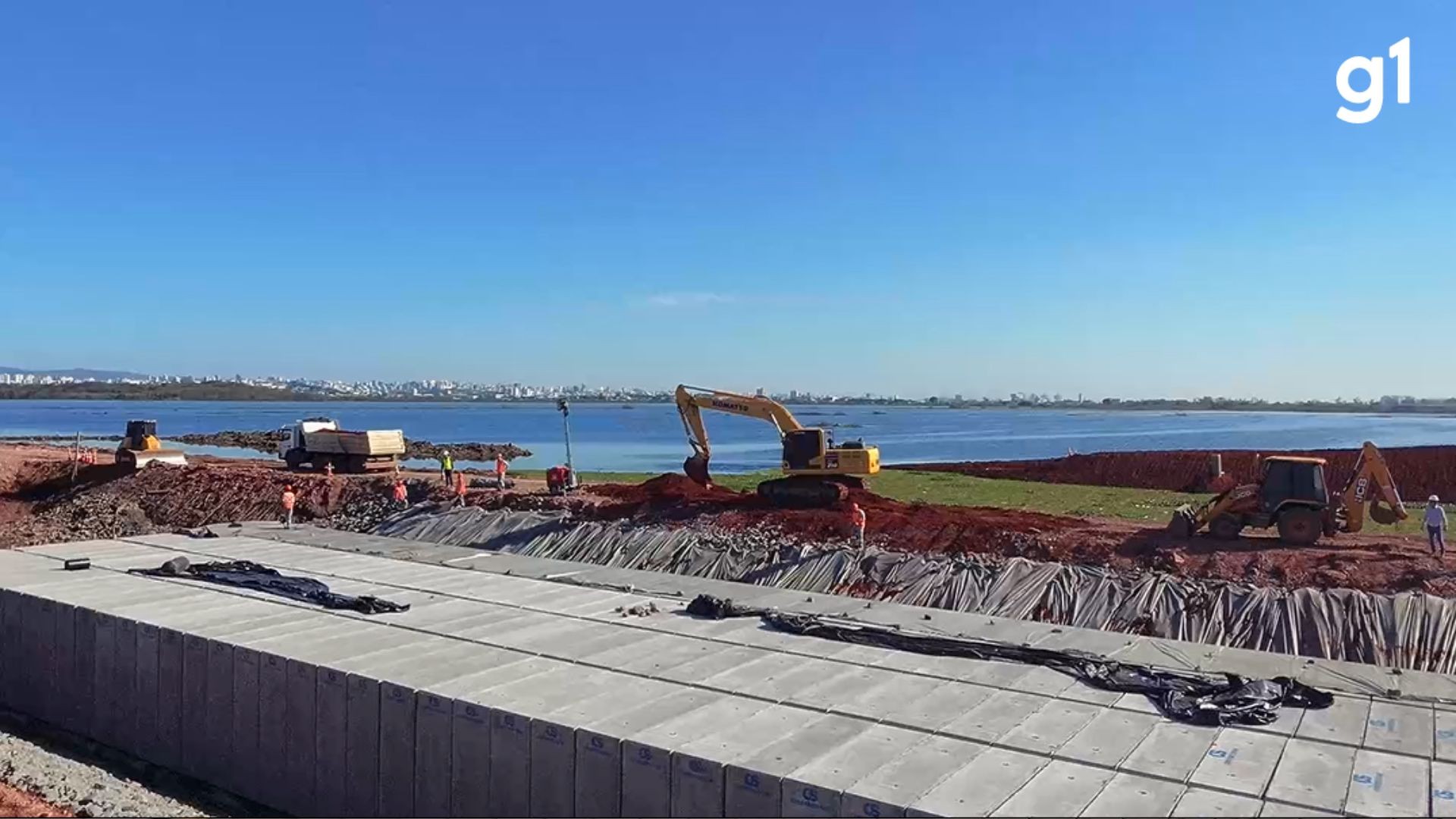
Porto Alegre's Municipal Department of Water and Sewerage (Dmae) has stated that a dike currently under construction in the city's North Zone does not significantly influence the flooding of the Rio Gravataí. Residents in the metropolitan region, like Adão Souza Dias Júnior from Alvorada, have questioned the dike's impact as the Rio Gravataí's water levels reached 4.77 to 4.79 meters, exceeding the 4.75-meter flood stage. Adão reported having to evacuate his home due to the rising waters and expressed concern that water from Porto Alegre's North Zone might be contributing to the flooding elsewhere. The Alvorada municipality reported assisting 129 individuals from 50 families to relocate and is sheltering six people from four families at a municipal facility. Emergency pumps are currently directing water from Arroio Passo das Pedras to the Rio Gravataí, a process that will become automatic upon the dike's completion, projected for August of this year. This operation aims to prevent water from returning to neighborhoods and causing floods in the North Zone, forming part of the region's flood prevention system. Dmae's president, Vicente Perrone, likened the water diversion to adding a cup of water to an Olympic pool, emphasizing its minimal impact on the Rio Gravataí's levels, with studies by Rhama Analysis and the Federal University of Rio Grande do Sul's Hydraulic Research Institute (IPH/UFRGS) corroborating this, estimating an influence of only 2 to 6 millimeters. Fernando Meirelles, a professor at IPH/UFRGS, affirmed the dike's essential role in protecting Porto Alegre's North Zone, which was highly vulnerable during the 2024 events, and stated it has no bearing on flooding in neighboring municipalities like Cachoeirinha, Gravataí, and Canoas.
The construction of flood control infrastructure, such as the dike in Porto Alegre's North Zone, presents a complex challenge in managing water resources and mitigating disaster risks. While official statements and technical studies suggest minimal impact on downstream river levels, public perception and the lived experiences of affected residents highlight the critical need for transparent communication and robust community engagement. The event underscores the interconnectedness of urban water systems and the potential for perceived or actual impacts to erode trust in governance. Moving forward, integrating advanced hydrological modeling with real-time data and establishing clear protocols for addressing community concerns will be crucial for building resilience and ensuring equitable outcomes in flood management strategies, especially as climate change intensifies extreme weather events.
AI-generated to prompt reflection — not editorial opinion, not advice, not a statement of fact. How this works.
