Post-Khamenei Iran: What Has Changed and What Has Remained the Same?
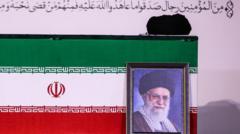
The death of Ali Khamenei was widely anticipated by observers to be a pivotal moment in the history of the Islamic Republic of Iran. This event was expected to either lead to the regime's collapse or at least usher it into a new phase. However, several months after his passing, neither the predicted scenario of collapse has materialized, nor can it be definitively stated that Iran's political structure has remained unchanged. The period following Khamenei's death has presented a complex picture of continuity and subtle shifts within the Iranian political system. While the fundamental structures of the Islamic Republic appear to persist, the dynamics of power and governance may be undergoing gradual adjustments. The initial expectations of dramatic upheaval have not been met, suggesting a degree of resilience or adaptability within the existing framework. Further observation is needed to fully assess the long-term implications of this transition on Iran's political landscape and its future trajectory.
The transition of power following a long-standing leader like Ali Khamenei presents a critical juncture for any political system. While initial expectations often lean towards dramatic shifts or collapse, the reality frequently involves a complex interplay of continuity and gradual adaptation. The Islamic Republic's apparent ability to maintain its core structures suggests the presence of deeply embedded institutional mechanisms and a strategic approach to managing succession. Understanding the underlying incentive structures that preserve the existing order, alongside any emergent dynamics that signal potential future changes, will be crucial for assessing Iran's trajectory over the next decade. This period offers insights into the resilience of state apparatuses in the face of leadership transitions and the potential for subtle, rather than overt, political evolution.
AI-generated to prompt reflection — not editorial opinion, not advice, not a statement of fact. How this works.