Power poles installed on Ipojuca bike path create cyclist safety concerns
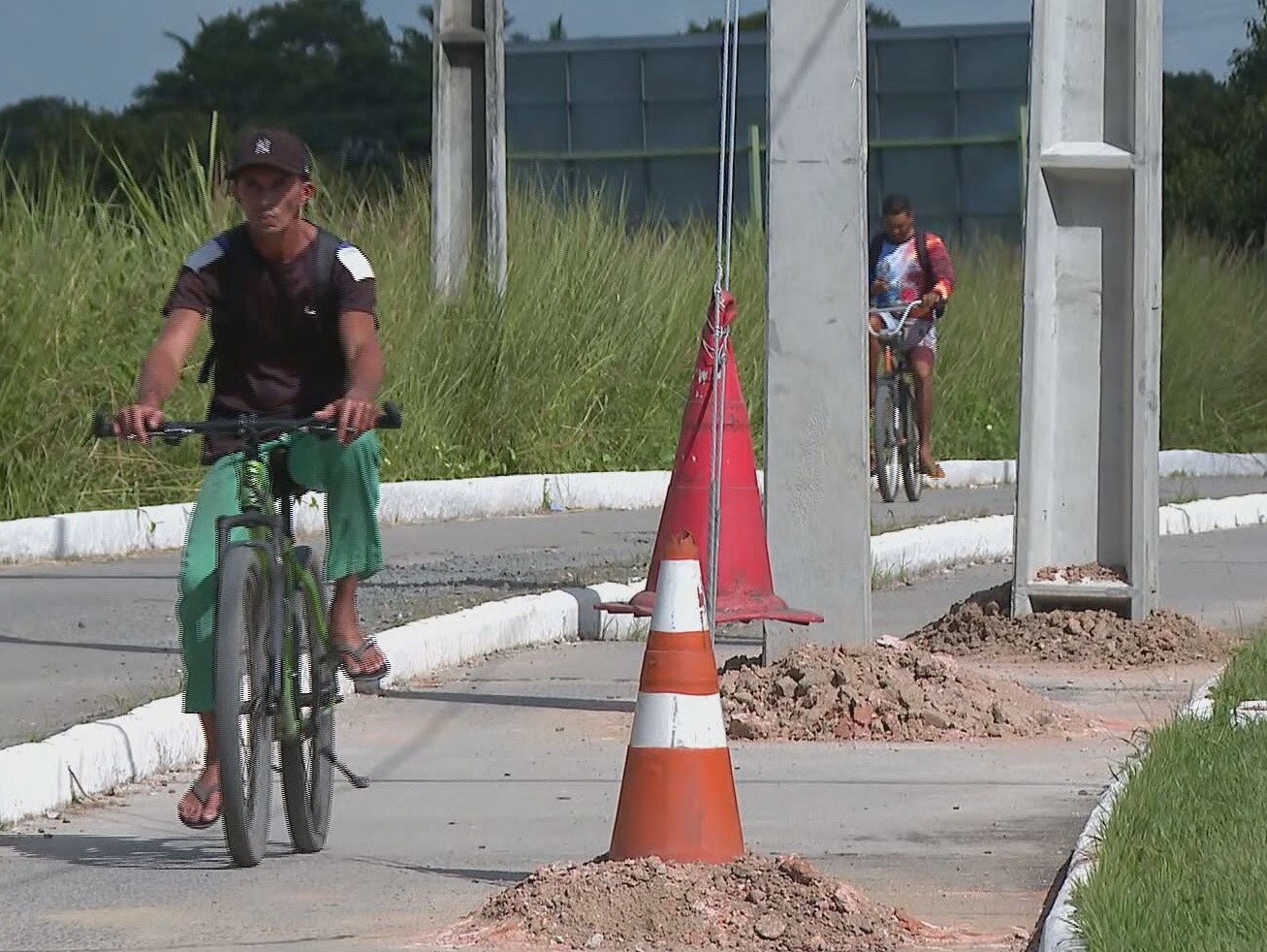
Neoenergia has installed electricity network poles directly in the middle of a dedicated bike path in Ipojuca, located in the Greater Recife region of Brazil. This placement forces cyclists to maneuver around the concrete structures, significantly increasing the risk of accidents. Residents who use the bike path for recreation, sport, or commuting are demanding the removal of these obstacles. The poles, erected by a company contracted by Neoenergia, have reduced the exclusive space for cyclists along the PE-009 highway, which connects Nossa Senhora do Ó and Porto de Galinhas. The hazard is amplified at night due to insufficient lighting, making it difficult to see the obstructions. Cyclists report being surprised by the installations, which began approximately three months ago, and note that the remaining mud from the pole foundations further narrows the path. The Porto Pedal group has formally requested explanations from local authorities and Neoenergia but has not yet received a response. They propose that the poles could be relocated to the sides of the road, where ample space exists. Neoenergia stated that the installations are part of a temporary project to modernize the electrical grid in the municipality, with completion expected in September. They maintain that placing the poles on the bike path was the only technically feasible option to ensure uninterrupted energy supply during the modernization work, which aims to enhance the region's electrical system capacity and reliability. Neoenergia also confirmed that the intervention was authorized by the Ipojuca municipality and the Pernambuco Department of Roads (DER), and that the temporary structures will be removed and the bike path fully restored upon project completion.
The installation of electrical poles directly on a designated cycle path in Ipojuca presents a clear conflict between infrastructure development and public safety. While Neoenergia cites technical necessity and municipal authorization for the temporary placement, the inherent safety risks to cyclists are undeniable, particularly given the lack of adequate lighting and the reduced space. This situation highlights a systemic challenge in urban planning where essential utility upgrades may not adequately consider existing, and often vulnerable, alternative transportation infrastructure. Moving forward, a more integrated approach to infrastructure projects is needed, involving proactive engagement with community groups and cycling advocates to identify solutions that balance modernization goals with the safety and accessibility of public spaces. Future planning should prioritize non-disruptive alternatives or clearly defined mitigation strategies to prevent such hazardous compromises.
AI-generated to prompt reflection — not editorial opinion, not advice, not a statement of fact. How this works.