PP and União Brasil to remain neutral in presidential election, Ciro Nogueira tells Flávio Bolsonaro
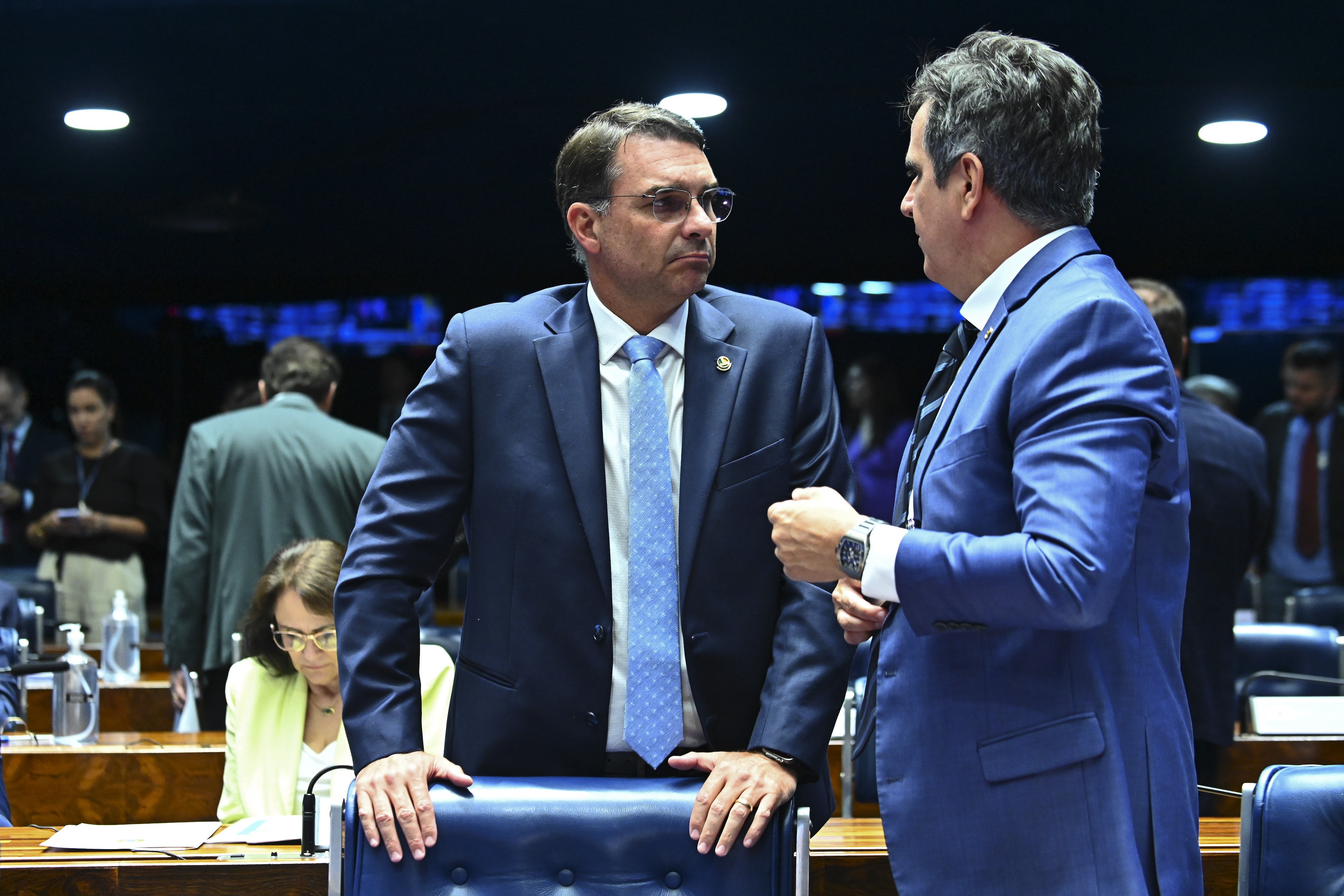
Senator Ciro Nogueira, national president of the Progressistas (PP) party, has informed Senator Flávio Bolsonaro that the PP and União Brasil federation will adopt a neutral stance in the upcoming presidential election's first round. This neutrality may extend to the second round as well. The decision comes after Flávio Bolsonaro's campaign received a negative response from Senator Tereza Cristina regarding an invitation to join the presidential ticket as vice-president. The campaign plans to continue seeking a vice-presidential candidate until the August 5th deadline, hoping for an improvement in voter intentions for Flávio Bolsonaro. Nogueira and Bolsonaro discussed the matter on Wednesday, July 22nd. A key factor in the PP and União Brasil's decision is the need to allow their members to form independent alliances at the state level, which may include supporting candidates allied with President Lula in some regions. Additionally, both parties are reportedly unenthusiastic about Flávio Bolsonaro's candidacy, citing internal crises and concerns over potential new accusations linking him to banker Daniel Vorcaro. In 2022, the PP allied with Jair Bolsonaro, but Ciro Nogueira has expressed dissatisfaction with Flávio Bolsonaro's perceived lack of defense during a Federal Police operation. Flávio Bolsonaro is now reportedly pursuing an alliance with the Republicanos party, which also allied with Bolsonaro in 2022. However, the Republicanos party has indicated a similar inclination towards neutrality in the presidential election, citing disagreements over the PL's support for their gubernatorial candidates in several states, such as Mato Grosso, where the PL launched its own senatorial candidate over the Republicanos' gubernatorial hopeful.
The reported neutrality of the PP and União Brasil in the presidential election, despite past alliances, reflects a strategic recalibration driven by the need for state-level flexibility and potential concerns regarding the leading candidate's internal standing and external perceptions. This dynamic highlights the complex interplay between national aspirations and regional political necessities, where party federations must balance broad ideological alignment with the pragmatic pursuit of power across diverse electoral landscapes. The reluctance of these parties to fully commit to a specific presidential ticket, coupled with their stated reservations, suggests a market-based approach to political alliances, prioritizing immediate electoral gains and risk mitigation over unconditional support. This approach underscores the evolving nature of party politics, where coalition-building is increasingly contingent on perceived candidate viability and the potential for reciprocal state-level benefits, rather than solely on historical alignments or ideological solidarity.
AI-generated to prompt reflection — not editorial opinion, not advice, not a statement of fact. How this works.