PP's Anti-Corruption Drive Hampered by Past Scandals, Poll Shows
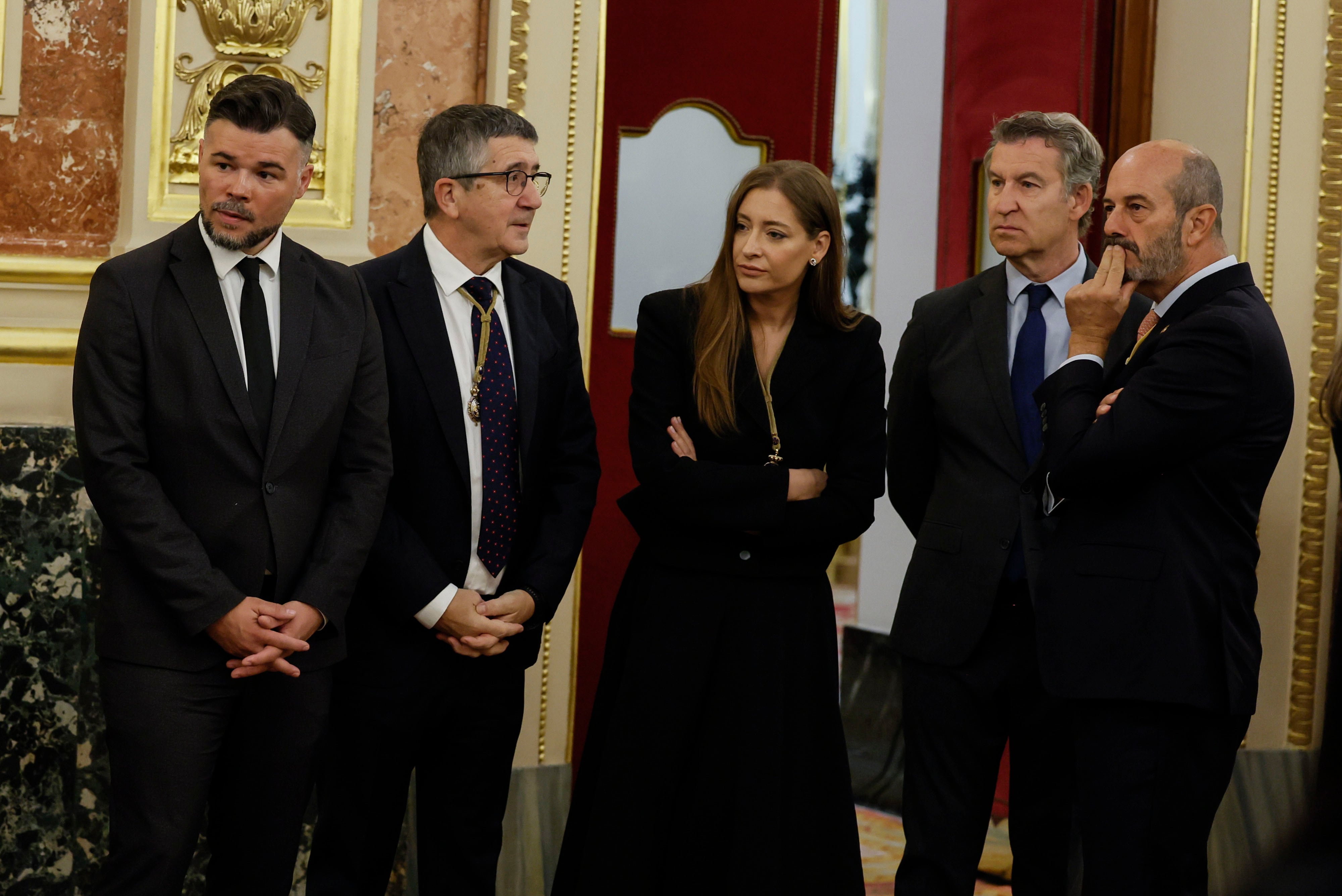
A recent poll indicates that a majority of voters associate the People's Party (PP) with corruption more than the Socialist Workers' Party (PSOE). Alberto Núñez Feijóo, the leader of the PP, inspires less confidence than Pedro Sánchez, the current Prime Minister, according to data from the CIS (Center for Sociological Research). In a ranking of democratic quality encompassing 17 political formations, only Vox, a far-right party, scored lower than the PP. This suggests that historical issues and perceptions of corruption continue to weigh heavily on the PP's public image and its efforts to position itself as a party committed to clean governance. The findings highlight a significant challenge for the PP as it seeks to regain public trust and differentiate itself from past controversies. The comparison with other major parties, particularly the PSOE and Vox, underscores the complex landscape of public perception regarding political integrity in Spain. The poll's results are a clear indicator that the party's anti-corruption narrative faces an uphill battle against ingrained voter sentiment.
The survey data reveals a persistent public perception linking the PP with corruption, a challenge that could undermine its reformist agenda. This perception, whether rooted in past events or ongoing concerns, creates an incentive structure where the party must exert considerable effort to build credibility. The comparative ranking against PSOE and Vox suggests that voters are evaluating parties not just on policy but on perceived integrity and democratic quality. For the PP, overcoming this hurdle requires more than just pronouncements; it necessitates demonstrating tangible changes in governance and transparency to shift long-term voter sentiment in the coming decade. The challenge lies in aligning public trust with the party's stated anti-corruption goals, a critical factor for its future electoral viability.
AI-generated to prompt reflection — not editorial opinion, not advice, not a statement of fact. How this works.