PPP Accuses AJK Election Commission of Aiding Rigging in Polls
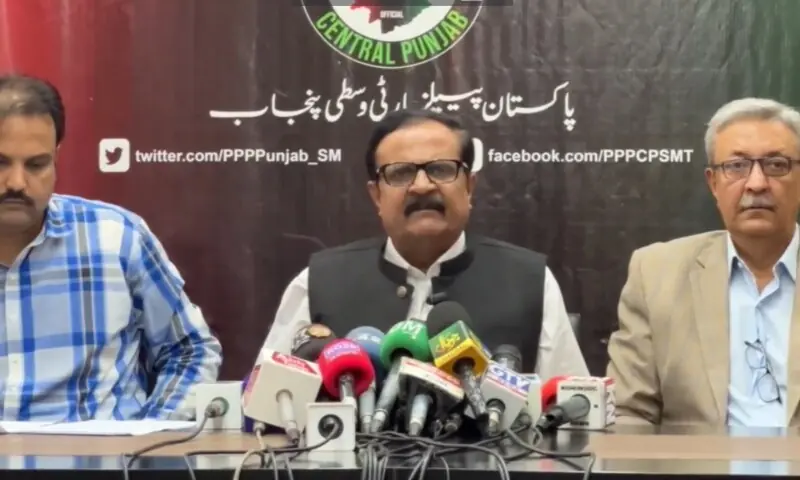
The Pakistan Peoples Party (PPP) has leveled serious allegations of rigging against the Pakistan Muslim League-Nawaz (PML-N) in the first phase of the Azad Jammu and Kashmir (AJK) elections, while also criticizing the AJK Election Commission for allegedly facilitating these irregularities. Provisional results indicate that the PML-N secured nine out of the available seats in Monday's election, which is being conducted in three phases due to security concerns. The PPP claims that the election commission's actions exposed its role in undermining the PPP's mandate. Specific accusations include the "hostaging" of 30 polling stations in Charhoi, where PPP polling agents were allegedly prevented from congregating, and similar tactics in Javed Badhanvi's constituency. The party also reported the martyrdom of a worker, Mukhtar Younis, on polling day. Furthermore, polling stations in the constituencies of Chaudhry Ikhlaq and Chaudhry Pervaiz Ashraf were reportedly seized. The PPP asserts that conducting elections in phases was a deliberate strategy to enable rigging, and likens the AJK Election Commission's role to that of a "commissioned agent" that determined the outcome of polling. The party claims that extending voting time by an hour was intended to allow for the stamping of votes in favor of the PML-N. The PPP stated that it had alerted the commission to violations of the code of conduct, such as the distribution of buses, but the commission only acted after public outcry on social media. In response to comments from Punjab Chief Minister Maryam Nawaz, the PPP highlighted its historical role in securing parliamentary political rights for AJK. The party also referenced its past efforts to address the demands of the Joint Awami Action Committee (JAAC), noting that during the PPP's six-month tenure, 35 demands were met by then-Premier Faisal Mumtaz Rathore. The PPP maintains that the federal government's involvement or the need for constitutional amendments prevented the resolution of two specific demands. The party reiterated its call for a truth and reconciliation commission to address ongoing protests in AJK, stemming from the JAAC's demand to abolish 12 seats reserved for refugees from Indian-occupied Jammu and Kashmir.
The PPP's accusations highlight significant concerns regarding electoral integrity and the role of the AJK Election Commission. The allegations of rigging and the commission's alleged complicity, if substantiated, point to systemic governance challenges that could undermine public trust in democratic processes. The phased election approach, coupled with claims of polling station "hostaging" and manipulated voting times, suggests potential vulnerabilities in electoral management that could be exploited. The PPP's call for a truth and reconciliation commission, in the context of broader protests over refugee representation, indicates a deep-seated need for transparent dialogue and conflict resolution mechanisms. Moving forward, strengthening independent oversight of electoral bodies and establishing clear protocols for dispute resolution will be crucial for ensuring fair elections and fostering stability in the region. The situation underscores the ongoing tension between political competition and the imperative for impartial administration in electoral cycles.
AI-generated to prompt reflection — not editorial opinion, not advice, not a statement of fact. How this works.