PPP Accuses PML-N of Rigging in All General Elections
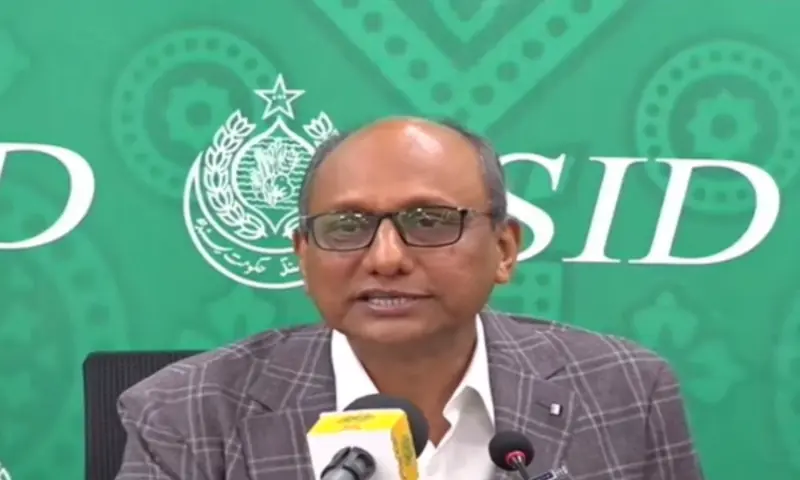
Pakistan Peoples Party (PPP) leader Saeed Ghani alleged on Saturday that the Pakistan Muslim League-Nawaz (PML-N) has never won a general election without rigging. Speaking in Karachi, Ghani asserted that the PPP has always secured power through legitimate means, contrasting it with the PML-N's alleged reliance on electoral manipulation. He specifically referenced the 1985 election, claiming PML-N supremo Nawaz Sharif "conspired" against then-Prime Minister Mohammad Khan Junejo. Ghani further alleged that the PPP was a "target of rigging" in the 1988 and 1990 elections, which saw the PML-N win, and that his party was "controlled and prevented from forming a government in Punjab" in 1993. He also claimed the PPP was limited to "16-17 seats" in the 1997 elections when Nawaz Sharif's PML-N formed the government. Ghani contended that even in 2008, when the PPP gained power, the PML-N was allegedly "made to win seats, especially in Punjab, through rigging during Musharraf’s tenure." He extended this accusation to the 2013 elections, stating the PML-N was "made to win," and declared that in the 2024 elections, "everyone, even children, know that the PML-N was badly defeated." Ghani also criticized PML-N leaders Nawaz Sharif, Prime Minister Shehbaz Sharif, and Punjab Chief Minister Maryam Nawaz for losing their own seats and blaming others. The PPP leader made these remarks while explaining his party's stance on new provinces, emphasizing that such decisions must align with the wishes of the people and their elected representatives in the provincial assemblies. He noted that Sindh's representatives oppose new provinces, while Punjab's assembly and Senate have passed resolutions favoring them, asserting that Punjab has no right to dictate provincial matters for Sindh. Ghani also criticized Punjab's ministers for their limited understanding of Sindh, suggesting they were solely influenced by Maryam Nawaz.
This statement from Saeed Ghani highlights persistent allegations of electoral manipulation within Pakistan's political landscape, particularly between the PPP and PML-N. The accusations, spanning decades and multiple electoral cycles, suggest a systemic distrust in the fairness of general elections. From a governance perspective, such claims, if substantiated through independent electoral reforms and transparent processes, could undermine public confidence in democratic institutions. The framing of these allegations, especially concerning past military dictatorships and alleged foreign influence, points to a complex historical context shaping current political discourse. Future electoral integrity will likely depend on strengthening independent oversight mechanisms and ensuring a level playing field for all political actors, fostering a more stable and predictable political environment.
AI-generated to prompt reflection — not editorial opinion, not advice, not a statement of fact. How this works.