Praia Grande Seizes Over 300 Illicit E-Bikes and Mopeds
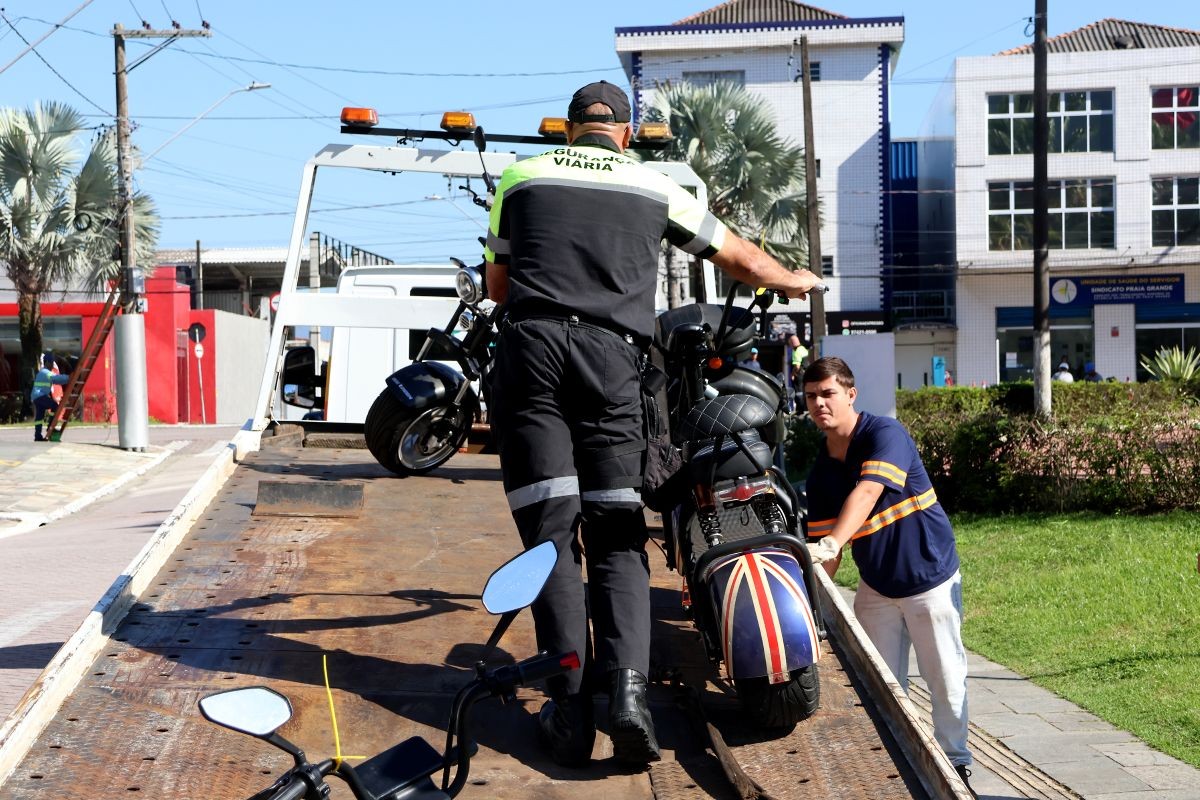
Praia Grande, a coastal city in São Paulo, Brazil, has confiscated 313 electric bicycles, mopeds, and self-propelled individual mobility devices between January and June of this year. These enforcement actions were carried out by the Municipal Secretariat of Transit (Setran) to ensure compliance with Municipal Law No. 2.306/2025, which regulates the use of these transportation modes. The city's administration stated that no financial fines are issued in these cases; only the seizure of the vehicles occurs. To retrieve a confiscated vehicle, owners must present proof of purchase (nota fiscal) and pay removal and storage fees. Setran identified common violations including riding on sidewalks, against traffic flow, and non-compliance with minimum age requirements for operation. The law specifies that mopeds must use the roadway, not sidewalks or bike paths, while e-bikes and self-propelled devices should primarily use designated bike lanes or, failing that, the shoulder or right edge of the road. Circulation on roads with speed limits over 40 km/h is prohibited for these devices, as is riding on sidewalks, promenades, and pedestrian crossings. Minimum ages for operation are 18 for mopeds (with appropriate license), 16 for self-propelled devices, and 14 for pedelec-style electric bicycles. Vehicles not claimed within 60 days are subject to auction. Removal fees are R$155.44 and daily storage is R$44.41 for mopeds, while e-bikes and self-propelled devices incur a R$76.09 removal fee and R$22.20 daily storage charge.
Praia Grande's enforcement actions highlight the growing challenge of integrating new mobility devices into urban infrastructure. The city's approach, focusing on seizure and fees rather than direct fines, aims to regulate usage and ensure public safety by enforcing a specific municipal law. This strategy incentivizes compliance by imposing costs on owners who violate regulations regarding where and by whom these devices can be operated. The tiered fee structure reflects the differing regulatory requirements and potential impact of mopeds versus lighter electric devices. As cities globally grapple with similar issues, Praia Grande's experience offers insights into balancing innovation in personal transport with established traffic laws and public space management, prompting consideration of how regulatory frameworks can adapt to technological advancements without stifling their benefits.
AI-generated to prompt reflection — not editorial opinion, not advice, not a statement of fact. How this works.