Precarious Wooden Bridge Endangers Families in MT Settlement
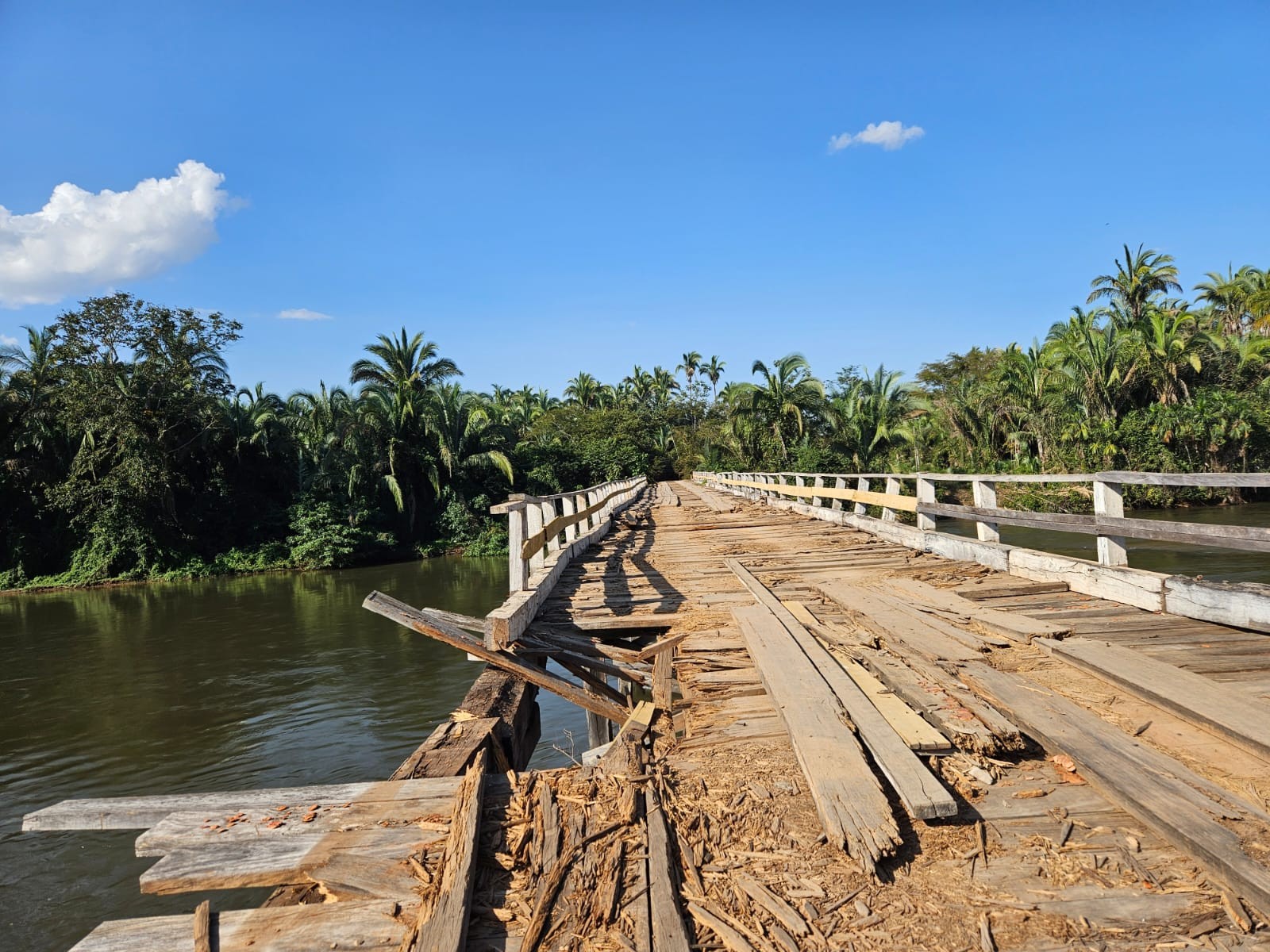
Families in the Antônio Conselheiro settlement, located between Tangará da Serra and Barra do Bugres in Mato Grosso, Brazil, have been risking their lives for four years to cross a dilapidated wooden bridge. This structure, approximately 120 km long, is crucial for at least 90 families, connecting them to essential services like healthcare and education. The municipality of Barra do Bugres, responsible for the bridge's maintenance, has requested materials seized by the State Secretariat of the Environment (Sema) for repairs but has not yet received a response. The State Civil Defense agency is monitoring the situation and has advised the local government to declare a state of public emergency.
Despite the evident danger, residents feel compelled to use the bridge due to the lack of viable alternatives. One resident described the crossing as heart-stopping, expressing frustration with politicians for their inaction on a problem that has persisted for so long. In February of this year, an inspection by the Tangará da Serra Secretariat of Infrastructure confirmed significant structural issues, with only temporary repairs made to the upper section. The situation has since deteriorated, prompting calls for a new concrete bridge over the Sepotuba River, a major tributary of the Paraguay River basin. Residents highlight that the nearest safe crossing is 40 km away, making such detours impractical for daily life and access to necessities.
The situation at the Antônio Conselheiro settlement highlights a critical infrastructure deficit impacting a community's access to basic services. The dependency on a precarious wooden bridge, coupled with bureaucratic delays in obtaining necessary materials and official responses, suggests potential governance challenges. The need for emergency declarations and the residents' reliance on a structure deemed unsafe points to systemic issues in infrastructure planning and maintenance, particularly in underserved rural areas. Looking ahead, the reliance on such temporary or failing infrastructure raises questions about long-term resilience and the equitable distribution of public resources, especially as climate impacts may further stress existing structures. Addressing this requires not only immediate repairs but also a strategic re-evaluation of infrastructure investment priorities to ensure safety and accessibility for all citizens.
AI-generated to prompt reflection — not editorial opinion, not advice, not a statement of fact. How this works.