Prefabricated Construction Accelerates Business Expansion in Brazil's Vale do Ribeira
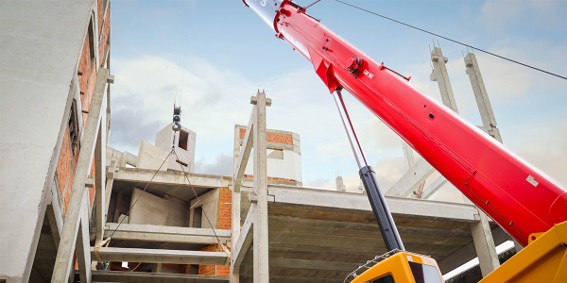
Businesses in Brazil's Vale do Ribeira region are increasingly adopting prefabricated construction methods to speed up expansion projects. This industrial approach allows multiple construction phases to occur simultaneously, significantly reducing project timelines and enhancing schedule predictability. As every week of construction directly impacts return on investment, entrepreneurs are turning to prefabrication to accelerate project completion and begin operations sooner.
While foundations are prepared on-site, structural components like pillars, beams, slabs, and roofing can be manufactured in a controlled industrial environment. This parallel processing minimizes the waiting periods common in traditional construction, leading to a more organized worksite, less waste, and better labor utilization. In commercial and industrial sectors, faster project delivery translates directly to financial gains by enabling earlier revenue generation and reducing losses associated with ongoing construction.
The controlled industrial setting ensures high precision in manufacturing, with standardized concrete mixes and rigorous quality control processes guaranteeing the uniformity and performance of structural elements. Companies like Hipermolde, with over 33 years of experience, offer comprehensive prefabricated solutions for commercial, industrial, and corporate projects in the Vale do Ribeira and Baixada Santista areas. Their services include foundations, pillars, beams, slabs, stairs, wall panels, and roofing, all custom-designed to project specifications. By investing in technology, quality control, and specialized engineering, Hipermolde provides clients with greater cost predictability, schedule adherence, and structural safety.
The adoption of prefabricated construction in Vale do Ribeira reflects a broader trend toward industrializing building processes to enhance efficiency and financial performance. This shift prioritizes speed and predictability, recognizing that time-to-market is a critical driver of investment returns in competitive business environments. The method's emphasis on controlled manufacturing environments suggests potential for improved quality and reduced waste, aligning with sustainability goals. As businesses seek to grow rapidly, prefabricated solutions offer a strategic advantage by de-risking project timelines and accelerating revenue generation, thereby transforming construction from a cost center into a direct contributor to financial strategy. Future developments may see further integration of digital technologies and advanced materials to optimize these industrial construction processes.
AI-generated to prompt reflection — not editorial opinion, not advice, not a statement of fact. How this works.