President Aliyev: Threats in Our Region Are Quite Real Today
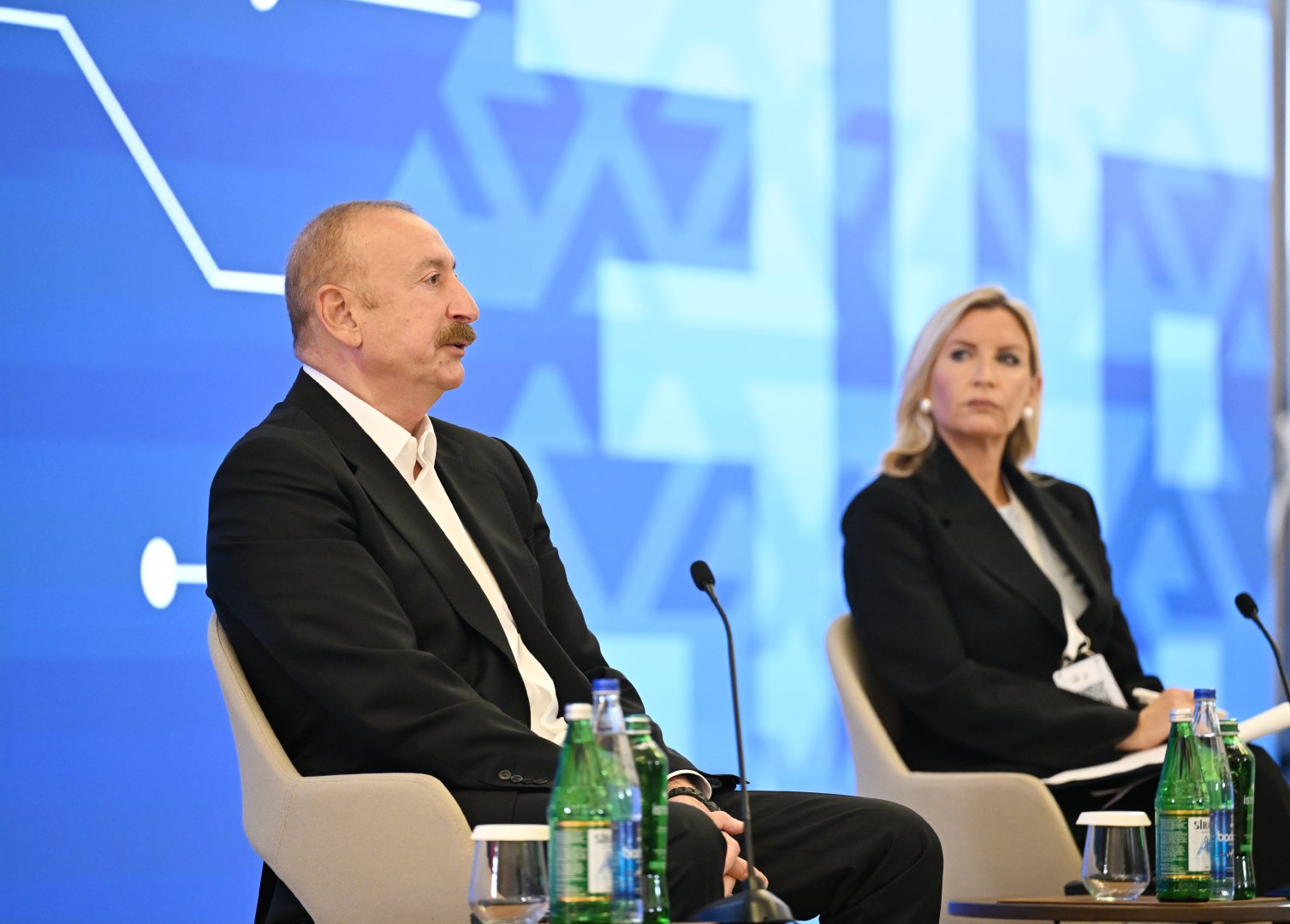
President Ilham Aliyev has stated that the threats currently present in the region are "quite real." He made this assertion, highlighting the tangible nature of these dangers. The President's remarks underscore a perceived level of instability or potential conflict within the geographical area. While the specific nature of these threats was not detailed, the statement implies a need for vigilance and preparedness. The President's comments serve as a direct communication of his assessment of the regional security landscape. This declaration suggests that the geopolitical environment is characterized by significant and present risks. The emphasis on the "real" nature of these threats indicates a departure from abstract concerns, pointing towards concrete dangers. President Aliyev's pronouncement is a clear signal regarding the security situation as viewed from his perspective. The statement implies that the region faces challenges that demand serious attention and potentially proactive measures.
President Aliyev's assertion of "real threats" in the region, without specifying their origin or nature, invites scrutiny of regional geopolitical dynamics. Such statements can serve multiple purposes, including signaling national security concerns, influencing international perceptions, or bolstering domestic support by framing external challenges. The analysis should consider the incentive structures that might lead to such public pronouncements, potentially related to defense spending, diplomatic positioning, or regional power balances. In the context of evolving global security architectures and the increasing role of AI in intelligence and defense, understanding the underlying drivers of regional tensions is crucial for long-term stability. Evaluating the statement requires examining historical precedents, current diplomatic efforts, and the potential for miscalculation or escalation in a complex geopolitical landscape.
AI-generated to prompt reflection — not editorial opinion, not advice, not a statement of fact. How this works.