President Md. Shahabuddin Resigns Citing Illness
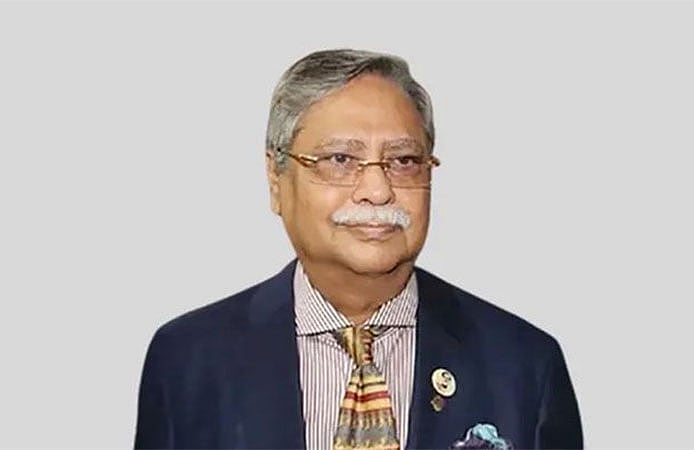
President Md. Shahabuddin has resigned from his post, with his health cited as the primary reason. He submitted his resignation letter to the Speaker of the National Parliament, Hafiz Uddin Ahmad, on Friday. Speaker Ahmad announced the resignation at a press conference at the National Parliament building at 5 PM, stating that the President is seriously ill and unable to fulfill the duties of his important constitutional office due to various health issues, both physical and mental. Md. Shahabuddin was sworn in as the 22nd President of Bangladesh on April 24, 2023, and was elected unopposed with the nomination of the Awami League party. His five-year term was scheduled to end in April 2028. Following the overthrow of the Awami League government in a student-led popular uprising on August 5, 2024, the political landscape of Bangladesh underwent significant changes. During this period, President Shahabuddin served through critical junctures, including the dissolution of parliament and the formation of an interim government after Prime Minister Sheikh Hasina resigned and left the country. Student leaders had called for President Shahabuddin's removal after the popular uprising, organizing protests and demonstrations, including a siege of the presidential palace, demanding his resignation. However, the interim government led by Muhammad Yunus did not take any steps to remove him. Subsequently, the BNP came to power through parliamentary elections, creating a different political dynamic between the presidency and the government. Although Md. Shahabuddin was elected president under the Awami League government, the new BNP-led government did not immediately seek his removal. Discussions about the President's future had been ongoing in political circles since the change of government, though neither the government nor the BNP publicly demanded his resignation. Recent media reports indicated that President Md. Shahabuddin had a phone conversation in May with former Prime Minister Sheikh Hasina, who had been ousted by the popular uprising and taken refuge in India. This conversation reportedly initiated discussions about the President's resignation. Responding to questions about the resignation, the Home Minister had previously advised waiting until Friday, stating that they had no information about the President's phone call to Sheikh Hasina. The Speaker, Hafiz Uddin Ahmad, returned to Bangladesh on Friday, cutting short his trip to Thailand for medical treatment, arriving two days earlier than scheduled. According to constitutional provisions, the Speaker will act as President until a new president is elected and takes office.
The resignation of President Md. Shahabuddin, attributed to health reasons, occurs within a context of profound political transition following a popular uprising and a shift in governing parties. The President's tenure spanned a period of significant instability, from the Awami League's rule to the subsequent interim government and the current BNP administration. The analysis of this event should consider the systemic pressures on a figurehead president during such volatile political realignments. The constitutional framework dictates the process for presidential succession, with the Speaker assuming presidential duties until a new election, which must occur within 90 days. Given the current parliamentary majority held by the BNP, the selection of the next president will likely reflect the ruling party's political direction, highlighting the inherent tension between the symbolic role of the presidency and the practicalities of political power consolidation in a post-upheaval environment. Future governance models may need to address the resilience of constitutional roles amidst rapid political change.
AI-generated to prompt reflection — not editorial opinion, not advice, not a statement of fact. How this works.