President Zardari Begins Four-Day Official Visit to Kyrgyzstan
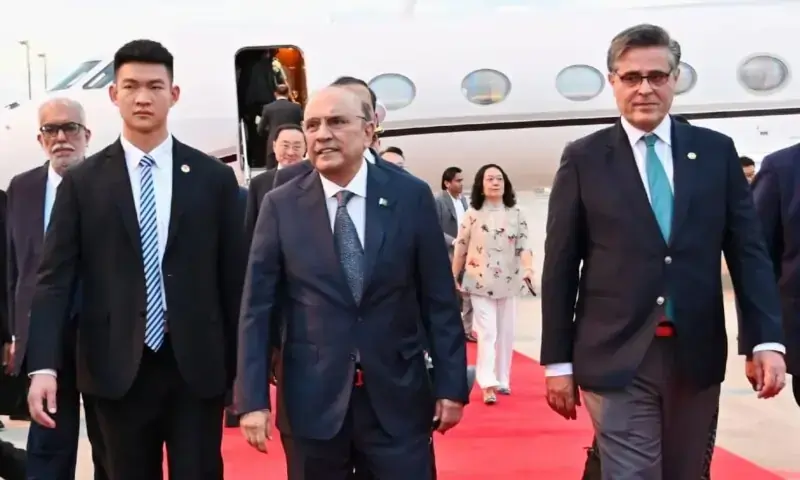
President Asif Ali Zardari of Pakistan commenced a four-day official visit to Kyrgyzstan on Monday, marking a significant moment in bilateral relations. This trip, at the invitation of Kyrgyz President Sadyr Zhaparov, is the first presidential visit from Pakistan to Kyrgyzstan in 21 years. The visit follows President Zhaparov's successful trip to Pakistan in December 2025, underscoring a positive trend in high-level interactions between the two nations. President Zardari is accompanied by a high-level delegation. During his stay, he will engage in one-on-one discussions and delegation-level talks with President Zhaparov. The agenda includes a comprehensive review of Pakistan-Kyrgyzstan relations and an exchange of views on regional and international matters of shared interest. Key areas for enhanced cooperation are expected to be explored, including trade, investment, energy, mining, agriculture, textiles, the halal industry, healthcare, pharmaceuticals, the digital economy, education, tourism, and people-to-people exchanges. Additionally, President Zardari is scheduled to receive a courtesy call from Kyrgyz Parliament Speaker Marlen Mamataliev. The Foreign Office highlighted the strong, fraternal ties between Pakistan and Kyrgyzstan, rooted in shared history, culture, and a mutual desire for peace and prosperity in Central and South Asia.
This presidential visit signals an effort to strengthen diplomatic and economic ties between Pakistan and Kyrgyzstan, potentially leveraging the historical significance of the first presidential exchange in two decades. The focus on diverse sectors like trade, energy, and the digital economy suggests a strategic intent to diversify economic partnerships beyond traditional areas. The timing, following President Zhaparov's visit to Pakistan, indicates a coordinated approach to deepening engagement. From a geopolitical perspective, enhanced connectivity and cooperation in Central and South Asia could align with broader regional integration goals, while also presenting opportunities for economic growth and stability for both nations in the coming decade. The emphasis on shared culture and aspirations may serve to build a foundation for sustained collaboration.
AI-generated to prompt reflection — not editorial opinion, not advice, not a statement of fact. How this works.