Presidente Prudente Preserves Memory of 1,100 Volunteers in 1932 Revolution
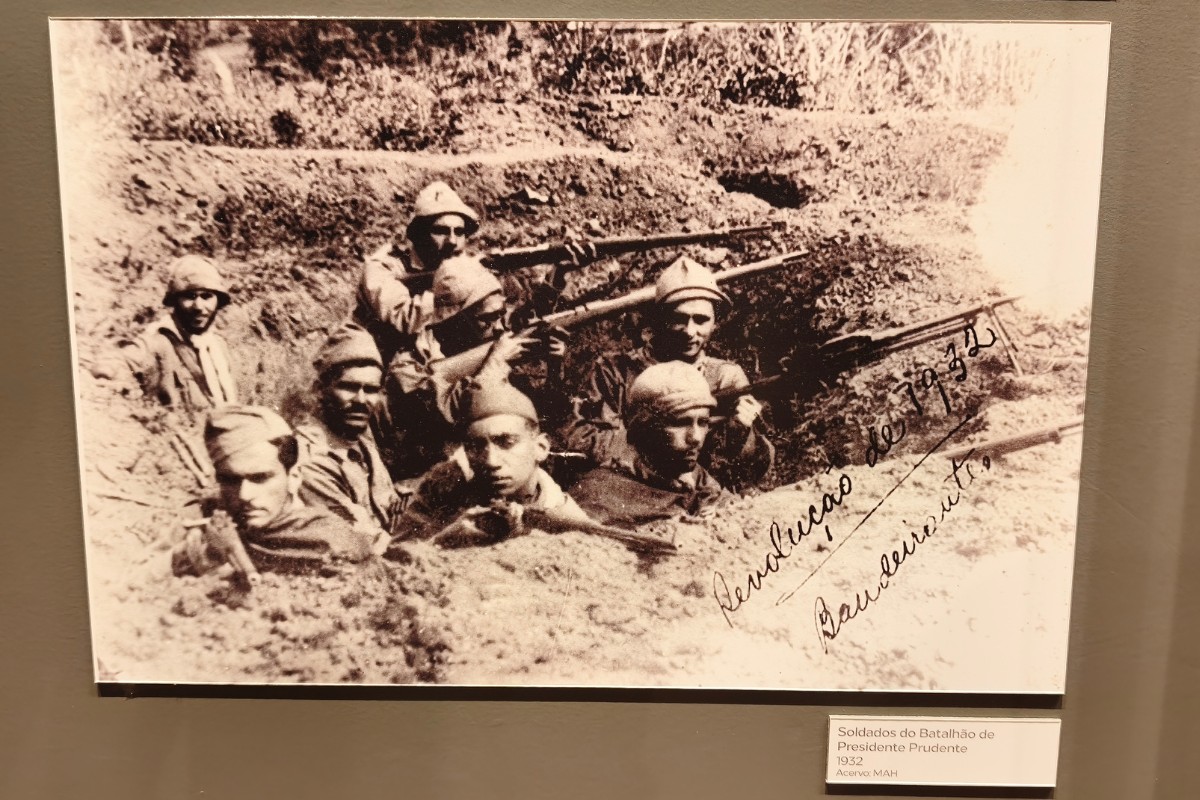
Nearly a century after the 1932 Constitutionalist Revolution, Presidente Prudente, São Paulo, is actively preserving the memory of this significant historical event. A dedicated archive at the Historical Museum and Archive, along with monuments and a newly formed commission, ensure the stories of approximately 1,100 volunteers from the region who fought in the conflict are remembered. The commission, established in 2024, aims to keep these narratives alive, highlighting the bravery and contributions of those involved.
Following the revolution's outbreak on July 9, 1932, local authorities and citizens mobilized to form the President's Battalion, led by Colonel Miguel Brizola. Volunteers gathered at the current site of Praça Nove de Julho before being sent to the Southern Front near Ourinhos. Beyond combatants, women, children, and other residents provided essential support through food, blankets, and medical supplies. Despite Presidente Prudente having a population of only about 15,000 at the time, the significant number of volunteers, all of whom were civilians as the city lacked a formal police force, drew attention. Seven combatants from the region died in the fighting, including Lieutenant Nicolau Maffei, whose refusal to surrender earned him posthumous military honors from opposing troops. Another notable figure is Soldier Amendoim, a homeless man who volunteered and died in combat, whose remains have never been recovered but who is honored by a monument.
The commission's ongoing efforts include preserving historical artifacts, maintaining monuments, and encouraging donations of relevant documents and objects. The museum currently houses items such as the battalion's flag, uniforms, medical equipment, and swords. The 1932 Revolution itself was a movement to restore constitutional order in Brazil, which had been governed by decrees following Getúlio Vargas's provisional government after the 1930 Revolution. The movement involved diverse social classes and aimed to reinstate the constitution. While the revolution ended militarily with an armistice on October 2, 1932, due to São Paulo's lack of resources, its objective of reinstating the constitution was later achieved with the convocation of a Constituent Assembly and the creation of a new constitution. Those interested in donating historical items can contact the museum or the commission via Instagram.
This historical preservation effort in Presidente Prudente underscores the enduring human impulse to memorialize collective action and sacrifice. The narrative highlights how local communities can actively shape historical understanding, moving beyond a singular national perspective to one that recognizes regional contributions. The focus on diverse participants, from officers to homeless soldiers and civilian supporters, reflects a broader historical trend acknowledging that significant societal movements are often fueled by a wide spectrum of individuals. The analysis of the revolution's ultimate success, achieved not through military victory but through subsequent political processes, offers a lens on how state legitimacy can be contested and renegotiated. This event serves as a case study in the long-term impact of civic engagement and the complex interplay between popular mobilization and constitutional governance, particularly relevant in an era where the foundations of democratic institutions are frequently debated.
AI-generated to prompt reflection — not editorial opinion, not advice, not a statement of fact. How this works.