Presidential Candidate Romeu Zema to Name Running Mate by Wednesday
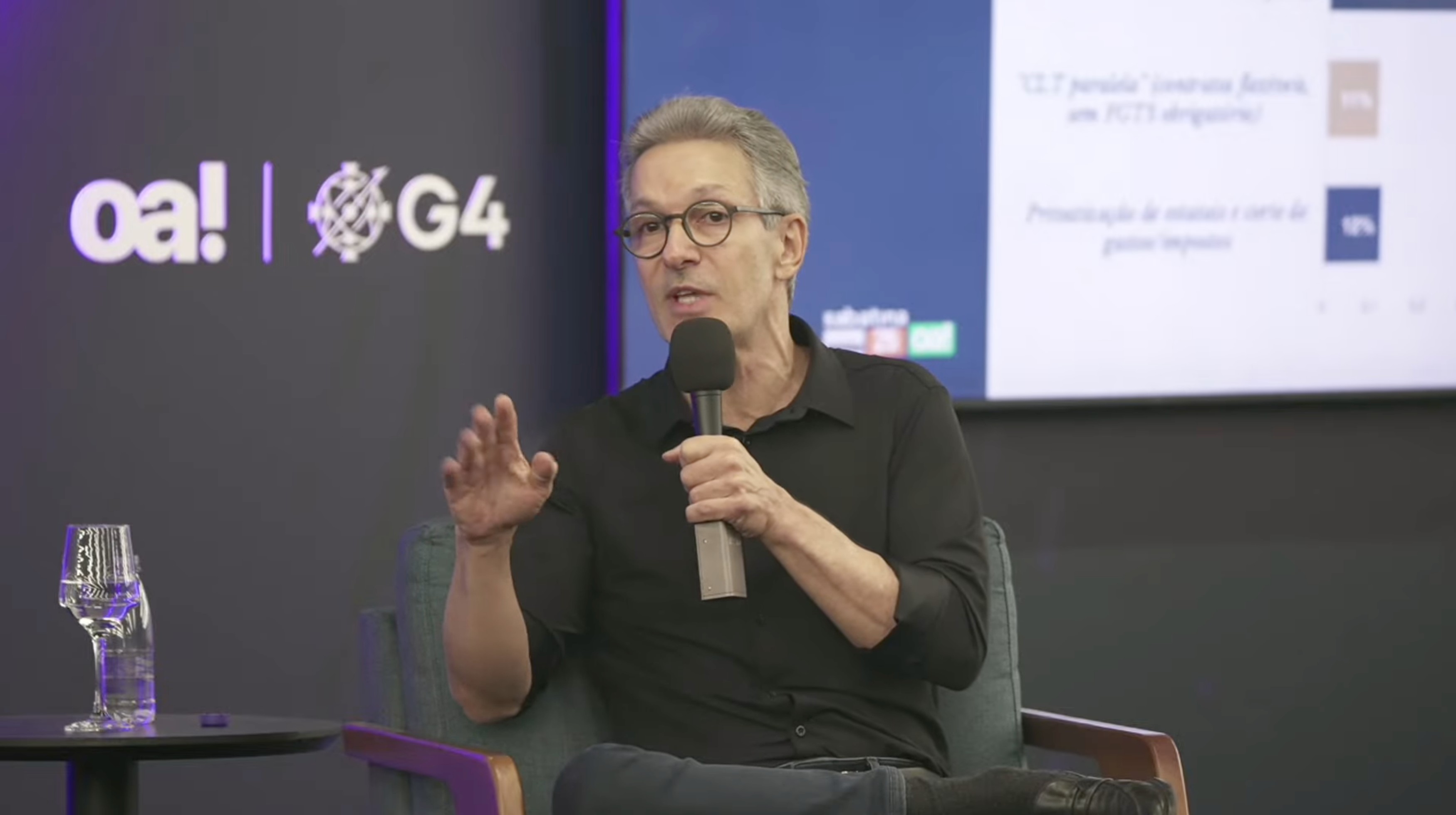
Presidential candidate Romeu Zema, representing the Novo party and former governor of Minas Gerais, announced that his vice-presidential pick will be finalized by Wednesday, August 5th. He indicated that the most likely choice will be "someone from the party," suggesting a "pure ticket" strategy. While Zema confirmed ongoing discussions with other political parties, he stated there have been no concrete advancements in those negotiations. The declaration was made during a forum hosted by G4 and "O Antagonista" in São Paulo on Tuesday, August 4th. Zema emphasized that a key criterion for his vice-presidential choice is that the individual must be "clean slate" and committed to ethical governance, free from blackmail or undue pressure. He drew a parallel to his own re-election in 2022, where despite a "pure ticket," his administration forged alliances with nine other parties, demonstrating that this approach does not preclude broader political cooperation. Regarding economic policy, Zema reiterated his commitment to privatization, stating his intention to "privatize everything," asserting that the state's primary responsibilities lie in public safety, health, and education, and that managing businesses is not a core competency of government. He cited his gubernatorial tenure in Minas Gerais as evidence of his effective leadership, characterized by a firm stance against corruption and a focus on delivering results without succumbing to political pressures.
This announcement highlights the strategic considerations and political maneuvering inherent in Brazilian presidential campaigns. The emphasis on a "clean slate" candidate and the potential for a "pure ticket" reflects an attempt to project an image of integrity and independence, potentially appealing to voters disillusioned with traditional political alliances and perceived corruption. However, the candidate's assertion that a "pure ticket" does not preclude alliances suggests a pragmatic approach, acknowledging the necessity of broader coalition-building for electoral success and governance. The strong stance on privatization, framed as a move to improve efficiency and focus government on core functions, aligns with a broader trend of market-oriented reforms but also presents potential trade-offs regarding public services and state-owned enterprises, which could face scrutiny regarding their social impact and accessibility. The candidate's self-portrayal as an effective leader who resisted pressure in Minas Gerais aims to build confidence in his ability to implement his agenda if elected.
AI-generated to prompt reflection — not editorial opinion, not advice, not a statement of fact. How this works.
