Primary Teachers in Bangladesh Face Financial Hardship and Systemic Issues
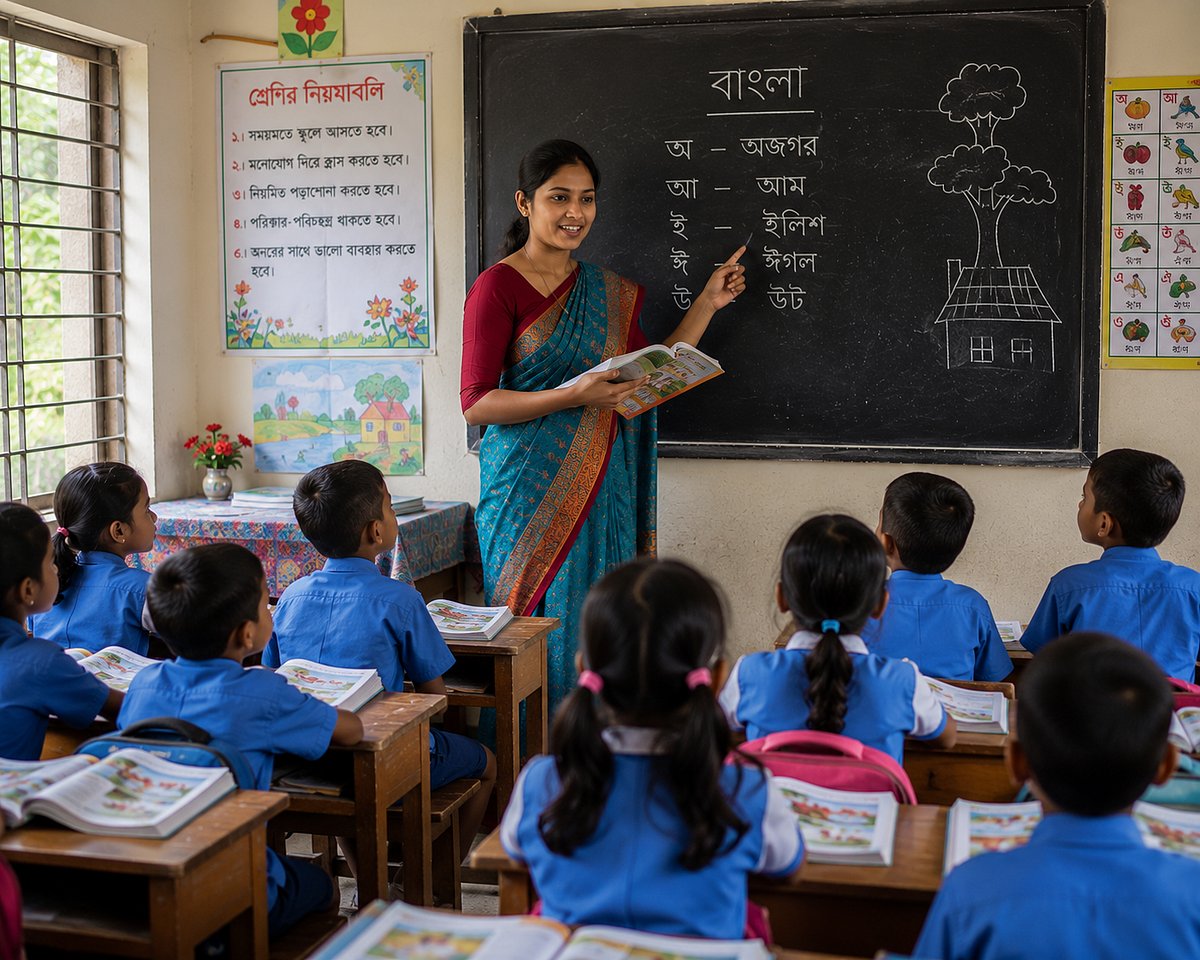
Primary school teachers in Bangladesh are struggling with severe financial difficulties and a decline in societal respect, despite their dedication to students. Many, like the fictional 'Rahmat Sir' from a northern border village, go above and beyond their duties, offering personal support and even free medicine to students and the community. However, their meager salaries, starting at 11,000 Taka for assistant teachers at the 13th grade, are insufficient to cover rising living costs. This financial strain forces many to take loans, often from informal lenders at high interest rates, by mortgaging their salary checks. The situation is exacerbated by systemic issues within the primary education sector, including corruption in teacher recruitment and administration. Allegations of 'center contracting' and question paper leaks plague recruitment processes, allowing unqualified individuals to enter the profession. These individuals often neglect their teaching duties, engaging in local politics, business, or coaching, while honest teachers bear the extra workload. A network of corrupt officials in education directorates allegedly colludes with underperforming teachers, allowing them to evade accountability through bribes, while diligent teachers face harassment for minor infractions. Even basic administrative processes like transfers, leave applications, service book updates, and pension settlements are reportedly mired in demands for bribes. This systemic rot is directly impacting the quality of education, as evidenced by a significant drop of over 1 million students in government primary schools in 2023, with a corresponding increase in enrollment at private kindergartens and madrasas, indicating a loss of parental confidence in the public system. Teachers are demanding immediate reforms, including promotion to the 10th grade, improved promotion opportunities, and an end to recruitment irregularities and administrative corruption, expressing a desire to simply teach with dignity.
The situation of primary school teachers in Bangladesh highlights a critical disconnect between the societal importance of education and the material conditions provided to its educators. The narrative suggests that systemic corruption and administrative inefficiencies within the education bureaucracy divert resources and undermine the morale of dedicated teachers. This creates a negative feedback loop where financial precarity and lack of professional respect can lead to decreased educational quality, ultimately eroding public trust in government-provided schooling. Addressing this requires not only salary increases but also robust anti-corruption measures, transparent administrative processes, and a merit-based system for recruitment and promotion. The long-term implications for Bangladesh's human capital development in the coming decade will depend on its ability to professionalize the teaching cadre and ensure equitable resource distribution within the education sector.
AI-generated to prompt reflection — not editorial opinion, not advice, not a statement of fact. How this works.